
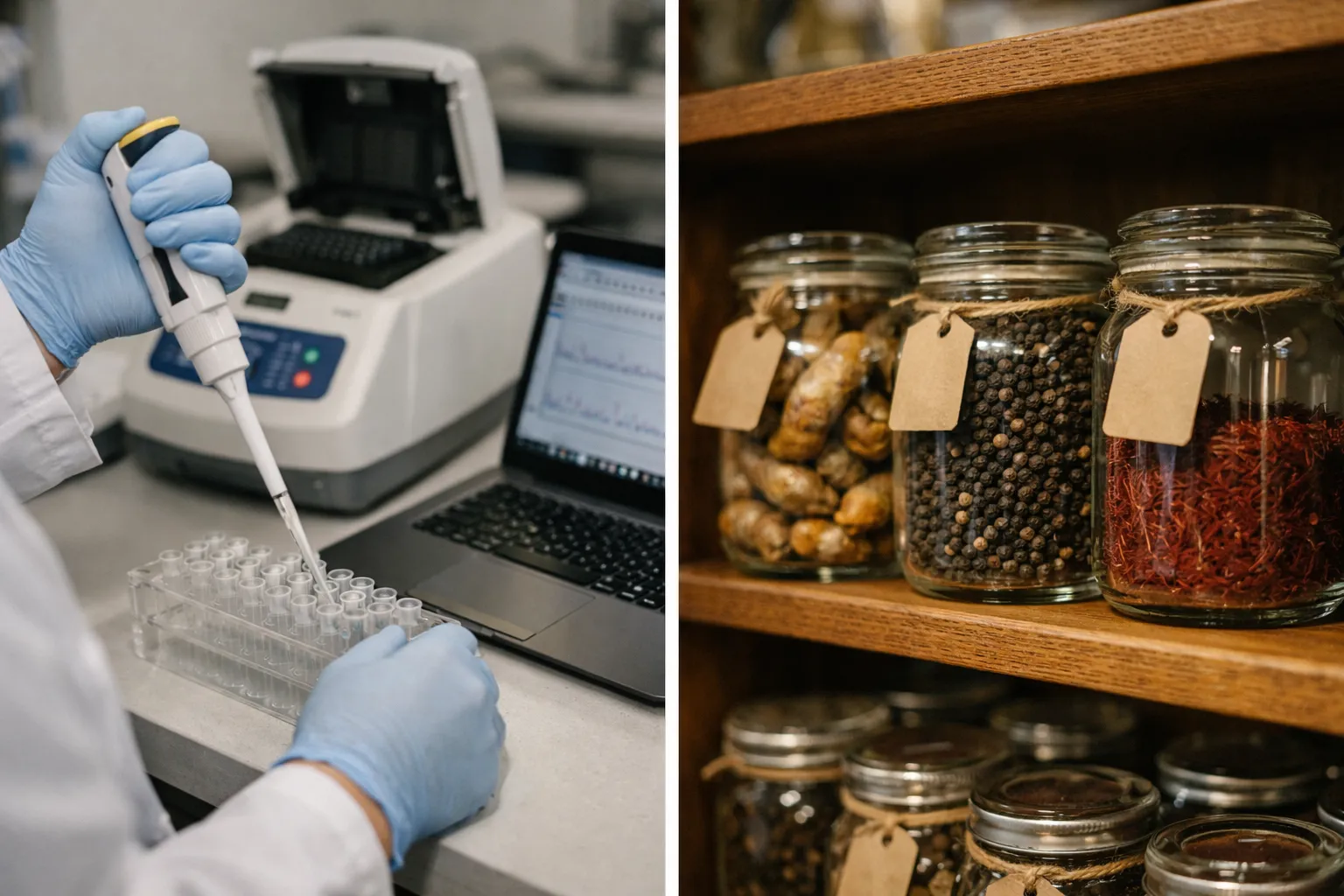
Who, what, when, where, why: As of August 2026, a growing group of U.S. and international supermarket chains, online specialty grocers and independent spice merchants have expanded DNA‑based and hybrid verification for selected high‑risk ground spices. The push — accelerated after multi‑sample laboratory reports published in February 2026 flagged frequent species substitutions in ground products — now includes more routine use of DNA metabarcoding, targeted chemical assays (LC‑MS), and isotope ratio checks in supply chains for turmeric, ground black pepper, vanilla and saffron.
Why this matters now
Ground spices continue to be an attractive target for economically motivated adulteration because visual and texture cues are masked. The February 2026 laboratory work drew broader attention to species substitution and undeclared plant fillers that traditional moisture or ash tests can miss. Between June and August 2026 the industry has moved from experimental pilots to hybrid, risk‑based verification for more SKUs — a shift that affects shelf labels, supplier onboarding and, ultimately, retail prices.
What’s changed since May 2026
- From pilots to routine checks: Where several retailers planned 6–18 month rollouts in spring, many shortened timelines for the riskiest SKUs to 3–6 months and began integrating verification into regular lot acceptance procedures as of July–August 2026.
- Hybrid testing is standard: Laboratories now commonly pair DNA metabarcoding (to detect multiple plant species in a sample) with targeted chemical methods — LC‑MS for alkaloids and curcuminoids, starch assays and isotope ratio mass spectrometry (IRMS) for provenance and adulterant detection.
- Traceability goes consumer facing: More brands are publishing lot numbers and test certificates online and adding QR codes on packs that link to supplier traceability pages or lab certificates. These QR‑linked disclosures are appearing most often on premium and single‑origin SKUs.
- Lab accreditation and method harmonization: Retail buyers increasingly require testing by ISO/IEC 17025‑accredited labs and are asking suppliers to use standardized panels so certificates are portable between buyers.
New evidence and industry signals
Independent labs and trade newsletters report higher detection rates of undeclared plant material when DNA metabarcoding is added to chemical screening, especially in minimally processed powders. That said, DNA success falls when spices are heavily heat‑treated or ultra‑micronized; here, chemical fingerprints and IRMS provide complementary evidence. Industry counsel and legal departments favor a multimodal certificate — DNA plus chemical — because it is more defensible in supplier disputes and regulatory sampling.
Cost, retail impact and who pays (updated)
Testing and traceability still add cost, but scale is driving modest declines in per‑lot fees. Industry cost estimates collected in August 2026 place incremental verification costs at roughly $40–$200 per lot for common spice batches, depending on batch size and test panel complexity. Adding origin audits, traceability platform fees and certification administration raises compliance costs for small exporters and cooperatives.
Retail price effects are trending smaller than early 2026 estimates. Where spring estimates projected a 5–20% premium for verified high‑risk spices, by August many retailers report verified premiums settling closer to 3–12% as testing becomes routine and supply chains adjust. Expect the higher end of that range for Grade A saffron, single‑origin vanilla beans and branded small‑batch turmeric; commodity, non‑verified ground spices may see downward pressure.
Impact on small suppliers and specialty brands
Smaller processors remain the most exposed. Mandatory testing, representative sampling and origin audits add up-front costs and administrative work. In response, suppliers are forming formal cooperatives and pooled‑testing arrangements, sharing accredited lab access and traceability platforms to spread per‑lot costs. Some artisanal importers are pivoting toward whole spices and clearly documented small‑batch runs sold through specialist retailers willing to absorb higher margins.
Practical advice for home cooks — ROI‑focused
Consider your usage, budget and taste priorities before paying a premium. Here are ROI‑oriented actions that matter now (August 2026):
- Buy whole and grind when practical: Whole peppercorns, turmeric knobs and vanilla pods preserve volatile oils and are less likely to be cut with fillers. A quality burr spice grinder costs $25–$70 and pays back in flavor and reduced fraud risk for frequent cooks.
- Use batch‑level info and QR codes: Scan QR codes on premium jars. Look for lot numbers, ISO/IEC 17025 lab names, or PDFs of test certificates. If a product’s provenance page shows a lab certificate listing both DNA and chemical assays, that’s stronger assurance than a single claim of “tested.”
- Favor transparent sellers: Prefer merchants that list origin (country, cooperative or estate), publish testing methods, and provide a clear return or refund policy tied to batch complaints.
- Buy smaller quantities of high‑risk items: For saffron and vanilla, buying by the gram from specialists with visible batch documentation reduces your exposure if a lot proves suspect.
- Don’t rely solely on aroma and color: Sensory checks still catch low‑quality or stale products but won’t detect species substitution. Use sensory checks in combination with provenance verification.
Reactions and what stakeholders are saying
Trade communications to suppliers over June–August 2026 emphasize phased enforcement and supplier support: several retailers told suppliers they will offer testing credits or longer onboarding windows for established partners. At the same time, buyers are tightening acceptance criteria for private‑label ground spice suppliers. Small exporters report increased demand for consolidated testing services and assistance in meeting documentation standards.
What to watch next
- Regulatory sampling: Expect targeted import sampling programs to expand where traceability remains weak; officials are watching hybrid methods closely for evidentiary value.
- Standardization: Look for broader adoption of harmonized test panels and accredited lab lists; that will reduce disputes and make certificates more transferable.
- Consumer transparency tools: More brands will add QR‑linked certificates and origin pages. If provenance matters to you, prioritize products that already publish batch‑level testing.
Bottom line
Between February and August 2026 the market shifted from experimental DNA checks to operational hybrid verification for higher‑risk spices. That improves the odds that premium or single‑origin claims are real, while raising short‑term costs for some suppliers. For home cooks, the best ROI remains simple: buy whole where you can, favor transparent sellers that disclose batch testing (DNA + chemical), and weigh a modest premium on verified ground spices against how often you use them.
Will DNA and hybrid testing stop spice fraud completely?
No. DNA metabarcoding and chemical assays significantly reduce many common frauds, but heavily processed powders, synthetic fillers (pure starches or dyes) and deliberate mixing strategies can still evade some tests. The strongest assurance combines DNA, chemical profiling and audited traceability.
How much more will I pay for verified spices right now?
As of August 2026, expect modest premiums: in practice many verified high‑risk spices are carrying a 3–12% price premium compared with unverified equivalents, with the higher end for rare items like top‑grade saffron and single‑origin vanilla.
Can small suppliers comply without going bankrupt?
Yes, if they pool resources. Look for testing cooperatives, pooled sampling programs, and third‑party platforms that accept consolidated certificates. Prioritizing whole‑spice sales and transparent recordkeeping can also reduce audit costs.
Should I stop buying ground spices entirely?
Not necessarily. Ground spices are convenient. If you use a spice often, buy the whole form for everyday cooking and reserve verified ground versions for recipes where provenance and consistent flavor matter most.