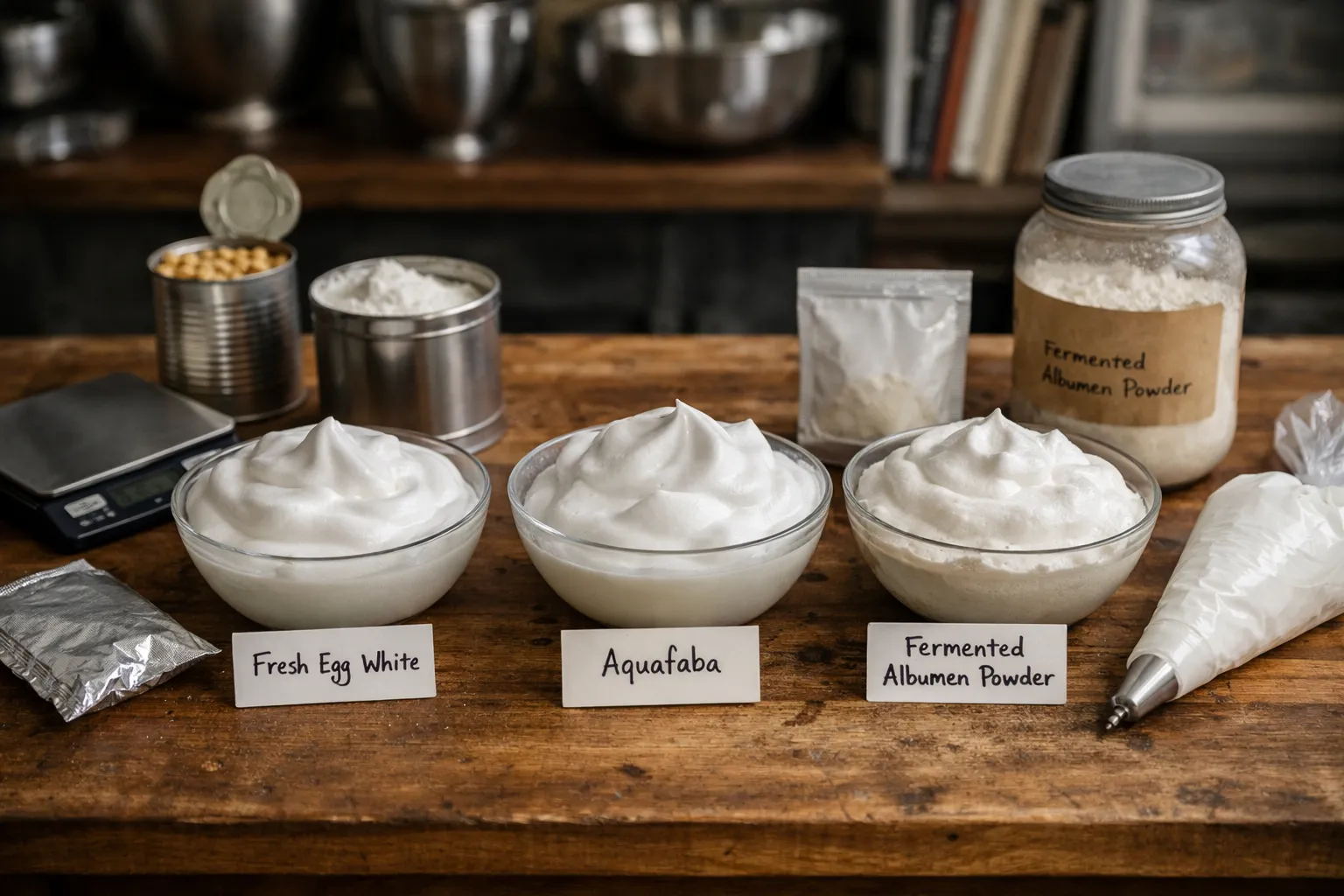
Overview: Precision‑fermented egg white powders—marketed variously as fermented albumen, bio‑albumin or precision‑fermented albumin—moved further into retail channels through 2026. For home bakers weighing them against fresh whites, powdered egg white and aquafaba, the central question remains practical: do these powders deliver the lift, gloss and stability bakers need, and at what cost and risk? This November 2026 update summarizes what has changed since mid‑2026, reports recent market and laboratory observations, and gives concrete guidance for testing and using these ingredients in the home kitchen.
Background: why this category still matters
Precision fermentation uses engineered microbes to produce single proteins that are then isolated and dried. The intended benefit for bakers is predictable protein functionality (foaming, gelation, gloss) without using poultry. Since 2024–25 the technology moved from pilot production to larger commercial plants; in 2026 that scale‑up began to show in consumer packaging, price movements and more focused formulations aimed at bakeries and home cooks.
Data and evidence: what's new through November 2026
- Retail availability: What was sporadic in early 2026 is now clearly more visible. Specialty grocers, online ingredient platforms and several direct‑to‑consumer sites regularly list fermented‑albumen powders. Many brands offer single‑egg equivalent sachets and small tubs calibrated to common recipes.
- Product differentiation: Ingredient makers introduced purpose‑tuned SKUs in 2026 — powders optimized for rapid whipping, for heat stability in baked meringues, and blends formulated to reduce syneresis in macarons. Several consumer formulations include modest amounts of hydrocolloids or starches to recreate the mouthfeel of whole egg‑white foams.
- Price trends: Manufacturers and distributors we reviewed reported mid‑single‑digit to low‑double‑digit percentage declines in per‑unit ingredient cost through 2026 as fermentation yields improved and packaging shifted from lab‑scale sachets to retail volumes. Prices remain higher than commodity eggs and standard powdered egg white; expect continued downward pressure but not immediate parity.
- Allergen and labeling developments: Pressure from allergy advocates continued through 2026. A growing number of brands now include explicit allergen statements such as “contains egg albumen protein” or “may cause reactions in individuals with egg allergy,” even when the protein is produced without hens. This framing has become more common in retail product pages and front‑of‑package copy.
- Sustainability context: Lifecycle assessments published and circulated through 2025–26 reiterate a key point: the climate and land‑use advantages of precision fermentation depend largely on electricity source and feedstock efficiency. Where plants operate on renewable energy, greenhouse‑gas impacts can be substantially smaller than poultry; where operations rely on fossil‑heavy grids, the advantage diminishes.
How they compare now: performance, flavor and practicality
Fresh egg whites
- Performance: Fresh whites remain the benchmark for tensile strength, elasticity and the classic mouthfeel in traditional meringues and macarons.
- Practical notes: Fresh eggs require refrigeration and careful separation; freshness and yolk traces still cause batch variability.
Dried powdered egg white
- Performance: Reconstituted powdered whites continue to be the most familiar non‑fresh substitute and perform predictably in most home recipes.
- Use case: Economical, long shelf life and widely available—good for bakers who prioritize price and straightforward substitution.
Aquafaba (chickpea brine)
- Performance: Aquafaba remains a strong, low‑cost vegan option. It reliably produces voluminous foams but tends to make slightly different textures—often softer, drier crumb in baked goods—and shows batch variability tied to bean source and concentration.
- Flavor and technique: Legume notes are typically managed with sugar and acid; many bakers standardize by weight and reduce concentration to get consistent results.
Precision‑fermented egg white powders (Nov 2026 view)
- Performance: By autumn 2026, extensive home and professional trials show many fermented powders can produce glossy, elastic foams that closely mimic fresh or powdered whites in meringues, mousses and soufflés. Performance tends to be more consistent from batch to batch than aquafaba.
- Flavor: Because the ingredient is a concentrated albumen protein, most formulations present a neutral flavor without legume notes—an advantage when a clean base is essential.
- Practical notes: Single‑egg sachets and recipe‑targeted tubs are now common, which simplifies dosing. Hydration and whipping behavior still vary by brand; manufacturers’ reconstitution instructions are generally reliable. Labels increasingly include explicit allergen guidance.
Multiple perspectives
Pastry chefs and R&D bakers who tested 2026 retail launches highlight consistency and reduced dependency on egg supply volatility. Vegan bakers welcome an animal‑free avenue to egg‑white‑style foams where aquafaba’s flavor or variability is limiting. Allergists and consumer groups continue to urge clear labeling: because precision‑fermented albumen is molecularly equivalent to hen‑derived albumen in many cases, it may trigger the same allergic responses. Several brands and retailers have moved to explicit “contains egg protein” statements in response.
Implications for home bakers — updated recommendations
What should you do today if you’re curious or ready to adopt?
- Buy a small, labeled sachet first: Look for single‑egg equivalent sachets or sample packs that note reconstitution weight; these let you test with minimal cost and waste.
- Measure by weight and follow reconstitution instructions: Unlike older powdered whites, many fermented products are formulated to rehydrate to a specific concentration—weight matters. Use a kitchen scale and the manufacturer’s grams‑to‑water guidance.
- Use standard meringue‑building techniques: Acid (cream of tartar, lemon) and gradual sugar incorporation still stabilize foams. For Italian or Swiss meringue, maintain the same syrup‑temperature targets and watch visual cues rather than assuming different behavior.
- Test bake before scaling recipes: Fermented powders may set or dry at slightly different rates. When substituting in macarons, pavlovas or large meringue shells, run a small pilot to adjust oven time or humidity if necessary.
- Treat allergen risk conservatively: If anyone in your household has an egg allergy, assume cross‑reactivity is possible until a product provides independent clinical data. Look for products that state allergen status explicitly.
Practical tips: quick substitutions and troubleshooting
- For recipes where exact texture matters (macarons, French meringues), start with a single sachet and compare side‑by‑side with fresh whites to check foot, gloss and bake time.
- When replacing aquafaba for flavor reasons, expect cleaner taste but also less residual savory note; you may need to slightly reduce added salt or savory inclusions.
- If foam seems over‑stable (stiff, less spread), whisk a touch more water into the reconstituted mix and re‑whip to soften the network.
Outlook: what to watch into 2027
- Labeling and regulatory clarity: Expect more explicit allergen statements across brands and clearer guidance from consumer groups. Watch for any formal regulatory notices that standardize allergen language.
- Further cost improvement: Continued scale‑up and formulation engineering should keep putting downward pressure on prices; bulk foodservice ingredients are likely to reach lower per‑unit costs before retail single‑use sachets follow.
- Clinical allergen studies: Independent clinical research into cross‑reactivity and sensitization will be an important area to monitor; early manufacturer‑sponsored reports prompted calls for third‑party studies in 2026.
- Application‑specific blends: Expect more targeted powders aimed at macarons, high‑heat bakes or frozen desserts—each tuned to the mechanical and thermal stresses of those applications.
Bottom line
As of November 2026, precision‑fermented egg white powders are a practical new tool for home bakers who want predictable, neutral‑flavored foams. They are not a universal replacement for fresh eggs or a guaranteed cost saver, but they narrow the functional gap between powdered egg whites and plant alternatives like aquafaba—especially where flavor neutrality and batch consistency matter. Approach them as you would any new ingredient: test small, follow the brand’s reconstitution and dosing guidance, and treat allergen claims conservatively.
Is precision‑fermented albumen safe for people with egg allergies?
Manufacturers typically advise caution. Because many fermented albumen products are molecularly similar or identical to hen‑derived albumen, they may provoke allergic responses in people with egg allergy. Look for explicit “contains egg protein” labeling and consult an allergist before use in households with egg allergy.
Can I substitute fermented powder one‑to‑one for powdered egg white?
Not always. Hydration ratios and functional blends differ by brand—some powders are concentrated and others include stabilizers. Follow the manufacturer’s grams‑to‑water instructions and run a small test bake when switching products.
Will fermented powders replace aquafaba for vegan bakers?
Not wholly. Fermented powders provide a clean‑flavored, consistent foam but many are not eligible for vegan labeling because allergen and origin statements can be restrictive. Aquafaba remains the lowest‑cost, widely available vegan option; each ingredient has distinct trade‑offs in cost, flavor and labeling.
How should I store fermented egg white powders?
Store unopened tubs or sachets in a cool, dry place. Once opened, follow the brand instructions—many recommend resealing and using within a specified period; some refrigerated storage may extend shelf life but is not universally required.
Where should I buy a small sample to test?
Look for specialty ingredient retailers, online marketplaces that carry new food‑tech ingredients, or direct‑to‑consumer brand stores. Single‑use sachets and small tubs aimed at home bakers are now common and convenient for trials.