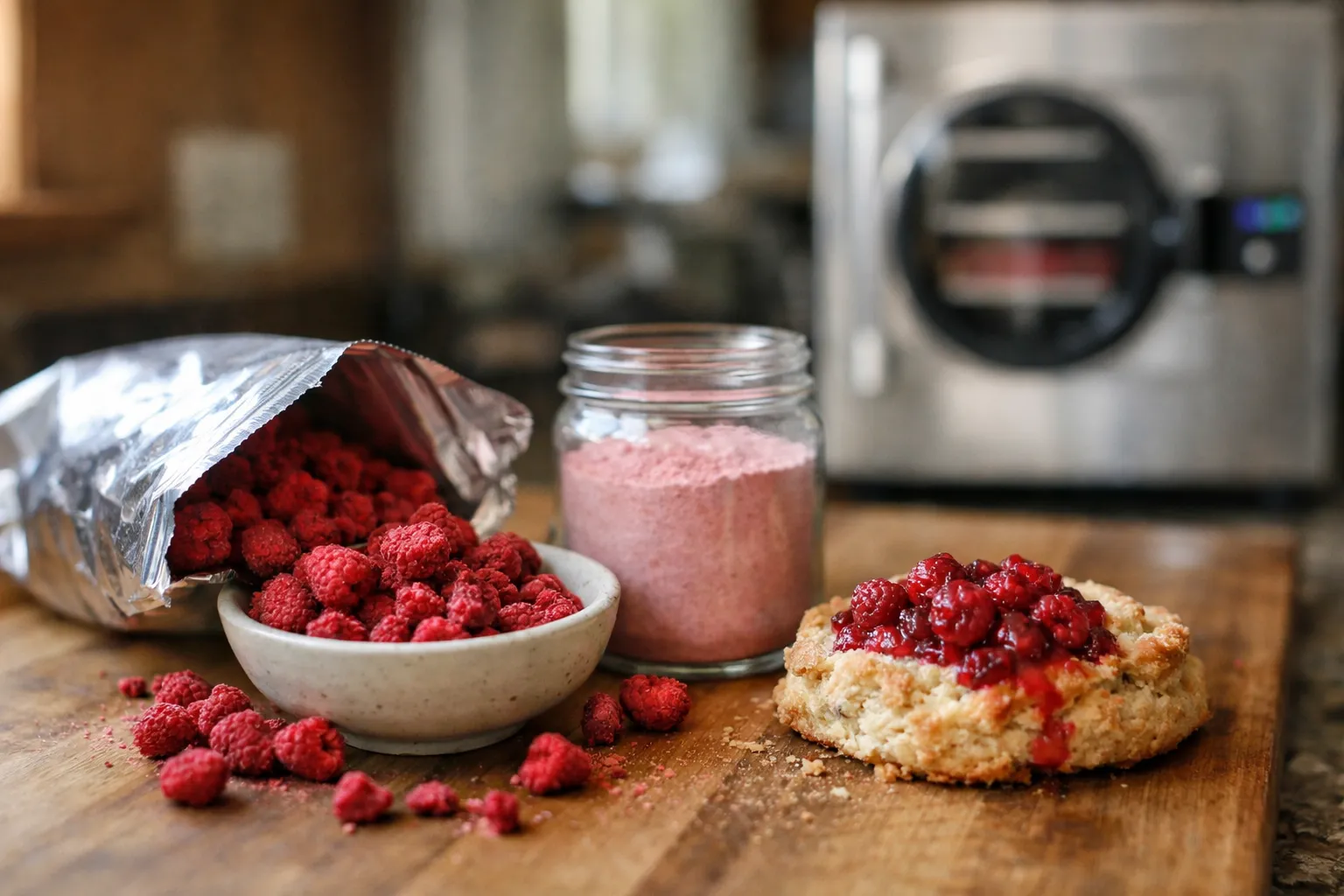
Overview: Freeze-dried ingredients — whole fruits, herb powders, concentrated pastes and delicate garnishes converted into crisp, shelf-stable form — have continued to move from specialty and emergency-prep niches into everyday home kitchens in 2026. Between June and November 2026 the changes have been incremental but meaningful: wider retail assortment, more culinary-grade powders, new service models, and small but practical improvements in consumer hardware. This update synthesizes what has changed in late 2026, what that means for home cooks who actually use these products, and concrete, evidence-based steps for buying, storing and — if you decide to own — operating a consumer freeze-dryer efficiently.
Background: what freeze-drying does and why it still matters
Freeze-drying (lyophilization) removes water by freezing the food and then lowering pressure so ice sublimates directly to vapor. The result is a highly porous, brittle matrix that reconstitutes quickly and retains many volatile aroma compounds better than heat-based drying. For home cooks the practical advantages remain: long shelf stability at ambient temperature, concentrated flavor by weight, and textures (crisps, powders) that change how recipes are composed.
Why the renewed attention in late 2026? Three developments matter most:
- Retail and culinary innovation: More single-origin fruit powders, finely milled herb concentrates, and culinary-grade composite powders designed for pastries and cocktails are appearing in specialty and mainstream channels.
- Service models: A growing number of local kitchens, co‑ops and “freeze‑drying as a service” (FDaaS) providers let home cooks and small producers drop off batches, reducing the ownership barrier.
- Incremental hardware and workflow gains: Consumer units now more commonly include improved vacuum pumps, app-based cycle monitoring, and energy‑use readouts; pre-freezing and cycle-staging workflows have become better documented in maker and culinary communities.
Data and evidence: market signals and product trends (Nov 2026)
- SKU growth: Specialty aisles and online marketplaces show noticeably broader SKUs compared with early 2026: fine powders for pastry use, cocktail-ready citrus blends, and savory umami concentrates in single-serve sachets.
- New product forms: Expect to see hybrid formats — powder-plus-crisp packets intended for layered textures, and pre-measured sachets for bartenders and bakers that prioritize weight-based dosing.
- Retail packaging experiments: Brands are piloting recyclable barrier pouches, reusable glass refill jars sold at local grocers, and bulk dispensers at a small number of zero‑waste stores.
- FDaaS and local production: Community kitchens and a handful of specialty food co‑ops now offer small-batch freeze‑drying services, making premium preservation available without buying a machine.
Note: these are market observations rather than precise market-share statistics. For category-level numbers and growth rates consult retail analytics firms (NielsenIQ, IRI, Euromonitor) or industry trade reports when making business decisions.
How freeze-dried compares now: frozen and dehydrated revisited
Freeze-drying still sits between frozen and conventionally dehydrated options. It provides room-temperature shelf stability without freezer space and preserves volatile aromatics more consistently than hot-air drying. Compared with frozen produce, freeze-dried goods avoid freezer burn and shipping/space constraints. The trade-offs remain: higher per-unit energy use than passive air-drying, higher retail price than dehydrated alternatives, and a texture that approximates but does not perfectly replicate fresh on reconstitution.
Where freeze-dried shines in the home kitchen — practical 2026 examples
- Baking and patisserie: Refined fruit and flower powders are now standard in many home bakeries for vivid color and concentrated flavor without extra water. Home pastry cooks use them to color macarons, stabilize buttercream, and add intense fruit notes to glazes.
- Cocktails and mixology: Pre-measured citrus powders and flavor concentrates make consistent, shelf-stable flavored syrups and rim salts. Bartenders at home value predictable, weight-based dosing for repeatable cocktails.
- Umami and convenience cooking: Tomato paste powders, mushroom concentrates and powdered reductions help home cooks add depth to sauces without opening cans or simmering reductions.
- Finishing and plating: Fruit crisps and edible flower chips give immediate color and texture for plating desserts and cheeses without additional fat or frying.
- Small-producer value-add: Backyard growers and market vendors increasingly sell lightweight freeze-dried items (fruit crisps, herb powders) that extend seasonality and lower shipping costs.
Flavor, nutrition and safety—what’s new
Freeze-drying continues to protect many heat-sensitive vitamins and volatile aroma compounds better than thermal drying when the process reaches full dryness and packaging prevents moisture and oxygen ingress. Practically, expect powdered forms to deliver concentrated flavor and color, though some ultra-volatile molecules will be reduced compared with fresh. Nutritionally, macro- and most micronutrients are preserved when products are fully dried and stored correctly; the main post-packaging threats are oxygen and moisture.
From a food-safety perspective follow established low‑moisture food best practices: ensure finished product is fully dry before packaging, use appropriate barrier packaging or oxygen absorbers for long-term storage, and treat reconstituted items the same as any cooked produce (refrigerate promptly; consume within recommended holding times). When in doubt, consult USDA/FDA guidance on low-moisture and ready‑to‑eat food handling.
Energy, economics and environmental tradeoffs—what to consider now
Consumer freeze-dryers in 2026 are more accessible but still require capital, bench space and electricity. Two practical points:
- Batch efficiency: Full loads improve per-kilo energy and time efficiency. Partial runs inflate per-unit electricity costs and wear on the pump.
- Packaging vs. food waste tradeoff: Freeze-drying reduces produce spoilage and can lower food waste. Balance that against retail packaging choices when buying finished goods — prefer brands with refill or recyclable options when possible.
Operational tips to reduce footprint: pre-freeze items uniformly (commercial blast-freezing or a dedicated chest freezer helps), schedule cycles during off-peak electricity hours where rates or renewables availability is better, and use an inline energy meter to calculate kWh per cycle so you can cost and carbon‑account your runs.
Buy vs. own: updated practical considerations
- Try before you invest: The expanded retail assortment and local FDaaS options make it easier to trial forms (powder, chip, whole) before buying equipment.
- Volume threshold: Ownership makes sense if you have steady monthly throughput — garden harvests, regular small-batch production, or repeat culinary experiments. Otherwise FDaaS or buying retail is more economical.
- Operational reality: Cycle times remain multi-day for many products, although workflow improvements (uniform pre-freeze, tray staging) now shave several hours off typical cycles. Expect planning and scheduling to be part of ownership.
- Control and creativity: Owning a machine enables experimentation with multi-stage protocols, custom blends and small-volume product development — valuable for hobbyists and microproducers.
Practical tips for home cooks — what to act on in Nov 2026
- Scale by weight: Freeze-dried powders concentrate flavor — measure by gram rather than cup and adjust surrounding liquids accordingly.
- Rehydrate selectively: Rehydrate only what you need for a fresh texture; for baking fold powders directly into dry mixes when you need flavor without added water.
- Storage upgrades: Move opened retail pouches into airtight jars or resealable barrier bags with oxygen absorbers. Keep desiccants if you live in a humid climate and store in a cool, dark place.
- Time your runs: If you own a unit, pre-freeze thicker items uniformly, run full loads, and start cycles during lower electricity-rate windows. Track kWh per run to budget and assess sustainability.
- Use FDaaS to prototype: Try local drop-off services to test product concepts or learn cycle outcomes before buying equipment.
Multiple perspectives
Pastry chefs and home bakers praise freeze-dried powders for color and intensity; mixologists value pre-measured, shelf-stable citrus and bittering agents for consistency. Small-scale growers and market vendors see freeze-drying as a way to extend seasonality and reach mail-order customers economically. Sustainability advocates welcome reduced food waste but press producers to improve packaging recycling and publish energy data. Equipment makers highlight app controls and energy reporting as their priority for the next product cycles; service providers stress that FDaaS reduces wasteful capital purchases.
Implications for readers
If you’re a curious home cook, the smartest approach remains incremental experimentation: buy a few small retail items (a powdered fruit, a herb powder and a crisp) and test them in one or two favorite recipes. Use local FDaaS if you want to process harvest surpluses without the investment. Only consider owning a machine once you consistently have enough material to run full loads and you’re comfortable with the multi‑day workflow.
Outlook: what to watch for into 2027
- More packaged options that prioritize circular packaging or refill models as retailers pilot sustainable formats.
- Wider availability of FDaaS at community kitchens and food hubs, lowering the ownership threshold for new users.
- Better transparency from manufacturers on per-cycle energy use and throughput so consumers can compare operating costs.
Freeze-dried ingredients are a practical addition to the home cook’s toolkit — not a replacement for fresh, frozen or dehydrated staples. In November 2026 the value is in targeted use: concentrated flavor, stable shelf life and new textures. Experiment, measure by weight, protect finished product from oxygen and moisture, and lean on local services to test the economics before committing to ownership.
FAQ
Do freeze-dried ingredients retain vitamins and nutrients?
Yes — when the product is fully dried and kept dry, freeze-drying protects many heat-sensitive vitamins and aroma compounds better than thermal drying. Post-packaging storage (moisture, oxygen, light) determines long-term retention.
Can I substitute freeze-dried for fresh one-for-one in recipes?
No. Freeze-dried powders and crisps are concentrated and lack free water. Start by measuring by weight, reduce added liquid modestly (and test), and rehydrate when you need fresh-like texture for fillings or fruit components.
Is owning a home freeze-dryer energy-efficient?
Consumer units are more capable than earlier models but still energy- and time-intensive compared with passive drying. Maximize efficiency by running full loads, pre-freezing uniformly, and scheduling cycles during off-peak hours. Use an energy meter to calculate per-cycle kWh for budgeting.
How should I store opened freeze-dried packages?
Transfer to airtight containers or resealable barrier bags with oxygen absorbers or desiccants in humid climates. Store in a cool, dark place and avoid repeated opening when long shelf life is the goal.
Can I test freeze-drying without buying a machine?
Yes. Use local freeze-drying services (FDaaS), community kitchens offering small-batch runs, or buy small retail trial packs to evaluate how you’ll use powders and crisps before investing.