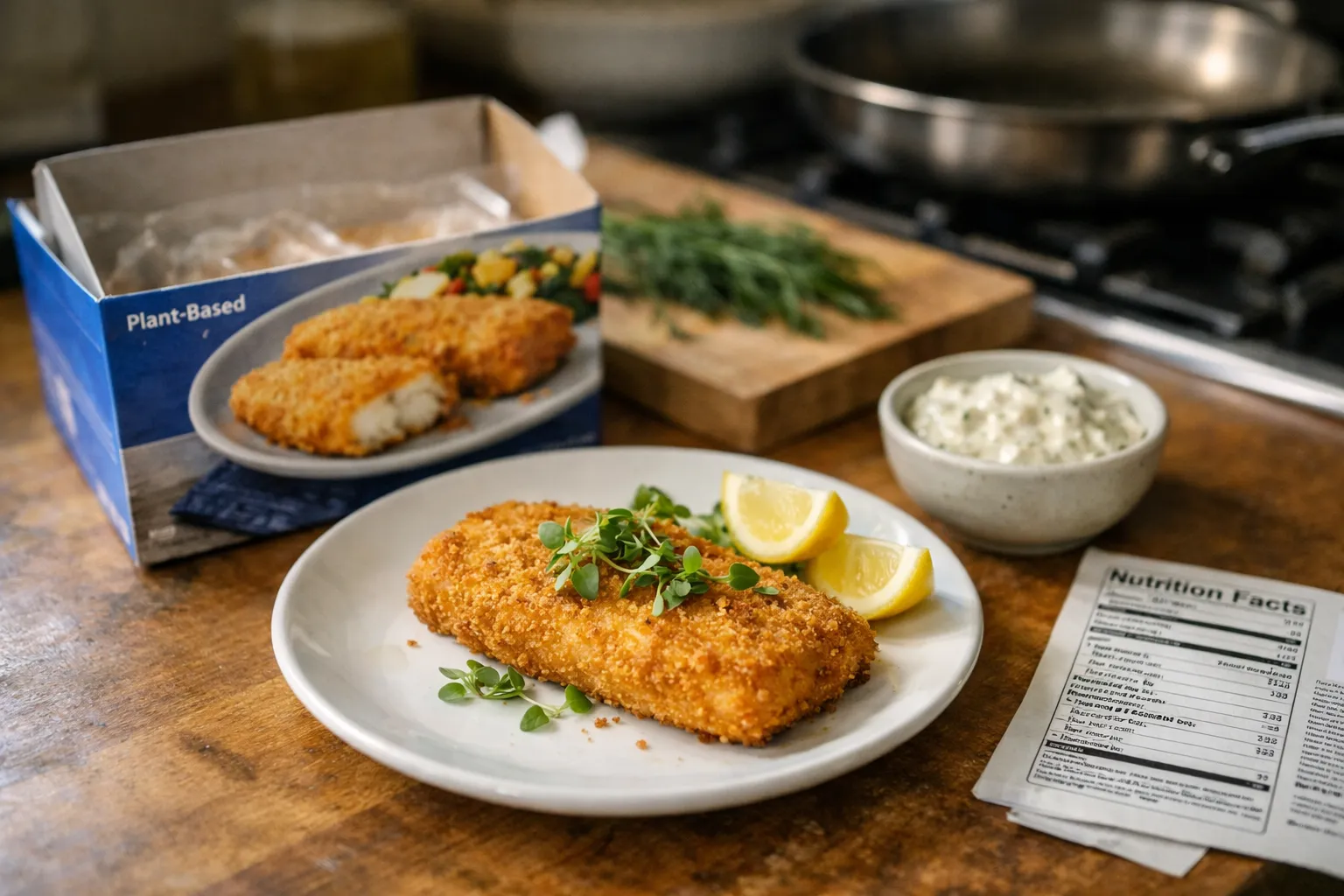
Overview: Plant-based seafood has moved further from novelty toward practical use for home cooks in 2026. Since early formulations reached grocery freezers, incremental improvements in texture, nutrient fortification and supply chains have broadened the category’s usefulness. This updated analysis explains what’s changed since March 2026, summarizes evidence and trade-offs, and gives concrete, timely guidance for shopping, cooking and evaluating claims.
Background: why this matters now
Interest in plant-based seafood continues to be driven by three consumer priorities: flavor and sensory acceptability, nutrition parity with marine proteins (especially EPA/DHA and iodine), and credible sustainability benefits. Over the past three years companies moved from proof-of-concept launches to scaled production in frozen and prepared formats. That matters for home cooks because availability, price and formulation advances determine whether plant-based seafood is a one-off experiment or a repeatable pantry option.
Market dynamics — what’s new as of June 2026
Since early 2026 retailers and foodservice operators have broadened assortments, particularly in frozen battered formats and ready-to-heat entrées. Notable patterns through mid‑2026:
- Retail penetration: National grocery chains now commonly carry at least one plant-based “fish” or “shrimp” SKU in the frozen aisle; regional chains and specialty grocers offer larger ranges including algal-oil–fortified fillets.
- Foodservice traction: Quick-service and casual chains increasingly trial plant-based seafood in limited‑time sandwiches and bowls, where breading, sauces and strong seasonings conceal subtle textural differences.
- Ingredient sourcing: More manufacturers are combining high-moisture extrusion, shearing processes and single-cell proteins (mycoprotein and microalgae) with pea/soy matrices to improve flake and bite. Algal oil capacity—while still concentrated among a few producers—has expanded, lowering formulation costs for some brands.
These shifts have not erased structural limits: many items remain premium-priced relative to commodity frozen fish, and availability varies by region and season. For cost-sensitive shoppers the category is increasingly viable as an occasional swap rather than a full replacement.
Data and evidence: nutrition, labeling and formulation trends
Two evidence-based nutrition themes guide purchasing decisions:
- EPA/DHA fortification is more common—but variable. By mid‑2026 a growing share of plant-based seafood labels list algal oil or “EPA/DHA” amounts. Typical products that claim parity provide meaningful marine omega‑3s per serving (commonly in the low hundreds of milligrams), but amounts vary widely—check the Nutrition Facts and the ingredient list for algal oil or specific EPA/DHA values.
- Iodine remains inconsistent. Some makers fortify with kelp or potassium iodide; many do not. Because iodine is critical for thyroid function, shoppers who rely heavily on non‑marine diets should look for explicit iodine content on labels or keep other iodized foods in the rotation.
On calories, sodium and protein: processed ready-to-eat and breaded formats often contain sodium comparable to or higher than equivalent conventional products. Protein density varies by formulation—some fortified products deliver 10–15 g protein per serving, competitive with processed fish items, while fresh animal fillets typically provide higher complete-animal protein per ounce.
Flavor and texture: where plant-based seafood works now
The sensory strengths and weaknesses remain consistent, but incremental improvements change how you should use these products in the kitchen.
- Best fits — cooked, breaded, sauced: Breaded fillets, popcorn “shrimp,” nuggets and sauced “crab” cakes perform best. Crisp coatings, frying or high-heat roasting and bold sauces conceal minor flavor mismatches and exploit pleasing textural contrast.
- Challenging applications — raw and lightly dressed: Sashimi-style and ceviche preparations are still the hardest tests. A handful of algal- or tomato-based sashimi substitutes approach the clean mouthfeel of raw fish, but most unsupplemented formulations lack the subtle brininess and umami complexity chefs expect in raw preparations.
Ingredient strategies that now produce the strongest results include layered formulations: a protein base (pea, soy, mycoprotein), hydrocolloid structuring (konjac, alginate, methylcellulose), concentrated seaweed or yeast extracts for marine umami, and algal oil for mouths feel and omega‑3 profile. These products tend to be higher-cost, but they also deliver the closest sensory parity.
Multiple perspectives
Manufacturers: Suppliers emphasize improved algal-oil supply chains and process innovations that reduce off-flavors and provide flake-like textures. Many position plant-based seafood as complementary to, not a replacement for, wild-caught and farmed fish.
Chefs: Early-adopter chefs report that plant-based seafood shines in tacos, fried sandwiches and saucy stews, and advise against using most products in raw preparations unless explicitly formulated for that purpose.
Sustainability researchers: Life-cycle assessments continue to show wide variation. Production of algal oil can be low-carbon at scale but energy inputs matter; pea protein has a favorable greenhouse-gas profile but different water and land footprints. The consensus is that packaging, transport and freezing reduce some environmental gains—independent LCA summaries remain the most reliable source for claims.
Implications for home cooks: how to shop and cook in June 2026
Practical, evidence-based guidance for buying and using plant-based seafood:
- Read labels actively: Look for algal oil or explicit EPA/DHA values, and check for iodine sources if that nutrient matters to you. Note sodium and protein per serving and compare to conventional fish options.
- Match format to recipe: Reserve battered, breaded and sauced formats for fried items, sandwiches and spicy bowls. Use unbreaded, fortified fillets in saucy preparations (curry, pasta) rather than raw or acid-cured dishes.
- Adapt cooking technique: Plant-based seafood can become dry if overcooked. Follow package guidance—many products require shorter cook times or moderate oven temperatures—and use finishing fats or sauces to restore mouthfeel.
- Boost marine notes deliberately: Use acid (lime, rice vinegar), umami boosters (fermented soy, kombu broth, miso) and a light brushing of algal or neutral oil to enhance perceived brine and mouthfeel.
- Price strategy: Buy multi-packs, frozen formats and seasonal promotions to reduce per-serving prices. Treat plant-based seafood as a flexible ingredient for dishes that tolerate strong seasoning.
Sustainability and sourcing checklist
- Seek products with independent life-cycle assessments or third-party sustainability claims.
- Compare a product’s full chain—raw ingredient sourcing, processing energy, packaging and transport—against local, seasonal wild‑caught options when sustainability is a priority.
- Favor brands that disclose algal-oil sourcing and processing or that publish ingredient-origin information.
Outlook: what to watch through late 2026
Key developments that could change the category’s appeal in coming months:
- Further scaling of algal-oil and single‑cell protein production that lowers cost and widens fortification across SKUs.
- More explicit, consistent labeling for EPA/DHA and iodine that helps consumers compare nutritional parity.
- Increased presence in value-oriented frozen lines if manufacturers achieve cost reductions—this will be the juncture at which plant-based seafood moves from occasional novelty to routine pantry option for price-sensitive shoppers.
Practical recipes and pairing ideas (quick)
- Tacos: use breaded plant-based “fish” with cabbage slaw, lime crema and hot sauce.
- Seafood pasta: flake unbreaded fortified fillet into a tomato- or cream-based sauce with capers and lemon.
- Stews and curries: add nuggets or “shrimp” to coconut-curry bases where long simmering and spices camouflage texture differences.
Frequently asked questions
Are plant-based seafood products a good source of EPA and DHA?
Some are. Brands that add algal oil can supply EPA and DHA; amounts vary by product. Check the label for milligrams of EPA+DHA per serving—products now commonly list those values. If omega‑3 intake is a priority, compare labels and consider algal-oil supplements if product amounts are low.
Can I use plant-based “fish” in sushi or ceviche?
Most plant-based seafood is not formulated for raw applications. A few tomato- or algal-based sashimi substitutes are designed for raw-style service, but unless the package explicitly states safe raw use, stick to cooked, sauced or breaded applications.
Is plant-based seafood always more sustainable than conventional fish?
Not necessarily. Environmental impact depends on ingredient choices, processing energy, packaging and transport. Look for independent LCAs or clear manufacturer disclosures rather than trusting packaging buzzwords alone. In some cases a locally caught, sustainably managed fish can have a lower footprint than a heavily processed imported alternative.
How should I store and reheat frozen plant-based seafood for best texture?
Store frozen until use. Many products reheat best from frozen in a hot oven or air fryer to restore crispness; avoid prolonged microwave heating which can dry or make textures rubbery. Use a light finishing oil or sauce if the product feels dry after reheating.
Plant-based seafood in June 2026 is not a single thing—it's a cluster of products with different strengths. For home cooks, the key is informed selection: match format to recipe, read labels for nutrients you care about, and use acid and umami to bridge flavor gaps. With those practices, plant-based seafood can be a useful, flavorful tool in the modern kitchen.