
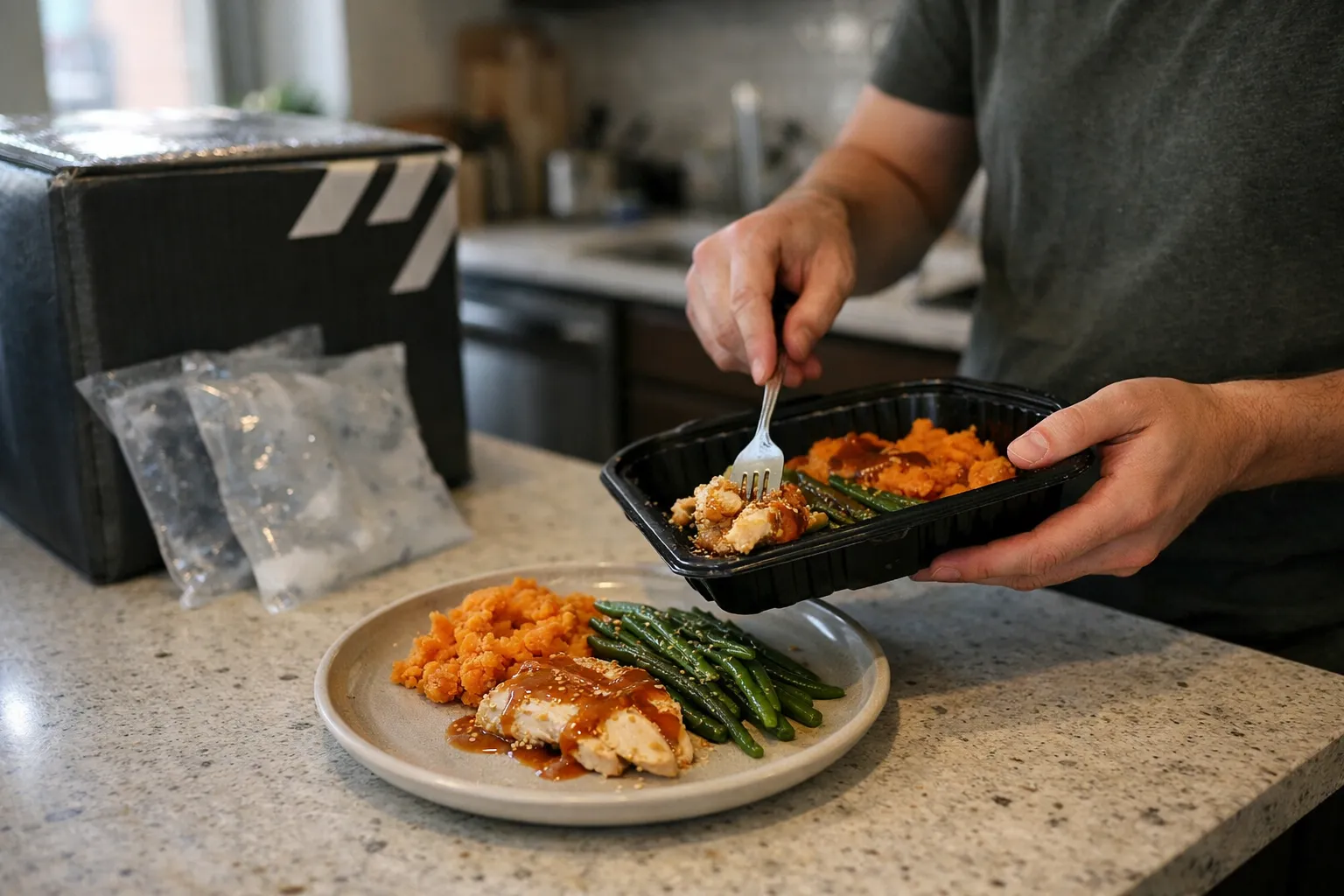
Overview
What we’re reviewing: Factor (stylized Factor_), the HelloFresh‑owned U.S. subscription service delivering refrigerated, fully prepared single‑serve meals designed to be heated and eaten.
- Meal type: Fresh (refrigerated), fully cooked, reheatable by microwave, oven, toaster oven or air fryer
- Typical menu: Protein-forward entrées with rotating categories: Chef’s Choice, Keto, Calorie Smart, Plant‑Forward and Protein Plus (selection rotates weekly)
- Ordering format: Weekly subscription with flexible edit/skip windows in the app
- Time to eat: 2–4 minutes in the microwave (plus resting); 6–12 minutes with an oven, toaster oven or air‑fryer finish for improved texture
- Core question: Has Factor kept pace through 2026—does it deliver consistent flavor, transparent nutrition and packaging improvements that justify the premium over takeout?
Background
Factor began as Factor75 and was acquired by HelloFresh in 2020, which gave the brand national distribution and a larger promotional engine. By mid‑2026 the direct‑to‑consumer prepared‑meal category has matured: consumers demand clearer nutrition data, more plant‑forward and functional options (gut health, collagen, adaptogens), and packaging that is meaningfully easier to recycle. Factor’s scale continues to allow a steady rotation of menu items and seasonal limited runs; its core proposition—no prep, predictable portions, ready‑to‑heat meals—remains intact.
Features Analysis
Menu design and culinary execution
Between May and August 2026 the clearest menu evolution is depth rather than direction. Factor has deepened its plant‑forward and functional offerings—think higher‑protein vegan bowls, tempeh bolognese, and a few chef‑driven items that use concentrated, shelf‑stable sauces to preserve texture and flavor in refrigeration.
- Sauce‑forward strengths: As before, Factor excels when dishes are sauced or braised; those profiles survive refrigeration and reheating far better than delicate, crisp elements.
- Sides and balance: Roasted roots, herb‑buttered grains and creamy purées remain reliable. If you expect a bright, room‑temperature salad or a crispy crust, a kit or fresh cooking will still outperform.
Kitchen reality: Factor is an elevated convenience product. Expect well‑seasoned plates with homestyle textures; don’t expect restaurant plating or freshly grilled char unless you plan an air‑fryer or oven finish.
Nutrition labeling, filters and medical diets
Transparency remains a selling point. Every meal lists a full nutrition panel and ingredient list in the app and online—critical for customers using prepared meals for macro tracking or medical diets. The app’s filters (Protein, Plant‑Based, Low‑Carb) are meaningful but not infallible: "Protein Plus" is a helpful guide, not a substitute for reading the grams and sodium figures for each meal.
Sodium and functional claims: Prepared meals still trend higher in sodium than scratch cooking. If sodium is a medical concern, favor simpler roasted proteins and steamed vegetables and compare labels. The brand has added a handful of explicitly lower‑sodium plates and a few "functional" entrées (collagen, gut‑health ingredients); treat functional claims as a complement to—rather than a replacement for—nutrition numbers.
Packaging, sustainability and waste
Packaging remains an industry pressure point. In 2026 Factor has introduced incremental improvements—thinner insulation liners, clearer recycling labels and more recyclable film in some markets—but the reality of refrigerated delivery still involves gel packs and insulating materials. Local recycling rules remain the limiting factor for diversion.
Practical steps that cut waste and cost:
- Consolidate deliveries: ordering more meals per shipment reduces insulating material per meal.
- Reuse gel packs for travel or donate where community fridges accept them.
- Check municipal film‑drop programs; many expanded collection points between 2024–2026.
Reheating performance: modern best practices
Reheating technique materially affects enjoyment. Since 2024 air‑fryers have become common in many kitchens; by 2026 they’re a practical finish for prepared meals that benefit from revived texture.
- Microwave (speed): Pierce film and heat in 60–120 second bursts at 70–80% power, then rest 1–2 minutes. Stir where appropriate to avoid hot spots.
- Air‑fryer finish (texture): After a short microwave burst, remove film and air‑fry at 360–375°F for 3–6 minutes to re‑crisp proteins and roasted veg. This method often yields the most restaurant‑like bite for poultry and gratins.
- Toaster‑oven/oven (evenness): For gravies and casseroles, a 6–10 minute oven finish at 375°F sharpens edges and reduces sogginess.
- Grain rescue: Add 1 tbsp water before reheating and cover loosely to rehydrate rice or quinoa.
Ordering controls and customer experience
Subscription control is still the single biggest driver of perceived value. Before subscribing, confirm three operational details:
- The exact cutoff for edits/skips for your delivery week (some services close edits 3–7 days before shipping).
- The refund/credit policy for late, damaged or missing meals and the process to claim it.
- Whether the service auto‑selects default meals if you forget to choose, and which items those are.
Pros and Cons
Pros
- True weeknight convenience: Heat‑and‑eat meals with minimal cleanup and predictable portions.
- Consistent, sauce‑driven flavor: Many entrées outperform grocery heat‑and‑eat options.
- Nutrition transparency: Full panels and filters make Factor useful for tracked diets.
- Deeper plant‑forward and functional options: Better choices for flexitarians and those seeking targeted nutritional benefits.
Cons
- Texture limitations: Expect softness over crunch unless you finish in an air‑fryer or oven.
- Sodium and additives: Some meals remain higher in sodium—compare labels if this matters.
- Packaging waste: Improvements are incremental and depend on local recycling infrastructure.
- Price sensitivity: The convenience premium remains—compare the true per‑meal cost to local takeout or grocery prepared options.
Pricing / Value
Factor’s prices still fluctuate with promotions and region. The practical way to evaluate value in August 2026 is unchanged: check the all‑in price at checkout. Typical patterns remain:
- Higher‑volume plans lower the per‑meal cost.
- Small plans carry the highest per‑meal charge when shipping is factored in.
Value sweet spot: Factor makes the most financial sense when it replaces multiple takeout meals per week or when your hourly time cost for shopping, prep and cleanup is high. For households where home cooking is frequent, the economics shift quickly.
Who It's For
- Busy professionals: Weeknight diners who value a variety of well‑seasoned meals without cooking.
- Tracked‑diet customers: People who need exact nutrition panels and predictable portions.
- Small households and shift workers: Reliable single‑serve dinners at odd hours.
Who should skip it: If you require crisp restaurant textures, ultra‑low sodium, or the lowest food cost, Factor is not the optimal choice. Large families and avid home cooks will often find better value elsewhere.
Alternatives
- Territory Foods: Prepared meals with chef‑driven plates and an emphasis on whole ingredients in many U.S. markets.
- Trifecta Nutrition: Athlete‑oriented prepared meals with macro focus and organic options.
- Meal kits (HelloFresh, Blue Apron): Better for diners who want fresher texture and the act of cooking; require time and cleanup.
Verdict
Factor remains a compelling choice in August 2026 for readers who value consistent seasoning, transparent nutrition data and true weeknight convenience. The biggest practical upgrades since mid‑2026 are deeper plant‑forward and functional choices and the widespread adoption of air‑fryer finishing as a way to recapture texture. The service is best used as a supplement to home cooking—especially when it replaces multiple takeout nights or saves significant time.
Recommendation: Order a single week sized to the number of meals you will actually eat, check the final checkout total to calculate your true per‑meal cost, and plan an air‑fryer or oven finish for dishes where texture matters. Consolidate deliveries where possible to reduce packaging per meal.
FAQ
Are Factor meals fresh or frozen?
Factor meals are shipped refrigerated (not frozen). They are intended to be eaten within the use‑by date printed on the package—refrigerate promptly on receipt.
Is air‑frying Factor meals safe and worthwhile?
Yes. A short air‑fryer finish after a microwave burst (3–6 minutes at 360–375°F) often produces the best texture revival for proteins and roasted vegetables. Remove the plastic film before using an air fryer.
Can I use Factor for a medical or low‑sodium diet?
Possibly, but you must read the nutrition panels. Factor lists sodium per meal; choose simpler roasted proteins and vegetable‑forward plates if sodium is a priority. Consult a clinician for medically prescribed diets.
How do I calculate the true per‑meal cost?
Divide the total charge on checkout (meals + shipping + taxes + any fees) by the number of meals in the box. That figure is the real per‑meal cost to compare with local takeout or grocery prepared options.
Does Factor offer recyclable packaging?
Factor has introduced more recyclable film and clearer recycling guidance in some markets, but results depend on local recycling programs. Consolidating deliveries reduces per‑meal packaging and is the most reliable way to cut waste.