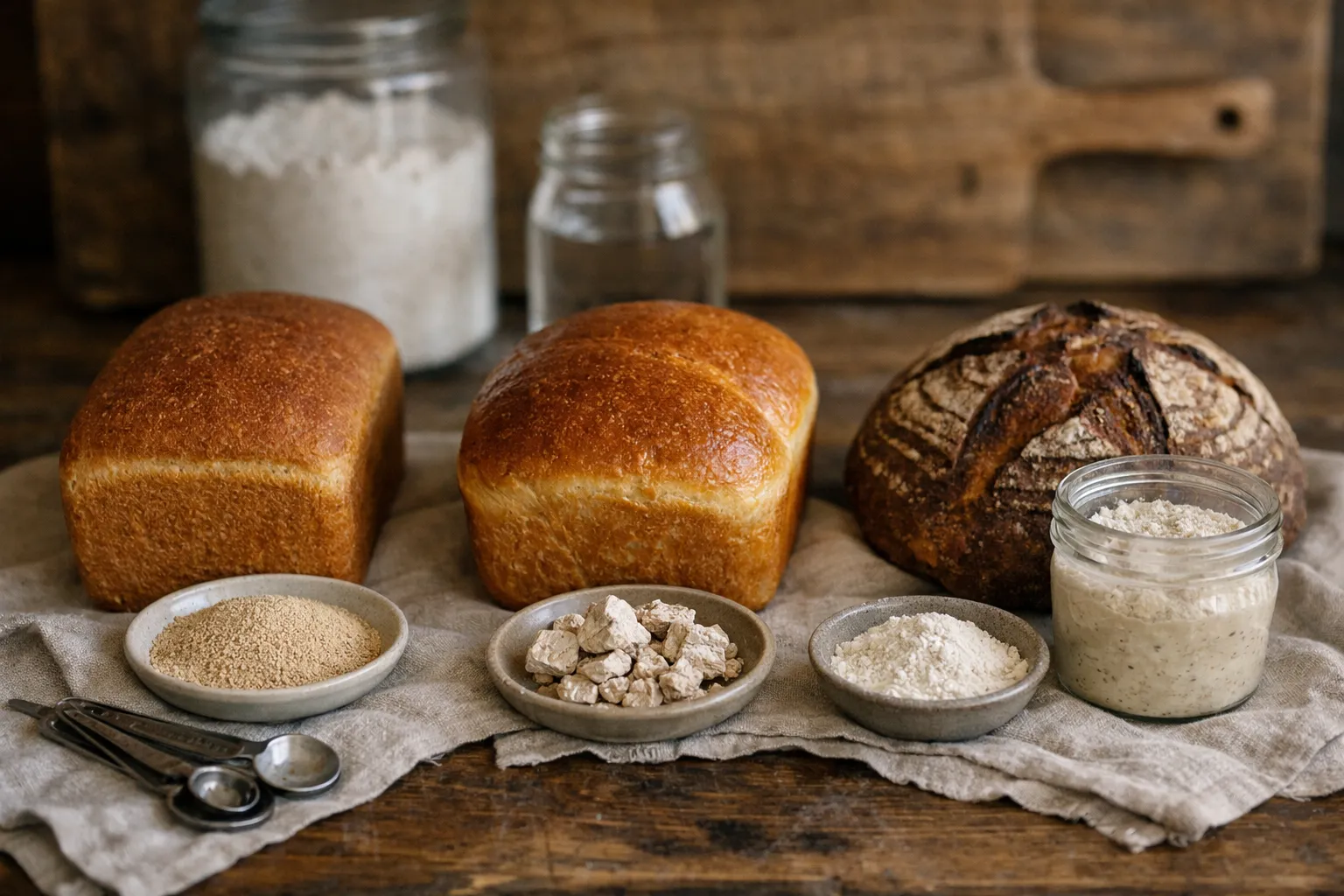
Overview: Home bakers choosing between instant dry yeast, fresh (cake) yeast and sourdough now face a richer set of options than in mid‑2026. This October 2026 update examines what’s changed in costs, availability, flavor and practical workflows—and gives concrete tactics and measurements so you can pick the right method for your schedule, pantry and taste goals.
Background: why this comparison still matters
Home baking remains a widespread hobby and small-business foundation: independent surveys and retail sales data through 2025–26 show stabilized demand for home-baking ingredients and a sustained interest in artisan techniques. The core tradeoffs are unchanged—speed and predictability (instant), traditional handling and enriched-dough performance (fresh cake yeast), or flavor complexity and household resilience (sourdough)—but three developments since early 2026 sharpen how bakers should choose:
- Major manufacturers and specialty brands have expanded product lines (flavor-forward instant blends, labeled strains, and improved freeze‑dried starter kits), making commercial choices more nuanced.
- Retail distribution of fresh cake yeast has modestly improved in some regions thanks to local bakery-supplier networks and refrigerated logistics, but availability is still uneven outside specialty markets.
- Hybrid techniques—using small amounts of commercial yeast with preferments or live starter—have moved from online forums into mainstream recipe books and small bakeries, because they reliably deliver both flavor and schedule control.
Data and evidence: costs, conversions and availability (Oct 2026)
Conversions and baker’s math remain central: always weigh, don’t count packets. Practical conversion rules are unchanged and still the best starting point for swapping leavening agents:
- Fresh (cake) yeast : instant dry yeast ≈ 3 : 1 — e.g., 9 g fresh ≈ 3 g instant for a ~1 kg flour dough.
- Active dry yeast behaves like instant once hydrated; instant yeast can be mixed directly into flour.
Updated retail price context (U.S. consumer perspective, October 2026):
- Instant dry yeast: retail packet (7 g) commonly ranges $0.40–$0.85 depending on brand and retailer; per‑loaf yeast cost using 2–4 g for an 800–1,000 g dough is roughly $0.12–$0.50.
- Fresh cake yeast: where available, per‑loaf cost typically ranges $0.25–$1.00 after accounting for packaging and spoilage risk; small bakers report higher effective cost when a whole block goes unused and spoils.
- Sourdough starter: direct ingredient cost per loaf remains low—often a few cents for flour and water—though amortized maintenance and discard handling put realistic per‑loaf maintenance at $0.03–$0.35 depending on feeding cadence and reuse of discard.
Availability notes:
- Instant dry yeast remains widely available in supermarkets, big-box stores and ecommerce; bulk and subscription channels grew again in 2026, lowering per‑unit cost for frequent bakers.
- Fresh cake yeast has improved distribution in some metropolitan areas as bakery-supply wholesalers expanded consumer-facing direct sales, but many groceries still do not stock it consistently.
- Freeze‑dried and dehydrated “starter” products are now sold by several retail brands and specialty companies. They provide convenience and rapid startup, but microbial diversity varies compared with a long‑maintained household starter.
Flavor, texture and performance—what to expect now
The sensory and structural differences still follow predictable patterns, and new product choices have narrowed some gaps:
- Instant yeast gives clean, neutral crumb and strong oven spring. New “flavor-forward” instant blends and labeled strain packs (targeted at aroma or cold‑tolerance) can add perceptible complexity without time cost; however, the most pronounced flavor gains come from preferments (poolish, biga) or extended cold fermentation.
- Fresh cake yeast remains prized for enriched doughs: its moisture and handling characteristics can make for softer crumb and more forgiving laminations in laminated doughs. Freshness matters—old cake yeast yields weak rises and sulfur notes.
- Sourdough continues to deliver acidity (lactic and acetic), ester-driven aromatics and longer keeping quality. Established starters now show more documented biochemical complexity—partly why small additions of starter to enriched or lean doughs can alter crumb and crust behavior in ways purely commercial yeast cannot fully replicate.
Multiple perspectives: bakers, manufacturers and researchers
Artisan bakers emphasize starter stewardship as a craft: feeding schedules, hydration and ambient temperature are all active levers that shape flavor. R&D teams at major yeast manufacturers (Lesaffre, Lallemand, AB Mauri and others) confirm the market trend toward strain‑specific communication—labels that describe whether a strain is selected for aroma, cold tolerance, or rapid fermentation.
Fermentation scientists and food technologists point out two practical mechanisms for flavor: microbial metabolism (in sourdough) and extended enzymatic activity in preferments or long, cold retards. Peer-reviewed work in recent years has clarified that predictable flavor development can be achieved with controlled long ferments even when using commercial yeasts, though the precise aromatic fingerprint of a long-lived house starter—shaped by local microbes and repeated refreshment—remains unique.
Implications for home bakers: practical choices
Decide by routine, waste tolerance and flavor goals. Updated, actionable guidance:
- Bake frequently and want reliability: use instant yeast. For weekly bakers, buy 250–500 g jars and store them vacuum‑sealed in the freezer; label with first‑opened date. A practical rule: a 1 g dose (0.1% of 1,000 g flour) of instant can be enough for very long, cold ferments when paired with preferments.
- Prefer traditional bakery handling for enriched doughs: if you can source fresh cake yeast and will use it quickly, it’s worth it for brioche and laminated pastries. Otherwise, instant + preferment will get you most of the way with more stable storage.
- Value flavor and resilience: maintain a living starter. New options make backups easier: freeze small discs of starter, dehydrate a portion for storage, and use reputable freeze‑dried kits as emergency restarts.
Updated, practical tactics (October 2026)
- Hybrid dosing for schedule control: use 10–20% starter (baker’s % of flour) + 0.08–0.15% instant yeast to shorten bulk fermentation while keeping starter-derived acidity. For a 1 kg flour batch, that’s 100–200 g starter plus 0.8–1.5 g instant.
- Preferments to boost flavor with instant yeast: an overnight poolish (100% hydration, 5–10% yeast relative to flour weight in the poolish) followed by cold retard builds ester complexity without a live starter.
- Starter backups and logistics: dehydrate a spoonful of starter on parchment and store vacuum‑sealed; or maintain a frozen jar (−18°C) as a quick restart. Many bakers now pair a small live jar with a dried backup kept offsite (friend, co‑op or freezer).
- Storage and testing: unopened instant yeast keeps up to 2 years; once opened, keep airtight and moisture‑free in the fridge or freezer. Test activity by proofing a small sample in warm water with a pinch of sugar (bloom should form in 5–10 minutes if active).
- Tools that changed since mid‑2026: consumer proofing cabinets and app‑controlled fridges are more common and inexpensive; precise temperature control (±1°C) for bulk fermentation or retarding makes predictable flavor development easier regardless of leavening choice.
Outlook: what to watch through late 2026 and 2027
Expect continued refinement and transparency in commercial yeast products: more strain‑level labeling, blends marketed for specific aromatic profiles, and improved freeze‑dried starter kits that better preserve microbial diversity. Retail penetration of dehydrated starter kits should increase, and hybrid workflows—starter plus minimal commercial yeast—will likely continue to define practical home- and micro‑bakery practice.
Regulatory and labeling changes could follow as strain‑level marketing grows, and small‑scale microbiome sequencing services for sourdoughs (used by some artisan bakeries) may become consumer-accessible—helping bakers understand how temperature, flour and feed schedule shape starter ecology.
FAQs
Can I mix instant yeast with my sourdough starter?
Yes. Adding a small amount of instant yeast (commonly 0.08–0.15% of total flour weight) to dough that contains 10–20% starter will shorten bulk fermentation while retaining some starter-derived acidity and flavor. Use this when you need faster turnaround but want sourdough character.
How should I store instant yeast for best longevity?
Unopened instant yeast stores well for up to two years in a cool, dry place. Once opened, transfer to airtight, moisture‑proof packaging and refrigerate or freeze. To confirm activity after storage, proof a small sample in warm water with a pinch of sugar—blooming within 5–10 minutes indicates viability.
Are freeze‑dried starter kits as good as a long‑lived house starter?
Freeze‑dried kits provide a convenient and consistent starting point and are excellent for learning and emergency restarts. However, they usually lack the evolving microbial diversity of a house starter that’s been refreshed daily or weekly for months or years. Expect a difference in subtle aromatic nuance—both can produce excellent bread.
Is fresh cake yeast worth buying in 2026?
Buy fresh cake yeast if you bake enriched doughs often and can use it quickly: its handling and immediate fermentation qualities can give softer crumb and easier laminations. For most home bakers, instant yeast plus preferments will offer similar outcomes with less waste risk.
What single change will give the biggest flavor lift without switching to sourdough?
Adopt controlled long, cold fermentation: retarding bulk or final proof in the refrigerator (8–72 hours depending on recipe) reliably increases enzymatic breakdown and ester development. This approach works with instant, fresh or sourdough leavening and requires no new ingredients—only time and temperature control.