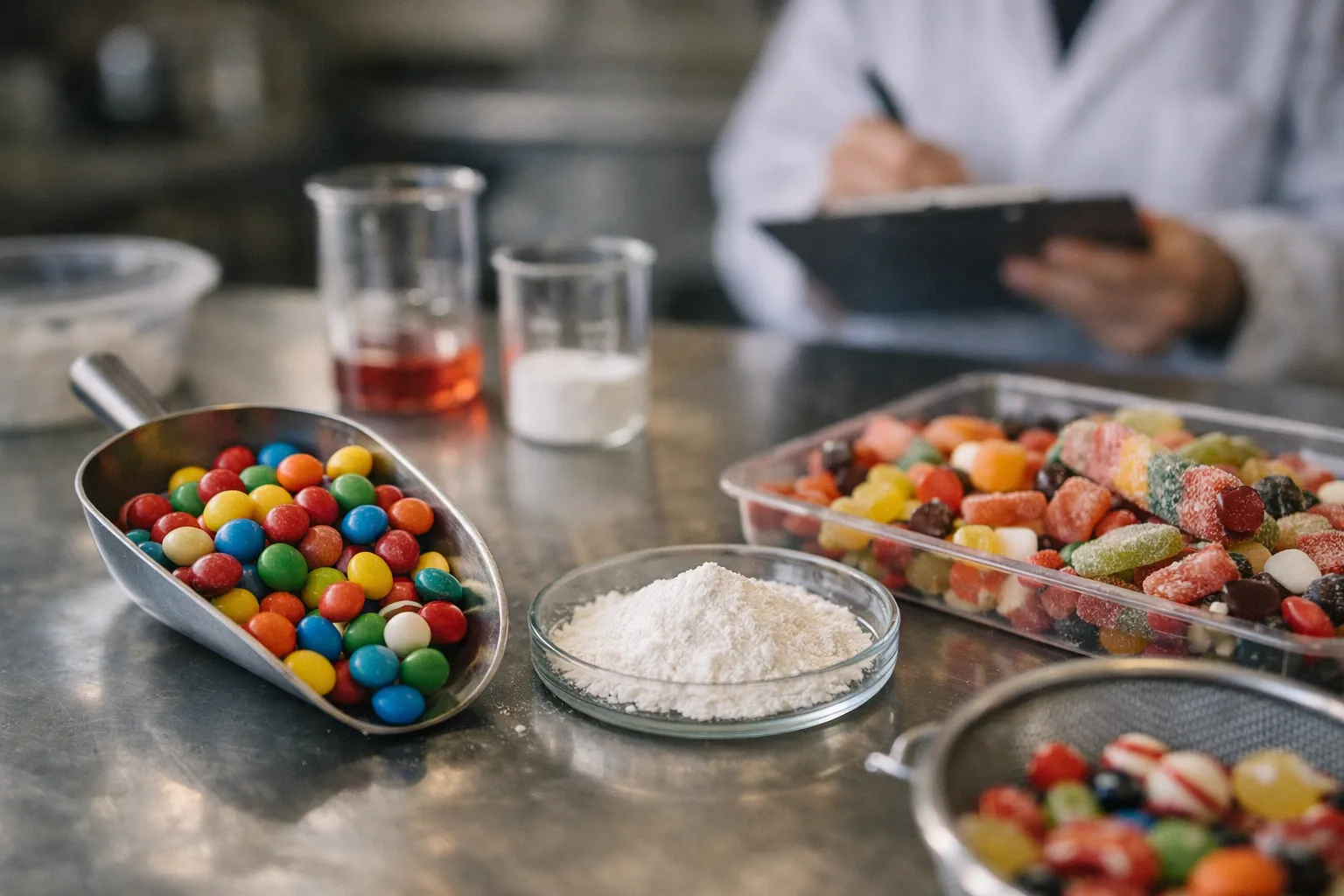
Lead: By September 2026, manufacturers and specialty suppliers across the United States have accelerated the phase-out of titanium dioxide (listed on labels as "titanium dioxide" or "E171") from many frostings, decorative candies and white confections. The change, driven by the European Food Safety Authority’s 2021 safety opinion and the EU’s subsequent restrictions, plus sustained consumer demand and supplier innovation, has moved from niche reformulation projects into mainstream product planning in both artisanal and national channels.
Context: why this still matters
EFSA’s May 2021 opinion concluded that E171 could no longer be considered safe as a food additive because of uncertainties about genotoxicity; that assessment prompted the European Commission to restrict E171 in foods (effective in Europe in 2022). Although the U.S. Food and Drug Administration has not implemented a nationwide ban as of September 2026, the regulatory shift in Europe plus press coverage and consumer concern created an economic incentive for brands to reformulate voluntarily. What began as product-line pilots in 2022–2023 is now a sustained category transition.
Where titanium dioxide still appears — and what to check
Titanium dioxide has traditionally been used as a high-opacity white pigment. Home bakers typically encounter it in:
- Decorative sprinkles, nonpareils and opaque sugar pearls
- Bright-white frostings, fondants and royal icing
- Some sugary glazes and white cake crumbs designed for visual contrast
- Certain powdered mixes and novelty candies marketed for bright-white finishes
On U.S. packaging you will still see it labeled as "titanium dioxide"; imported items may also carry the code "E171." As of September 2026, label-reading remains the clearest way for consumers to avoid E171.
What changed between 2023 and 2026
Reformulation work that used to be confined to artisan confectioners has expanded. In 2024–2026 product launches and ingredient catalogs increasingly emphasized "titanium-dioxide-free" or "E171-free" versions. Two practical outcomes for shoppers:
- More titanium-dioxide-free options are available in mass retail and on specialist baking sites; look for explicit "E171-free" claims on SKU pages.
- Specialty cake-decorating suppliers now list engineered alternatives (micro-encapsulated pigments, rice-starch opacifiers) and recipe guides to help decorators reproduce bright-white effects without E171.
Common replacement strategies — updated for 2026
Manufacturers now rely on a combination of physical, formulation and processing approaches. The three main strategies in wider use:
- Starch- and sugar-based opacity: Ultrafine powdered sugar blends, tapioca and rice starches engineered to specific particle-size distributions are used to scatter light and increase perceived whiteness. These are the least chemically intrusive options but can raise sweetness or change texture.
- Calcium carbonate and mineral blends: Food-grade calcium carbonate, in particle sizes optimized to avoid grittiness, is used in low concentrations to increase opacity in dry mixes and some icings. Manufacturers pair these minerals with emulsifiers and humectants to maintain mouthfeel.
- Advanced coatings and pigments: Pearlized and pearlescent pigments (mica-based cosmetic-grade pigments approved for food use where allowed), multilayer sugar coatings and microencapsulation let manufacturers separate color/shade from bulk opacifiers. These technologies have improved since 2022 and now appear on a wider set of decorative items.
Each option carries trade-offs: sweetness and texture shifts with starch increases, potential mouthfeel issues with mineral loads, and higher cost or regulatory complexity with specialty pigments.
Practical tips for home bakers (Sept 2026)
Here are tested, low-risk techniques to approximate bright-white finishes without titanium dioxide:
- Choose the right fat: Use refined vegetable shortening for icings that need opacity; shortening-based buttercreams will look whiter than butter-based ones.
- Sift and minimize liquid: Sift powdered sugar and keep liquid additions to a minimum when aiming for high reflectance; thinner, wetter icings lose whiteness.
- Use specialty dry blends: Look for "titanium-dioxide-free" powdered sugar blends and fondant bases sold by cake-supply retailers; these are already optimized for whiteness without E171.
- Test decorative products: If you need very white nonpareils or pearls, buy single small packs to test for mouthfeel and appearance before ordering large quantities.
- Layering technique: For visual pop, use a slightly off-white base layer and add high-shine pearlescent dusts or sugar glazes sparingly to create the perception of brightness without stark white pigment.
Supply chain and buying guidance
Reformulation takes time: manufacturers must verify shelf stability, regulatory labeling and sensory performance. As of September 2026 expect a staggered rollout — premium and specialist SKUs generally changed first, followed by broader national-brand conversions after pilot testing. If you rely on specialty items (opaque pearls, edible glitter), check product pages for "E171-free" claims and, when in doubt, contact suppliers directly for technical data sheets that list all ingredients.
Impact — who is affected and how
For home chefs and hobby bakers the impact is mainly aesthetic and procedural: whites may skew creamier, and some formulations will taste or behave slightly differently. Professional decorators who used stark white as a signature look may need to adopt new layering or finishing techniques. For manufacturers, the change has meant increased R&D spending and supplier qualification; for ingredient suppliers, demand has driven investment in microparticle control and encapsulation technology.
Reactions — industry and regulatory posture
Regulatory bodies continue different approaches: Europe maintains restrictions established in 2022; in the U.S., federal regulators have not removed approval but have continued to assess emerging data. Trade groups and many manufacturers frame the move as precautionary — a response to consumer demand and to regulatory divergence between markets. Specialty retailers and small confectioners often promote E171-free items as sales differentiators.
What to watch for next
- FDA communications: Watch for any new FDA guidance or data requests concerning titanium dioxide; federal action would be the clearest trigger for final category change in the U.S.
- Ingredient innovation: Continued improvement in micronizing techniques and encapsulation will narrow quality gaps between formulations.
- Label transparency: Expect more explicit "E171-free" and "titanium-dioxide-free" labeling, plus product pages with technical ingredient breakdowns from 2026 onward.
Frequently asked questions
Is titanium dioxide dangerous to eat?
Regulatory assessments differ. EFSA’s 2021 opinion concluded that E171 could not be considered safe due to genotoxicity uncertainties, which prompted EU restrictions. As of September 2026 the U.S. FDA has not issued a nationwide ban but continues to review available data. Most science to date has prompted precautionary regulatory decisions rather than consensus on specific health outcomes.
How can I tell if a product still contains titanium dioxide?
Read the ingredient list: in the U.S. it is typically spelled out as "titanium dioxide." Imported products may also use the code "E171." For decorative items, check product pages or technical data sheets from suppliers that explicitly state "E171-free" if you wish to avoid it.
What’s the best DIY trick to get a whiter frosting without E171?
Use refined vegetable shortening as the fat base, sifted powdered sugar, and limit added liquid to keep the icing dense and reflective. For added brightness, finish with a thin high-shine sugar glaze or a dusting of pearlescent, titanium-dioxide-free edible dust.
Are the replacement ingredients safe?
Most replacements (starches, calcium carbonate, sugar-based coatings) are widely used food ingredients with established safety profiles. The main considerations are sensory — texture, sweetness and stability. Specialty pigments and coatings should be purchased from reputable food-grade suppliers and used according to manufacturer guidance.
Bottom line: by Sept 2026 the trend away from titanium dioxide has moved well beyond pilot projects. For home bakers, the change is primarily about managing expectations and learning a few new techniques to reproduce bright-white looks with alternative ingredients and finishes. Read labels, test new products in small batches, and lean on specialty suppliers for technical guidance when you need exact visual matches.