Overview: Between 2024 and mid‑2026 the "fresh‑frozen" category — fully cooked, chef‑styled meals cooked under controlled conditions and blast‑frozen for retail — moved from niche novelty into mainstream grocery strategy. This update explains what changed in the last year, why it matters for home cooks, how sustainability and packaging evolved, and the practical steps to get restaurant‑level results from a freezer‑to‑table workflow.
Background: how fresh‑frozen went from trend to category
The core technical story remains the same as in earlier years: industrial sous‑vide and precision cooks create stable internal doneness and infused flavors; IQF and blast freezing limit ice‑crystal damage so texture survives thawing. What shifted in 2025–26 is scale and design: manufacturers are designing meals to be finished at home, retailers are allocating premium freezer shelf space, and more chefs are licensing techniques rather than full recipes. That combination turned a set of artisanal SKUs into a reproducible retail format.
Data and evidence: what the market looks like in 2026
Market trackers and trade groups report that premium frozen entrées now account for a materially larger share of frozen‑meal dollar sales than they did at the start of 2024. Growth has been driven by three measurable forces:
- Retail assortment expansion: National grocers and large regional chains expanded premium frozen lines and private‑label "chef finish" SKUs in 2025–26, increasing aisle facings for products labeled with technique cues (sous‑vide, blast‑frozen, finish in skillet/air fryer).
- Supply‑chain consolidation: Several large co‑packing operations invested in high‑capacity blast freezers and cryogenic tunnels to serve multiple brands centrally; this reduced per‑unit cost and enabled broader distribution beyond coastal urban centers.
- Packaging innovation: After pilot programs in 2024–25, a growing number of brands shifted to recyclable mono‑polymer trays (PP or PET mono-materials) and simplified laminates that are compatible with municipal recycling streams or store drop‑offs.
At the same time, independent life‑cycle assessments (LCAs) released in the past two years present mixed results: frozen meals typically reduce consumer‑level food waste (fewer spoiled fresh items) but can increase upstream energy and transport emissions if the cold chain relies on fossil‑fuel‑powered refrigerated transport. LCAs underline that the net environmental impact depends heavily on logistics design, energy sourcing at production and retail sites, and end‑of‑life packaging choices.
What manufacturers and retailers are doing now
Three practical shifts stand out in 2025–26:
- Finish‑first product design: More SKUs are explicitly engineered to be finished from partially frozen or fully frozen states — instructions for air‑fryer, oven broil or hot‑pan sear are printed large on packs. This shows manufacturers are optimizing texture and surface Maillard reactions for the home step.
- Packaging that balances barrier and recyclability: Mono‑polymer trays, recyclable film films and clear finish‑first windows are becoming common, with several brands publicizing third‑party recyclability certifications and store‑drop programs for flexible films.
- Cold‑chain electrification and energy efficiency: Warehouse operators and co‑packers invested in variable‑speed blast freezers, heat‑recovery systems and grid‑tied battery backup. Some facilities now run partial freeze cycles timed to off‑peak electricity to reduce carbon intensity and operating cost.
Multiple perspectives: industry, sustainability experts and home cooks
Industry: Manufacturers argue fresh‑frozen reduces food waste and expands consumer access to chef‑quality meals without the logistics burden of daily fresh delivery. Retailers cite higher per‑square‑foot revenue from premium frozen SKUs and lower shrink than fresh delis.
Sustainability researchers: Life‑cycle analysts caution that the benefits are conditional: if a frozen meal prevents household food waste and is produced in an energy‑efficient plant powered by low‑carbon electricity, it can be environmentally preferable. If cold‑chain logistics are long and powered by diesel trucks or fossil‑based grid electricity, gains may be offset.
Home cooks and chefs: Enthusiasts appreciate the hybrid model: the technical heavy lifting is centralized; the home cook performs a fast finishing step that restores texture and brightness. Professional chefs see retail fresh‑frozen as an opportunity to scale technique but worry about homogenization of flavor when brands optimize for shelf stability.
Updated culinary guidance (August 2026)
The basic finishing rules haven't changed, but small technique updates reflect device adoption and packaging changes:
- Finish from partially frozen for best crust: For proteins, remove the product from packaging and let it sit in the refrigerator until the center is just pliable — typically 30–90 minutes depending on size — then finish on a blisteringly hot pan or under a broiler. That balance preserves internal moisture while allowing rapid surface Maillard reaction.
- Use the air fryer for crisping vegetables and coatings: Many fresh‑frozen trays and proteins now call out air‑fryer finishing; 375–400°F (190–205°C) for 6–10 minutes will crisp coatings without overcooking interiors. Rotate halfway for even browning.
- Embrace quick fresh accents: Because freezing mutes volatile aromatics, add micro‑finishes at the end: torn herbs, citrus zest, a drizzle of high‑acid vinaigrette, or a finishing oil. These lift perceived freshness dramatically.
- Follow on‑pack finishing guidance — but adjust for equipment: Many packs now give separate oven, skillet and air‑fryer instructions; use whichever yields the hottest dry surface. If you have a cast‑iron pan, preheat longer for a superior crust.
Practical buying and recycling tips
- Look for technique cues on pack: "blast‑frozen," "IQF," "sous‑vide" and explicit finish steps are positive signals.
- Check packaging recyclability claims: mono‑polymer trays (labelled PP or PET mono‑material) are easier to recycle than mixed laminates. If flexible film is used, see whether the brand participates in store drop‑off programs.
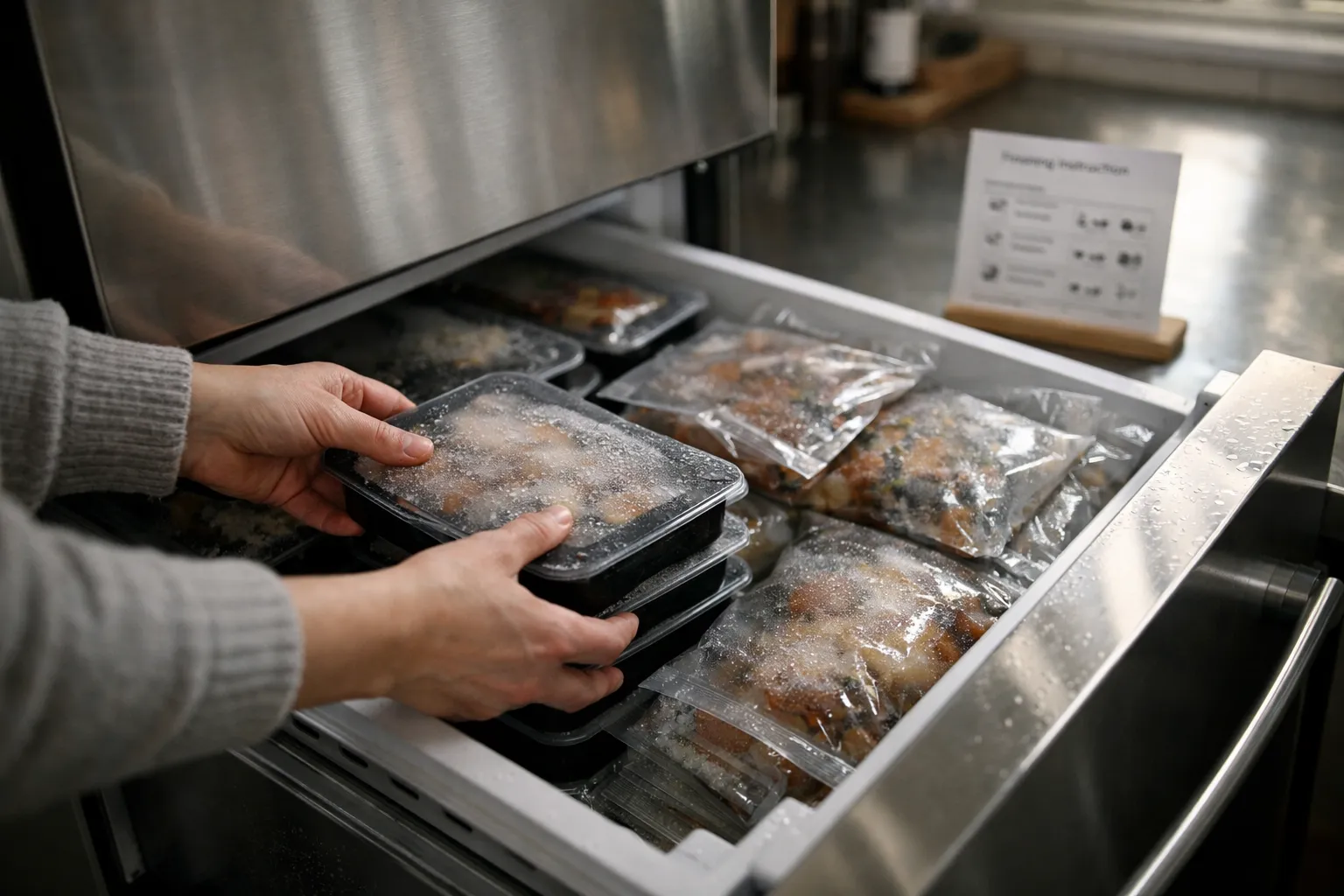
- Plan your freezer organization: keep a ready‑to‑finish section at eye level to avoid overbuying; rotate by use‑by dates to minimize household waste — the frozen aisle reduces spoilage risk but does not eliminate it.
Implications for cooks, retailers and sustainability goals
For food enthusiasts, fresh‑frozen widens the palette of high‑quality, low‑prep options: think immediate access to a precisely cooked protein or a restaurant‑grade braise that only needs a hot finish. For retailers, the category enables higher margins and simpler logistics than fresh chef counters. For sustainability, the picture is mixed: frozen food can reduce consumer waste but must be paired with lower‑carbon electricity, efficient logistics and recyclable packaging to realize net climate benefits.
Outlook: what to watch through 2027
Expect four converging developments:
- Packaging scale‑up: Wider adoption of mono‑material trays and film reformulations that pass municipal recycling tests.
- Cold‑chain decarbonization: More co‑packers and warehouse operators will deploy electrified fleets, solar + battery storage and waste‑heat recovery systems; these reduce the carbon intensity of freezing operations.
- Finish‑from‑frozen innovation: SKUs designed to be finished straight from the freezer (short, high‑heat finishes) will increase — helpful for impulse purchases and smaller households.
- Clearer on‑pack metrics: Expect more explicit labeling about how to finish for best results, recyclability icons, and—potentially—basic environmental footprint statements (e.g., "designed for low household food waste").
Bottom line
Fresh‑frozen has matured into a pragmatic culinary category rather than a marketing flourish. The best products are designed with a short home finish in mind, packaging is improving, and industry investments are making distribution more efficient. The category’s sustainability benefits are real but conditional; savvy shoppers should evaluate packaging and finishing instructions, and home cooks can get restaurant‑style results with a hot pan, an air fryer or a quick broil plus fresh finishing touches.
FAQ
Will fresh‑frozen taste as good as dining out?
It can approximate restaurant quality for many proteins, braises and composed bowls because of precision cooking plus a hot finish. The biggest gap is immediate brightness — volatile aromatics — which you restore with finishing garnishes (herbs, citrus, acid) and hot, dry surface treatments (searing, broil, air‑fry).
Is frozen always worse for the environment than fresh?
Not necessarily. Frozen meals often reduce household food waste — a major contributor to emissions — but they can have higher upstream energy use. The net outcome depends on production energy sources, transport distance and packaging. Look for brands reporting LCA data or using renewable energy and recyclable packaging.
Can I finish a fresh‑frozen steak or chicken straight from the freezer?
Some products are formulated for finish‑from‑frozen, but many deliver better texture if they are partially thawed (center just pliable) before a high‑heat surface finish. Follow on‑pack guidance and use a hot pan or broiler to get a fast Maillard crust without overcooking the interior.
How should I recycle fresh‑frozen packaging?
Check the pack: mono‑polymer trays (PP or PET) are usually recyclable in curbside streams where accepted; flexible films often require store drop‑off programs. Brands are increasingly labeling recyclability clearly — if in doubt, consult your municipality’s rules or the brand’s website.
What tools should I invest in to get the best results?
A heavy‑bottomed skillet or cast‑iron pan and an air fryer are the two most valuable tools for finishing fresh‑frozen meals. A thermometer helps avoid overcooking proteins; a small microplane for zest and a bowl of torn herbs can transform a frozen dish into something bright and immediate.