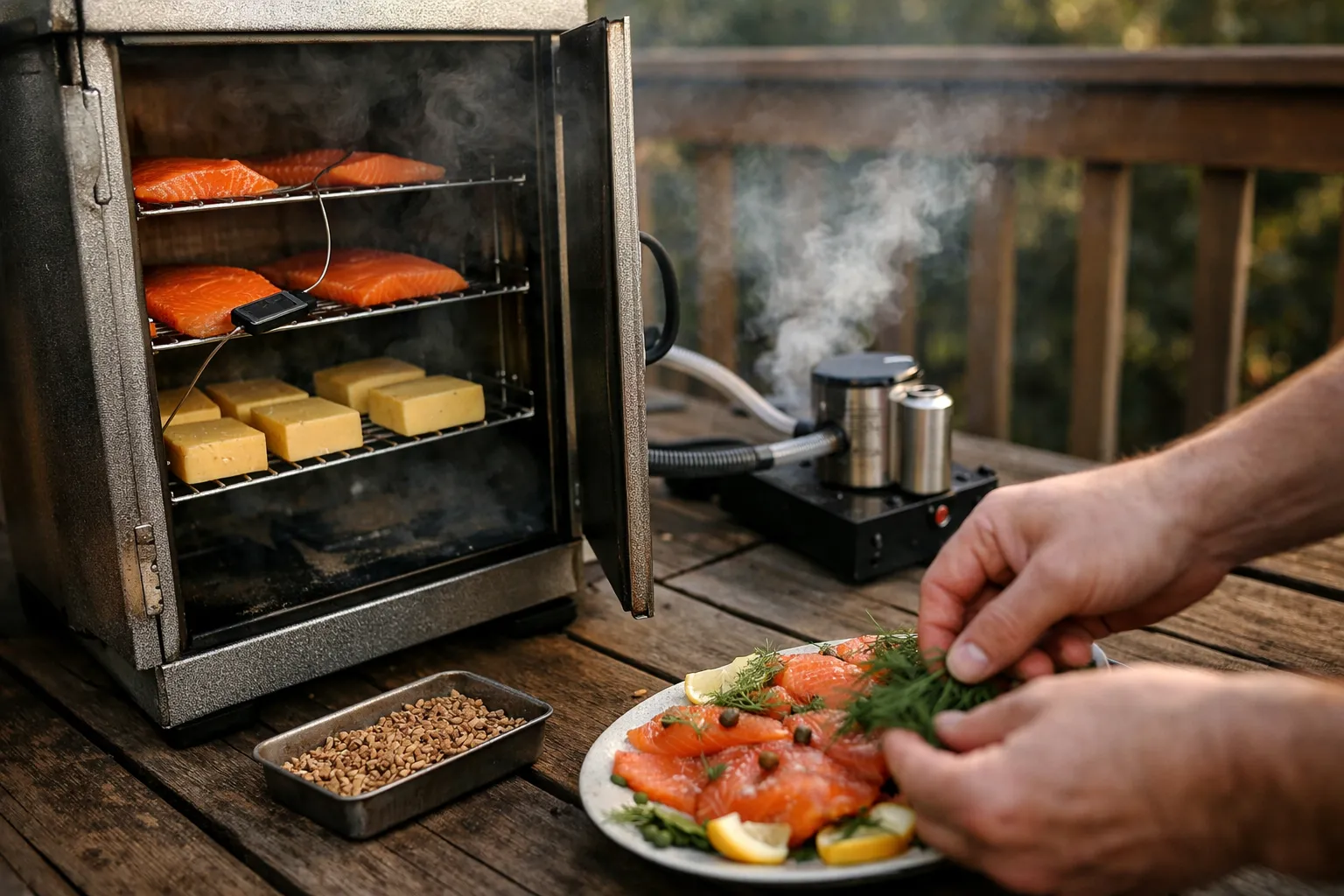
Introduction
Cold‑smoking adds layered, savory smoke without cooking — a transformative skill for home cooks who want smoked salmon, aged cheeses with smoke, or cocktail garnishes. This July 2026 update keeps the original workflow but adds recent best practices, product trends and clarified safety checkpoints so you can plan a successful session today. This guide is for home cooks and food‑enthusiasts who already understand basic food safety and want reliable, modern advice on cold‑smoking fish, cheese, vegetables and garnishes.
Prerequisites and context — what you should know first
Cold‑smoking deposits smoke compounds while keeping product temperature low. It is a flavoring method, not a guaranteed kill‑step for pathogens. Before you start, confirm three things:
- You have refrigeration capacity to keep perishable items at ≤4°C (≤40°F) before, during (when possible), and after smoking unless items are fully cured or previously frozen.
- You understand parasite and curing rules: raw fish intended to be eaten without cooking should meet FDA freezing guidance (see below) or be purchased previously frozen; whole muscle pork and poultry must be cooked or properly cured and processed before consumption.
- Your local codes and household smoke‑alarm setup permit visible smoke output. Since 2023 more HOAs and municipalities have clarified nuisance rules related to outdoor smoke; check local ordinances and condominium covenants before installing a visible generator.
What has changed since the original guide (2024–2026)?
- Product maturity: compact electric cold‑smoke generators with integrated temperature/humidity sensors and smartphone apps became mainstream in 2024–2025. They make long smokes easier to control for beginners.
- Air‑quality awareness: greater consumer attention to particulate emissions has led many home cooks to prefer enclosed electric generators or pellet systems situated away from neighbors to reduce visible plumes.
- Safety emphasis: extension services and food safety programs continue to stress that smoking is not a substitute for validated curing or cooking. If you plan to expand into cured hams or sausages, follow published curing recipes or consult a commercial processor.
- Materials & convenience: pre‑measured pellet pucks and food‑grade hardwood compressed logs designed specifically for cold smoke are now widely available, reducing creosote from inconsistent wood moisture.
What “cold‑smoking” is — and when not to do it
Cold‑smoking exposes food to smoke at low temperatures so flavor is deposited without significant cooking. A practical chamber target is 15–29°C (60–85°F); many home setups aim to stay below about 29°C (85°F) for extended smokes to avoid texture changes and bacterial growth. Cold‑smoking is appropriate for fish, cheeses, precooked or roasted vegetables, and finishing cocktails. It is NOT an appropriate sole treatment for raw pork, poultry, ground meat, or game unless you use validated curing with nitrite and follow tested, time‑temperature protocols.
Key safety notes (explicit and current)
- Smoking won’t reliably kill bacteria. Perishable foods must be refrigerated before and after smoking unless previously frozen or cured. Do not leave raw fish at room temperature for prolonged drying without refrigeration.
- Parasite control for fish: Follow FDA guidance for parasite destruction when serving raw or cold‑smoked fish: freeze at −20°C (−4°F) or below for 7 days (single‑species home freezer threshold) or at −35°C (−31°F) or below for 15 hours. If those conditions are unavailable, buy pre‑frozen fish or cook before serving.
- Curing for meats: For red meat and poultry, only use tested curing recipes (with correct salt/nitrite levels) and follow established protocols — do not improvise. If unsure, plan to cook to safe internal temperatures after smoking.
- PAHs and soot: Prolonged exposure to dense, sooty smoke raises polycyclic aromatic hydrocarbon (PAH) levels on food. Avoid heavy creosote by using dry hardwood pellets, maintaining airflow, and keeping smoke light and steady.
- Local rules: Many cities and homeowner associations updated nuisance and open‑burning rules 2022–2026 — check municipal codes and your HOA before installing a generator outdoors.
Choose equipment for your goals (updated recommendations)
Three practical cold‑smoking approaches remain common; recent hardware trends provide better control and cleaner emissions.
- Electric cold‑smoke generator + separate chamber — Best for long, repeatable sessions. Modern units (2024–2026 models) often include integrated fans, pellet pucks and app‑based monitoring of chamber temp and humidity. Using a converted chest refrigerator or insulated box keeps temps stable and separates combustion from food.
- Pellet tube or smoke pipe in a grill — Useful if you already own a charcoal or gas grill. For 1–6 hour smokes, use a dedicated pellet tube with high‑quality, low‑moisture pellets and keep vents adjusted to prevent heat buildup.
- Handheld smoking gun — Ideal for finishing and cocktails. Newer smoking guns include HEPA filters or charcoal traps to reduce particulate output; they’re not meant for prolonged cold‑smoking of whole fillets or large blocks of cheese.
Recommendation: for routine home use choose an electric generator routed into a dedicated insulated chamber or converted fridge. That setup minimizes heat transfer, reduces visible smoke, and simplifies humidity control.
Fuel and wood choices — 2026 notes
- Use 100% hardwoods (apple, cherry, oak, alder, hickory) in chips or pellets. Avoid resinous conifers and pressure‑treated lumber.
- Fruitwoods (apple, cherry) remain preferred for fish and cheese because they smoke cleanly and mildly. Oak and hickory are good for robust vegetables and dark cheeses.
- New compressed pellet puck products marketed for cold smoking have more consistent moisture content and produce fewer particulate spikes; they are a good option for long smokes.
- For cocktail finishing, use small amounts of herbs or lapsang tea cautiously; they create strong aromatics but can also add bitter notes if overused.
Prep — brining, drying and building the pellicle (with updated specifics)
Surface prep matters more than ever: a consistent pellicle and controlled salt balance make smoke penetration predictable.
Fish (salmon, trout) — quick workflow
- Buy previously frozen or sushi‑grade fish when possible. If fresh, freeze to FDA specs before serving raw or cold‑smoked (see safety notes).
- Make a wet brine: 40–60 g kosher salt per liter water (4–6%). Add 20–30 g sugar per liter for balance. Brine time: 30–90 minutes for fillets depending on thickness; use the shorter end for thinner fillets (1–2 cm), longer for thicker pieces.
- Rinse lightly, pat dry, then refrigerate uncovered on a rack for 4–12 hours to form a tacky pellicle. In warmer kitchens, perform pellicle formation inside a refrigerator to control temperature and RH.
Cheese — quick workflow
- Chill cheese blocks first. Dry surface in the refrigerator for a few hours so smoke adheres without sweating.
- Soft, young cheeses (fresh chèvre) take 1–2 hours; semi‑hard to hard cheeses (cheddar, gouda) 2–8 hours depending on intensity desired. For even color and milder surface bitterness, reverse‑rotate cheeses on the rack at mid‑point.
- Note: smoking accelerates surface drying. For long smokes, monitor moisture and humidity to avoid cracked rinds.
Vegetables and others
- Pre‑cook (roast or blanch) root vegetables to desired tenderness before smoking. Cold‑smoking adds flavor without cooking further texture.
- Blister peppers or roast tomatoes first. Smoke 30–90 minutes for accent flavors.
- For cocktail garnishes, chill peels or herbs, then cold‑smoke 10–30 minutes for persistent aroma; use a smoke gun for immediate tabletop effects.
Control temperature and humidity — practical 2026 tools
Accurate monitoring is essential. Use at least one chamber probe thermometer and a hygrometer. Newer setups pair wireless sensors with phone apps; these are helpful for long unattended sessions.
Targets:
- Chamber air temp: keep below 29°C (85°F) — preferably 15–25°C (60–77°F) for delicate fish and cheese.
- Pellicle drying RH: 60–80% relative humidity during initial drying for fish; avoid direct sun or warm kitchen air that raises temp.
- Cheese RH: 40–60% to avoid surface sweating during smoking.
To increase RH, place a pan of cold water in the chamber or use a small ultrasonic humidifier external to the food area. To lower RH, lift the lid intermittently or increase gentle ventilation.
Timing guidelines (general ranges, updated)
- Fish fillets: 2–12 hours (start light: 2–4 hours). Use 2–4 hours for delicate, slightly smoky finish; 6–12 hours for deeper flavor.
- Cheese: soft 1–3 hours; semi‑hard/hard 2–8 hours.
- Vegetables (pre‑cooked): 30 minutes–2 hours.
- Cocktail garnishes: 2–30 minutes (smoking gun or chamber).
Step‑by‑step cold‑smoking session — fish example (modernized)
- Prepare: thaw pre‑frozen fish in the refrigerator. Make a 4–6% brine (40–60 g kosher salt per liter), adding 20–30 g sugar per liter if desired. Brine fillets 30–90 minutes depending on thickness.
- Rinse, pat dry, then refrigerate uncovered on a rack for 4–12 hours to form a pellicle. Keep temperature ≤4°C during drying, or do drying inside the cold chamber if air temp can be maintained.
- Set up the electric cold‑smoke generator outside the chamber and run a short pre‑smoke to clear heavy initial particulates; modern units often have a “burn‑in” cycle — follow the manufacturer’s instructions.
- Place fillets on racks in the cold‑smoke chamber. Insert a chamber thermometer and at least one probe into a piece of fish to monitor food temperature.
- Start smoke flow, keeping chamber temperature under 29°C (85°F). Use low, steady smoke density — heavy, sooty smoke increases creosote and off‑flavors.
- Check periodically via app or direct readouts. After chosen smoke time, remove fish, rapidly chill to ≤4°C and refrigerate. Consume within 3–5 days refrigerated, or vacuum‑pack and freeze for longer storage.
Finishing, storage and serving
Cold‑smoked fish is typically thinly sliced and served cold. Keep refrigerated at ≤4°C. Vacuum packing extends refrigerated life and reduces oxidation — vacuumed smoked salmon can keep 10–14 days refrigerated if held cold continuously, but follow vacuum packer guidance and manufacturer recommendations. Cheeses: rest at refrigeration for 24–48 hours to let smoke flavors settle; wrap in cheese paper. Vegetables and garnishes: use within a few days refrigerated or freeze if cooked and intended for long storage.
Troubleshooting common issues
- Bitter/sooty smoke: Use drier hardwood pellets, reduce smoke density, increase airflow and shorten smoke periods. Clean generator combustion areas periodically.
- Food too salty: Reduce brine strength or shorten brine time; for borderline batches, soak briefly in cold water after brining then re‑dry to reform pellicle.
- No smoke flavor: Verify smoke is entering the chamber (seal leaks), increase exposure time, or choose a slightly stronger wood (oak vs. apple).
- Chamber warming: Move generator further away, add insulation, or increase ventilation. Avoid using ambient sunlit areas for long smokes.
- Surface dryness/cracking on cheese: Lower chamber airflow or RH; split long smokes into shorter sessions with resting periods.
Flavor pairings and contemporary serving ideas
- Cold‑smoked salmon: crème fraîche with preserved lemon, dill, cucumber ribbons, and crisp rye soldiers.
- Smoked goat cheese: warm honey, toasted hazelnuts and grilled fig on crostini (smoke mellows after a day — plan plating accordingly).
- Smoked roasted carrots: labneh, lemon zest and toasted za’atar; smoke before tossing with warm dressings to retain aroma.
- Smoked citrus peel: rim and aroma for stirred cocktails; cold‑smoke peels ahead so oils don’t become bitter from heat.
Legal, environmental and neighborhood considerations (2026 update)
Since 2022 many jurisdictions clarified rules on outdoor smoke and nuisance emissions. When planning an outdoor generator:
- Confirm municipal open‑burning rules and HOA covenants.
- Position generators downwind of neighbors and away from shared air intakes.
- Prefer enclosed electric units or pellet pucks to minimize visible plumes and PM emissions.
Quick shopping checklist
- Electric cold‑smoke generator or pellet tube (choose one with consistent pellet/puck feed)
- Insulated chamber (converted chest fridge, metal smoker or purpose‑built cold‑smoke box)
- Probe thermometers and hygrometer (consider wireless sensors)
- Racks, pans, drip tray and vacuum sealer
- Food‑grade hardwood pellets/chips or compressed pellet pucks
Common mistakes to avoid
- Leaving raw fish at room temperature to dry for extended periods — always dry in refrigeration when possible.
- Overloading the chamber with smoke source — denser smoke increases PAH and bitter flavors.
- Assuming smoking = safe: do not cold‑smoke raw pork/poultry without validated cure or cooking step.
- Neglecting local regulations and neighbor comfort — visible smoke can cause complaints and fines.
Pro tips
- Keep a smoking log: wood species, smoke time, RH and chamber temp — you’ll replicate successful runs more easily.
- Use small smoke bursts for delicate items: intermittent short smoke windows (e.g., 30–60 minutes on, 30–60 minutes off) can reduce soot and produce cleaner flavor.
- For safety and texture, consider cold‑smoke then sous‑vide (or gently cook) when serving to at‑risk diners — but follow validated time‑temperature pasteurization charts.
- Rotate cheese and fish halfway through long smokes for even coverage and to avoid hot spots in the chamber.
FAQ
Do I need to freeze fish before cold‑smoking?
If you plan to serve cold‑smoked fish raw (uncooked), follow FDA freezing guidance: freeze at −20°C (−4°F) or below for 7 days, or −35°C (−31°F) or below for 15 hours. Buying fish that was previously frozen by the supplier is an acceptable alternative when certified. Freezing reduces the risk of parasites but does not remove bacteria — maintain refrigeration and good hygiene.
Can I cold‑smoke raw pork or chicken safely at home?
No — do not rely on cold‑smoking alone for raw pork or poultry. These products require validated curing (with appropriate nitrite levels) and often a heating step to reach safe internal temperatures. If you want a smoky flavor on poultry or pork, either use hot smoking (where internal temperature reaches safe levels) or cold‑smoke first and then fully cook to recommended internal temperatures.
How long will my cold‑smoked salmon keep?
Fresh cold‑smoked salmon kept continuously refrigerated at ≤4°C (≤40°F) should be consumed within 3–5 days. Vacuum packing can extend refrigerated life modestly (follow vacuum sealer and supplier guidelines). For long‑term storage, freeze vacuum‑sealed portions; frozen smoked fish can keep several months.
Is cold‑smoking cheese safe — will it spoil faster?
Cold‑smoking cheese is safe when the cheese is handled and refrigerated properly. Smoking can dry the surface somewhat; allow smoked cheese to rest in refrigeration 24–48 hours to let flavors settle. Hard cheeses tolerate longer smokes and longer refrigerated storage than fresh, soft cheeses. Use cheese paper or breathable wrap rather than plastic wrap for longer storage.
Can I use a smoking gun for large items?
Smoking guns are designed for short finishing on small items and garnishes. They are convenient for cocktails, small cheeses, and individual plates but are impractical for extended cold‑smoking of whole fillets or large cheese blocks because they do not generate continuous low‑density smoke needed for even coverage.
Cold‑smoking is a craft that rewards preparation and restraint. With modern tools, better pellets and clearer safety guidance available in 2026, you can achieve consistent, clean smoke flavors at home — provided you follow the safety checkpoints above, monitor temperature and humidity, and respect local rules and your neighbors.