
Overview
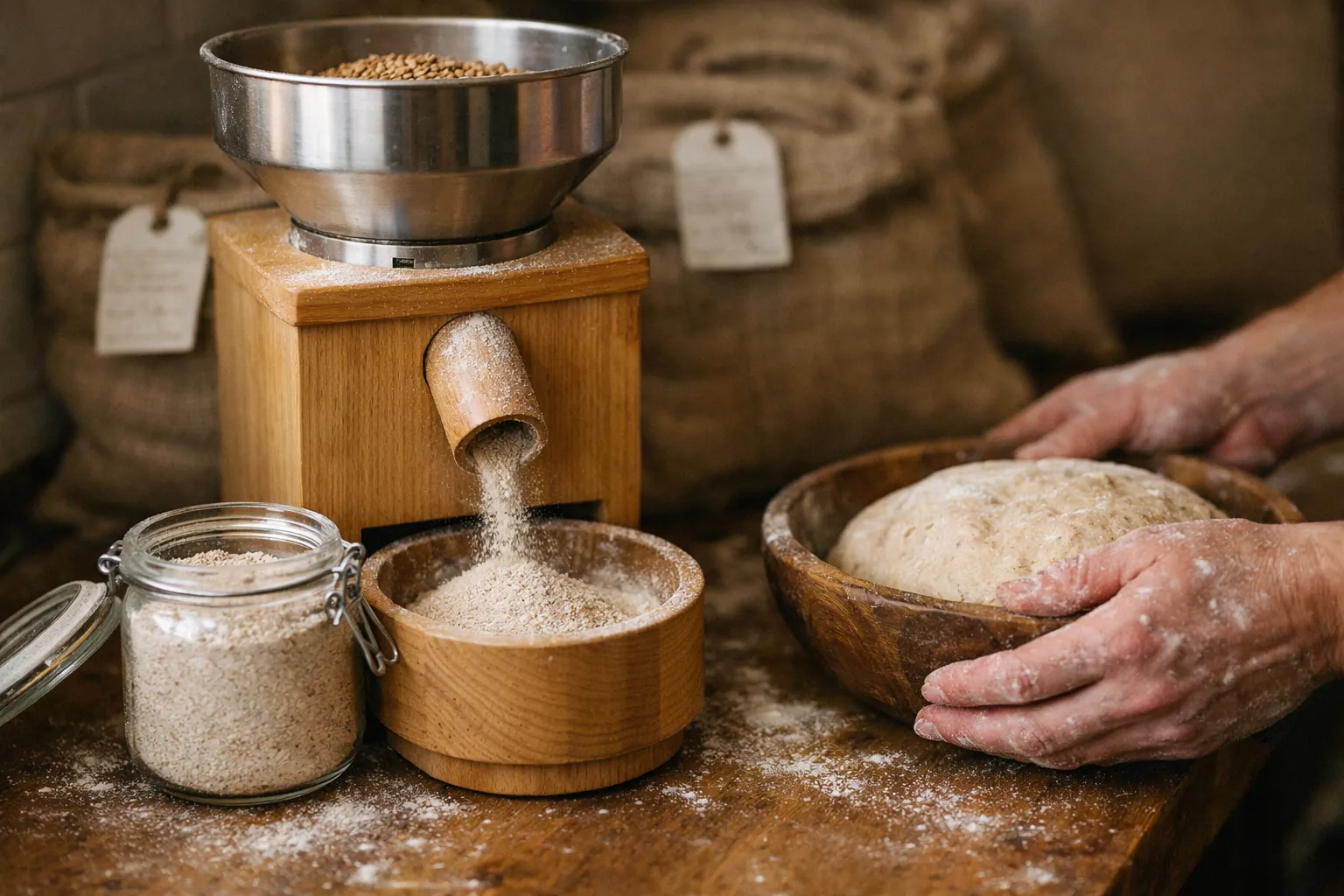
Home grain milling has moved from novelty into routine for many home bakers. In this August 2026 update we cut through the noise: what’s changed since mid‑2026, which developments matter to your bread and pastry, and what you should actually do today if you're milling at home or buying fresh‑milled flour from a nearby stone mill. Expect gear improvements, clearer labeling, modest supply volatility, and a few new best practices that make fresh grain both easier and more reliable in the kitchen.
Background: how we arrived here
The pandemic accelerated interest in home milling; since then the movement matured. Between 2024 and 2026 manufacturers refined consumer mills, small commercial mills scaled subscription and direct‑to‑consumer channels, and bakers collectively learned how fresh‑milled flour changes dough handling. Over the last year the conversation shifted from “fresh is interesting” to “how do we operationalize freshness and consistency?”—and we’re seeing concrete responses from millers, retailers and equipment makers.
Data and evidence: what’s real in August 2026
Controlled, peer‑reviewed comparisons directly contrasting freshly milled and older whole‑grain flours remain sparse, but consensus technical observations continue to hold and have become more actionable:
- Flavor window: Bran and germ volatile compounds oxidize quickly once the kernel is broken. Practical tasting panels run by artisan bakeries and regional mills show the most vivid aroma and nutty notes in the first 3–7 days at room temperature; refrigeration extends those sensory qualities for a few more weeks, and freezing preserves them for months.
- Hydration and handling: Freshly milled whole‑grain flours consistently demand more water—typical adjustments remain +2–6 percentage points for wheat whole‑meal, and +4–8 points for rye‑heavy or dark extraction formulas. Bakers report better gluten development with a longer autolyse and gentler handling when bran is present.
- Market signals: Over 2026 we’ve seen broader retail adoption of milling and harvest dates, more small‑mill subscription options (both grain and milled‑flour tracks), and pilot "freshness" labeling by regional mill cooperatives. These are practical indicators that provenance and date information now matter to consumers in purchasing decisions.
Multiple perspectives: makers, millers, bakers and safety voices
- Manufacturers: The latest consumer mills released in 2026 emphasize quieter motors, improved stone and ceramic burr compounds, and active cooling channels. The newest models add digital grind profiles or companion apps that help users reproduce particle distributions across grain types—useful for bakers chasing a consistent extraction.
- Small mills and farmers: Regional mills continue to formalize grower contracts for specific varieties—heritage wheats, specialty ryes and climate‑adapted strains—and many now print harvest and milling dates on bags. Several small‑mill coalitions have launched pilot programs to standardize extraction and freshness claims, responding to consumer demand for transparency.
- Bakers and recipe developers: Professionals who bake with fresh‑milled flour emphasize technique tweaks—higher hydration, longer autolyse, incremental salt timing and gentler degassing—to tame whole‑grain doughs. Home bakers who adopt these adjustments report clearer crumb texture and more expressive flavor.
- Food‑safety and regulators: Public health reminders are unchanged: grain and flour are not sterile. Reputable mills provide screening information and follow commodity‑grade testing for moisture and basic mycotoxin risk indicators. For home millers, proper storage (cool, dry, sealed grains) and routine mill maintenance are the main practical controls against off‑flavor and spoilage.
What’s new in gear, services and the supply chain (Aug 2026)
- Consumer mills have adopted more user‑friendly features: digital grind presets, grind‑profile sharing via apps, and simple particle‑size indicators. Expect better repeatability across batches if you use these tools.
- Packaging and labeling moved beyond novelty. More mill bags now list harvest date, milling date, variety and recommended extraction or bake use—information that helps you match grain to recipe without guesswork.
- Subscription models diversified: dual‑track subscriptions (whole grain plus occasional milled‑flour deliveries), seasonal single‑variety releases, and market‑style "milling days" at farmstands where customers can buy same‑day milled flour by the cup.
- Supply side: 2026 growing seasons showed localized variability—some specialty varieties were tighter in supply in spring 2026—so buyers of rare heritage wheats should expect seasonal windows and price swings and plan storage accordingly.
Practical, evidence‑based recommendations for bakers (what to do now)
- Set your objective: If you bake frequently and care about peak flavor, invest in a quality consumer mill or a regular grain subscription. If you bake intermittently, buy small‑mill flour by the bag (look for milling date) and keep it frozen in portioned packets.
- Choose equipment sensibly: Look for mills with proven burr/stone materials, active cooling or ventilation, and clear grind settings. Digital presets and companion apps can help repeat results; prioritize consistent particle distribution over flashy extras. Expect reliable entry‑level models in the low hundreds; premium quiet, app‑enabled units cost more.
- Adjust formulas: Increase hydration by +2–6 percentage points for typical whole‑wheat; for rye‑forward or darker extractions plan +4–8 points. Extend autolyse (30–60 minutes) to hydrate bran and reduce cutting of the gluten network. If your dough feels tight, add water in small increments rather than work it harder.
- Storage best practices: Whole grain: cool, dry, airtight—up to 6–12 months depending on temperature. Milled flour: refrigerate and use within 2–3 weeks for best aroma; frozen in airtight, portioned bags, quality is preserved for about 3 months—vacuum sealing and deep‑freeze temps can extend that life and reduce freezer burn. Always bring frozen flour to room temperature inside its sealed bag before opening to avoid condensation.
- Sanitation: Brush and wipe hoppers and grinding surfaces after use; perform deeper disassembly cleanings per manufacturer guidance. For small commercial operations, request testing protocols for moisture and basic contaminant screening before purchasing in bulk.
- Plan for seasonal supply: If you rely on specific varieties, buy in season and store grain, or sign up for a mill’s seasonal subscription to lock in supply and price.
Implications: what this means for home bakers and local food systems
Fresh milling is no longer just about taste theater; it's become a practical ingredient strategy. For home bakers, that means a small upfront investment in gear or relationships with local mills will yield consistent gains in flavor and provenance. For local food systems, the trend supports farm‑to‑mill linkages and modest value capture for growers. But don’t mistake this for a mass market displacement of commodity flour—cost, scale and convenience still make bulk commercial flours the backbone of many kitchens.
Outlook: what to watch through the rest of 2026
- Look for wider adoption of grind profiling on consumer mills and better integration of grain‑type presets in companion apps—this will make repeatability easier for home bakers.
- Expect more small‑mill transparency: standardized milling‑date labels and extraction guidance are likely to broaden as consumers reward clarity.
- Watch seasonal availability and pricing for specialty varieties. As demand increases for heritage and regionally adapted wheats, successful relationships will balance agronomy, realistic scale and buyer flexibility.
My take
We want bold flavor and real provenance, and fresh‑milled flour delivers both—but it asks for a little humility at the mixing table. Adjust your hydration, respect grain seasonality, and don’t expect identical behavior across batches. If you care about flavor, do the homework: get a sensible mill, or build a relationship with a trusted local mill that tells you the harvest and milling dates. Either route gives you control—and better bread.
FAQ: Common questions, August 2026
How long does fresh‑milled flour keep its best flavor?
At room temperature, aroma compounds decline noticeably within 3–7 days. Refrigerated in an airtight container, expect robust flavor for about 2–3 weeks; frozen in well‑sealed portions, quality is preserved for roughly 3 months—vacuum sealing and deep‑freeze storage can extend that window, but always thaw sealed to room temperature before opening.
How much more water should I use with fresh‑milled whole grain?
Start with +2–4 percentage points for typical whole‑wheat, and +4–8 points for rye‑heavy or dark extraction formulas. Let autolyse do the work and add any extra water incrementally based on dough feel—aim for extensibility rather than stickiness.
Is home milling safe and sanitary?
Yes—if you follow basic controls. Store whole grain cool and dry, clean the mill per manufacturer instructions, and avoid milling grain with visible spoilage. For bulk purchases from small mills, ask about their screening and moisture controls; reputable mills will share basic testing info.
Should I mill every bake or buy milled flour?
It depends on frequency and goals. Mill at home if you value peak freshness and bake weekly. Buy small‑mill milled flour if you bake less often or want professional consistency without the gear. Many bakers mix approaches: mill for special projects, buy milled flour for everyday baking.