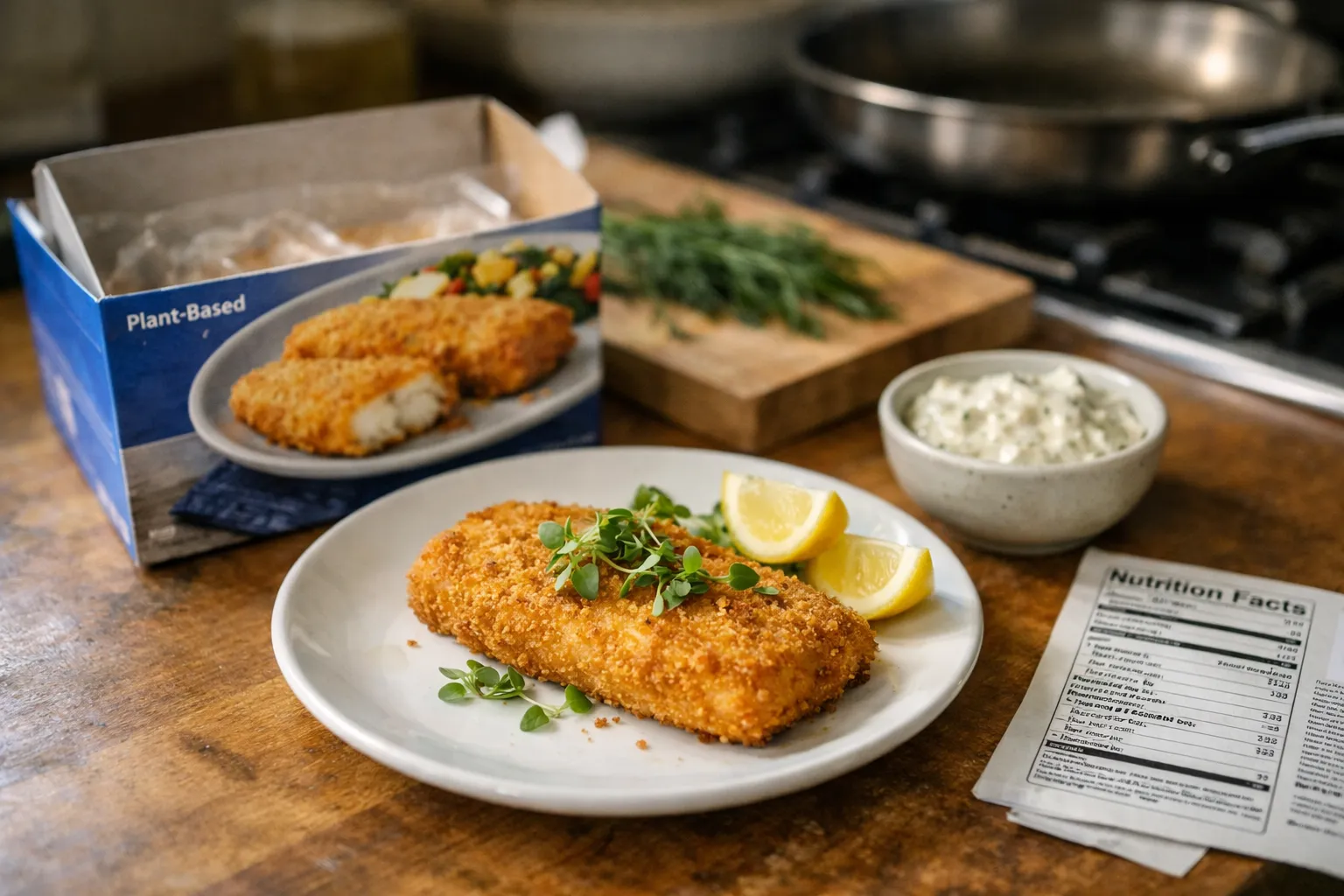
Overview: Plant-based seafood has continued its shift from novelty toward a practical pantry option for many home cooks in 2026. Since our June update, developments in algal‑oil supply, formulation approaches and retail assortment have changed where and how these products are useful. This update explains what’s new as of October 2026, highlights evidence and trade-offs, and gives timely, actionable guidance for shopping, cooking and evaluating claims.
Background: why this matters now
Consumers remain motivated by three priorities: sensory acceptability (taste and texture), nutrition parity with marine proteins (especially EPA/DHA and iodine), and credible sustainability benefits. For home cooks those priorities translate into practical questions: Will it taste good in my recipe? Does it deliver omega‑3s and iodine? Is it a defensible sustainable choice? Through 2026, makers moved from proof-of-concept launches to broader frozen and prepared SKUs. The October snapshot matters because availability, labeling consistency and price are increasingly determining whether plant‑based seafood is an occasional swap or a stable part of the weekly rotation.
Market dynamics — what’s changed by October 2026
Since mid‑2026 several observable shifts altered the category’s center of gravity:
- Wider private‑label presence: More regional and some national private‑label frozen lines have piloted plant‑based “fish” and “shrimp” items in limited geographies or seasonal assortments. That movement is lowering price points in pockets of the market and increasing in‑store visibility.
- Algal‑oil capacity and fortification consistency: Producers of algal oil reported incremental capacity expansions this year that have made fortification with EPA/DHA more common and less cost‑constraining—readers will now encounter a larger share of products that list EPA/DHA amounts on the label, though amounts still vary by SKU.
- Targeted product claims and raw‑style releases: A small number of companies have begun offering “sashimi‑style” or “raw‑service” formulations in limited releases; these products are explicitly labeled for cold service and include clear storage and food‑safety guidance. They remain the exception, not the rule.
- Foodservice experimentation: Plant‑based seafood appears more frequently in price‑sensitive menu tests (value bowls, limited‑time sandwiches) where coatings, sauces and bold seasonings mask subtle textural differences.
Structural limits remain: many items still carry a premium over commodity frozen fish in most markets, and assortment breadth varies by retailer and region. For price‑sensitive shoppers, plant‑based seafood is increasingly viable as an occasional swap rather than an across‑the‑board replacement.
Data & evidence: nutrition, labeling and formulation trends
Two nutrition themes continue to guide smart purchasing:
- EPA/DHA fortification is more common—but dosages vary. A larger share of labels now list algal oil or EPA/DHA values. When present, typical servings tend to provide low‑to‑mid hundreds of milligrams of combined EPA+DHA—meaning some products approach parity with common fish servings, while others supply only modest amounts. Always check the Nutrition Facts label and the ingredient list for algal oil, microalgae, or explicit milligram values.
- Iodine remains spotty. Some brands fortify with kelp, potassium iodide or list iodine content; many do not. Because iodine is concentrated in marine foods and is essential for thyroid health, cooks who reduce seafood intake should look for explicit iodine values or maintain other iodized foods in their diet.
On calories, sodium and protein: processed ready‑to‑eat and breaded formats typically contain sodium at levels comparable to or higher than processed conventional seafood. Protein density varies—some fortified products supply 10–15 g per serving and compete with processed fish items; whole fillets of fish generally provide higher and more complete animal protein per ounce.
Flavor and texture: where plant‑based seafood works today
Incremental formulation advances—layered protein bases (pea, soy, mycoprotein), hydrocolloid structuring (konjac, alginate, methylcellulose), concentrated seaweed/yeast extracts for marine umami, and algal oil for mouthfeel—have improved performance. That changes how you should use these products in the kitchen:
- Best fits — cooked, breaded, sauced: Battered fillets, popcorn “shrimp,” nuggets and sauced “crab” cakes remain the strongest fits. Crisp coatings, high heat, and bold sauces conceal minor flavor and textural differences while delivering satisfying contrast.
- Better than before — warm, gently sauced fillets: Unbreaded, fortified fillets now perform better in tomato sauces, curries and pasta dishes as formulations provide improved flake and mouthfeel.
- Still challenging — raw and acid‑cured applications: Most formulations are not appropriate for sashimi, ceviche or other raw applications. A few limited‑release “sashimi‑style” products are explicitly formulated and labeled for cold service, but unless the package states raw‑service safety, plan to cook or dress them hot.
Multiple perspectives
Manufacturers: Brands report lower ingredient costs in some lines due to improved algal‑oil supply and scaled single‑cell protein capacity. Many frame plant‑based seafood as complementary to conventional seafood, suitable for flexitarians and for applications that benefit from freeze‑stable formats.
Chefs: Early‑adopter chefs still favor plant‑based seafood in tacos, fried sandwiches, spicy bowls and stews. Chefs emphasize technique: crisp quickly in a hot oven or air fryer, finish with acid and oil, and avoid long low‑temperature cooks that can dry the product.
Sustainability researchers: Independent life‑cycle assessments continue to show wide variation across products. Key determinants are the source of protein (pea vs single‑cell), algal‑oil extraction methods, processing energy, and logistics. Packaging and freezing remain material contributors to footprints. Where sustainability is the priority, independent LCA data or third‑party verification provide the most reliable comparisons.
Implications for home cooks: how to shop and cook in October 2026
Practical guidance you can use right now:
- Read labels with purpose: Look for algal oil or a listed EPA+DHA amount and check ingredient statements for iodine sources (kelp, potassium iodide) if that matters. Compare sodium and protein per serving to conventional options.
- Match format to recipe: Use breaded items for sandwiches and tacos; use fortified, unbreaded fillets in sauced dishes. Reserve raw or lightly cured applications for products that explicitly state they are formulated and labeled for cold service.
- Adjust cooking technique: Many plant‑based seafood items reheat best from frozen in a hot oven or air fryer to restore crispness. Avoid prolonged microwave heating. For unbreaded fillets, moderate oven temperature and a light finishing oil help preserve mouthfeel.
- Enhance marine notes: Add acid (lime, rice vinegar), kombu or miso broths, fermented condiments and a light brushing of neutral or algal oil to boost perceived brine, umami and mouthfeel.
- Manage price: Watch private‑label introductions, multi‑pack promotions and frozen‑case discounts. Treat plant‑based seafood as a flexible ingredient best used where seasoning and textural contrast play to its strengths.
- Watch allergens: Many products use pea, soy or wheat; manufacturers sometimes add yeast extracts or fermented ingredients to create marine notes—check allergen panels closely if you or guests have sensitivities.
Sustainability & sourcing checklist
- Prefer products with published, independent LCAs or third‑party sustainability verification.
- Compare the full supply chain—raw ingredient sourcing, processing energy, packaging and transport—against local, responsibly sourced conventional seafood when sustainability is the decision driver.
- Favor brands that disclose algal‑oil and single‑cell protein sourcing and that publish ingredient‑origin information.
Outlook: what to watch through the rest of 2026 and into 2027
Key developments likely to shape the category in the near term:
- Further cost reductions as algal‑oil and single‑cell protein capacity scale—this will determine how quickly plant‑based seafood moves from niche to value‑oriented frozen lines.
- Greater labeling consistency for EPA/DHA and iodine as consumer demand for nutrient parity drives transparency—look for more products to list milligram amounts and iodine values.
- Broader foodservice experimentation with menu formats that mask textural gaps; this could increase consumer familiarity and repeat purchases.
Practical recipes and pairings (updated)
- Tacos: crisp breaded “fish,” pickled cabbage, lime crema and a splash of algal oil for gloss.
- Pasta: flake a fortified unbreaded fillet into a lemon‑capers white wine sauce; finish with parsley and a drizzle of extra virgin olive oil.
- Curry & stews: add nuggets or “shrimp” late in the simmer so they warm through without breaking down; coconut and tamarind amplify perceived marine notes.
Are plant‑based seafood products a reliable source of EPA and DHA?
Some products are. More manufacturers now fortify with algal oil and list EPA+DHA values on the Nutrition Facts or in the ingredient panel. Amounts range from modest to near parity with common fish servings. If omega‑3 intake is a priority, compare labels for milligram amounts per serving and consider algal oil supplements as a predictable alternative.
Can I use plant‑based “fish” in sushi or ceviche?
Generally no—most plant‑based seafood is not suitable for raw or acid‑cured service. A small number of limited‑release "sashimi‑style" products are explicitly formulated and labeled for cold service; these will include storage, temperature and shelf‑life instructions. Unless the package clearly states safe raw use, cook or warm the product.
Are plant‑based seafood products safe for people with shellfish or fish allergies?
Not necessarily. Many plant‑based seafood formulas contain common allergens (soy, wheat, pea) and are sometimes manufactured on lines that process fish or shellfish. Additionally, flavoring ingredients (yeast extracts, seaweed) can trigger sensitivities in some people. Always read the allergen statement and contact the manufacturer if you need clarification.
How should I store, reheat and preserve best texture?
Store frozen until use. For breaded items, reheat from frozen in a hot oven or air fryer to restore crispness; avoid long microwave heating. For unbreaded fillets, use moderate oven heat or a quick pan‑sear with a finishing oil to preserve mouthfeel. If a product feels dry, finish with a light sauce or a drizzle of oil and a squeeze of acid.
Bottom line: plant‑based seafood in October 2026 is a maturing cluster of products rather than a single category. The most useful change this year is greater fortification consistency and a modest widening of price points. For home cooks the keys are the same as before—read labels deliberately, match format to recipe, and use acid and umami to bridge flavor gaps. With those practices, plant‑based seafood is increasingly a practical and flavorful tool in the modern kitchen.