
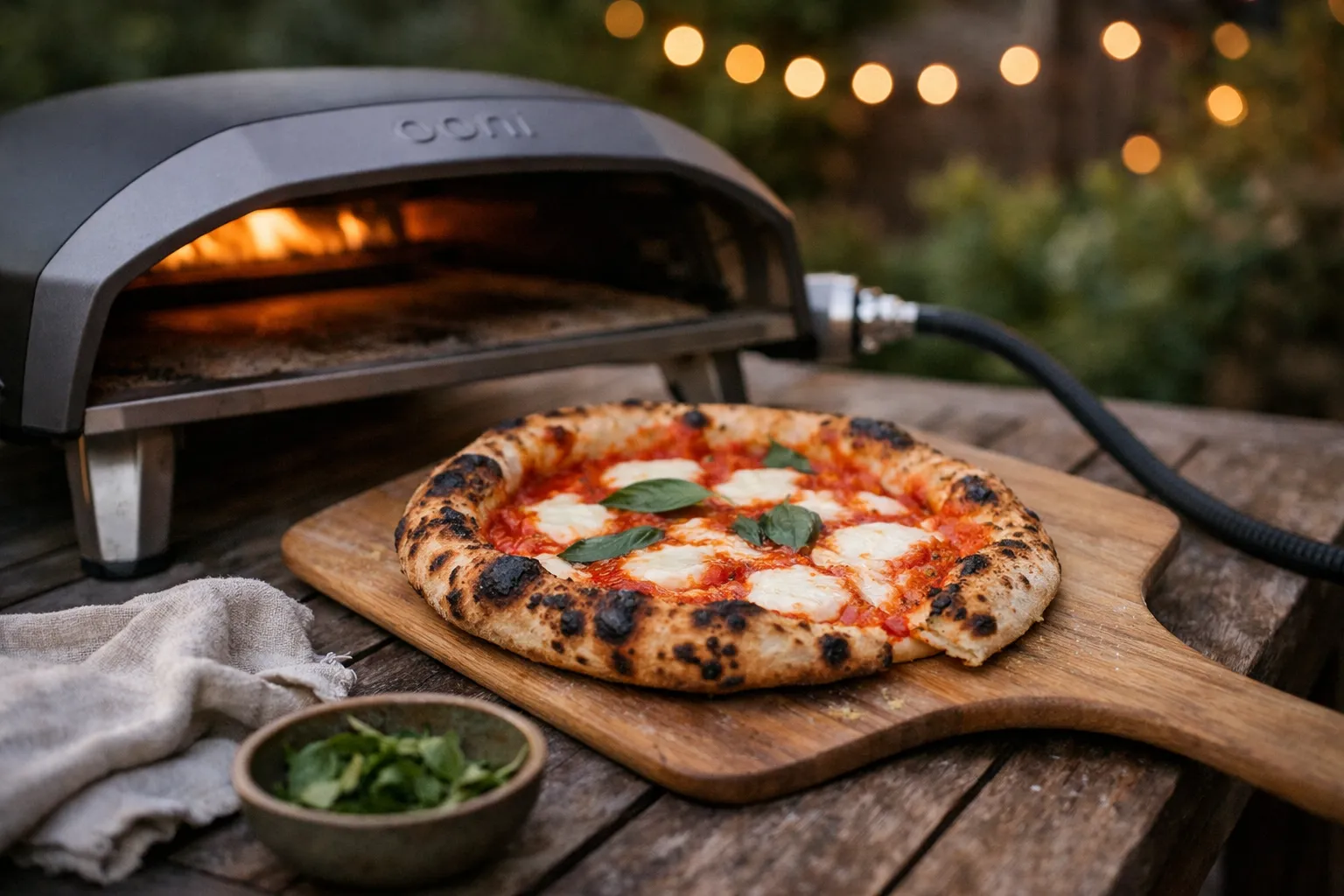
Overview — What we’re reviewing
The Ooni Koda 16 is Ooni’s dedicated gas pizza oven with a cooking surface sized for pies up to 16 inches. This August 2026 update retests the unit across summer service nights and warm/cool-weather sessions, evaluates accessory and conversion options that arrived since May 2026, and reassesses value versus newer backyard ovens. Key specs at a glance:
- Max pie size: up to 16 inches
- Heat source: propane gas (standard 20‑lb tank); market-dependent regulator and hose included
- Typical stone preheat: 650–800°F pizza-ready range (timing varies by ambient temperature)
- Cook times: Neapolitan 60–90s; thin New York–style 3–5 minutes
- Suggested U.S. retail price (Aug 2026): Ooni lists $699; street prices and bundles vary
Background — Who makes it and why it exists
Ooni (founded in Scotland as Uuni) built its brand on delivering high-heat pizza at home without the cost and footprint of masonry domes. The Koda 16 sits between the portability-focused Koda 12 and full-sized backyard domes: it’s designed for home cooks who want true 14–16" pies with the predictability of gas rather than the fiddly learning curve of wood.
Features Analysis — What stands out in August 2026
Two things still matter most for serious backyard pizza work: usable chamber area and repeatability. The Koda 16’s larger interior makes staging and rotating 14–16" pies far less fussy than the Koda 12. In repeated late‑July sessions (high humidity, evening breezes) the oven produced consistent results when used with the workflow below.
Heat and control: The Koda 16 remains a top‑heat machine. The gas burner creates intense radiant heat from above, so operators manage bottom color by stone prep, pizza placement, and rotation. Measured stone surface temps in my tests ranged 650–800°F depending on preheat time and ambient air — hot enough for classic Neapolitan blistering. An infrared thermometer is non-negotiable; a thin metal peel and brisk wrist are job essentials.
Preheat and throughput — updated practices: In summer evenings (75–85°F ambient) the stone hit 700°F in about 10–12 minutes and peaked near 800°F after 15. In cooler spring/fall conditions (50–60°F) expect 12–20 minutes. With a practiced two-person team, the Koda 16 sustained one pizza out and one pizza in every 90–150 seconds — 20–35 pies per hour depending on crust style. For single operators staging and a well-organized prep table, 15–20 pies per hour is realistic.
Accessory and ecosystem changes in 2026: Since May more third‑party carts and insulated covers have become standard online; several carts now integrate a propane dock and side prep shelf, which transforms Koda 16 into a usable party station. Pizza steels and hybrid stone-steel combos have also become more common among users to coax better bottom color without compromising the oven’s fast top heat. Natural gas conversion options are easier to source but remain region- and code-dependent — consult local regulations and vendor compatibility before buying.
Performance — Hands-on cooking tests
Across Margherita, pepperoni, and a 70%‑hydration New York test, the Koda 16 delivered:
- Classic Neapolitan char and leopard spotting when placed in the hottest zone and rotated frequently — 60–90 seconds typical.
- Good bottom browning for 16" thin crusts in 3–5 minutes when the stone was fully up to temp and pies were kept near the centerline; using a pizza steel or a thinner crust recipe improved base color in cooler weather.
- Top-heavy heat profile: breads, thicker hearth loaves, and low‑and‑slow dishes needed flame reduction and longer ramp-up — a masonry dome or hybrid oven still does those jobs better.
Practical result: the Koda 16 is optimized for high-throughput, high-heat pizza service. If your priority is evenly radiant base heat for longer bakes, consider a heavier dome. For parties, the Koda 16’s speed and chamber size win.
Pros and Cons — August 2026 update
- Pros: True 16" usable chamber for wide pies; fast preheat in warm weather; consistent, repeatable results once you learn placement/rotation; robust third-party cart and cover options now widely available.
- Cons: No built-in wood-smoke complexity; top-heavy heat demands active rotation and attention; not intended for heavy-duty bread baking or long roasts; still requires outdoor space and propane (or a vetted natural‑gas conversion).
Pricing and value — what you pay and what you get
Ooni’s U.S. list price for the Koda 16 is unchanged at $699 as of August 2026. Expect street pricing in the $649–$749 band during non-sale periods. Ready-to-run bundles (cart + cover + extra stone or steel) commonly push total outlay to $899–$1,250 depending on vendor and included items. Compare that to entry-level hybrid domes and Gozney’s backyard models, which start around $1,500–$2,000, and the Koda 16 still sits as a strong mid-market option for serious home entertainers.
Value judgment: if you plan weekly use through grilling season and host groups, the Koda 16 pays for itself quickly because it handles larger pies and higher throughput than smaller countertop models. If you only occasionally bake a 12" pizza, the Koda 12 or a tabletop unit will save money and storage space.
Who it's for
- Home cooks who routinely make 14–16" pizzas and entertain outdoors.
- Hosts who prioritize speed, throughput, and repeatability over chasing wood-smoke nuance.
- Families who want a mid-priced backyard oven without committing to heavy masonry or a permanent dome.
Alternatives — competing ovens to consider in 2026
- Gozney Roccbox / Roccbox Max — better portability and a reputation for even heat control, but smaller max pie size.
- Gozney Dome (and similar hybrid domes) — superior radiant base heat and authentic wood-fired flavor; better for slow roasts and bread baking, at higher cost.
- Ooni Koda 12 — choose this if you need portability and mostly make 12" pies; cheaper and easier to store if you seldom go above 12".
- Budget competitors (Bertello and others) — lower entry price but smaller chambers and mixed build quality; good for casual users on a tight budget.
Final verdict — my take
We still like the Koda 16 because it nails the promise: fast, blistered, high‑heat pizza with a workflow that’s far friendlier than tending a wood fire. In August 2026 it remains one of the best gas pizza ovens for home cooks who want serious 14–16" pies without stepping up to the cost or footprint of a backyard dome.
If you worship wood smoke or do a lot of slow breads and roasts, buy a hybrid or masonry dome. If you want speed, repeatability, and an oven that plays well at parties, add a good cart, a cover, and either a pizza steel or hybrid stone and you’ve got a true party machine.
Do I need a special propane hookup for the Koda 16?
No. The oven is designed to run from a standard 20‑lb propane tank and typically ships with the regulator and hose appropriate for many markets. If you plan a fixed natural‑gas line, use a manufacturer-approved conversion kit and follow local codes; contract a licensed gas fitter for installation.
Can I get real wood-smoke flavor from the Koda 16?
Not authentically. The Koda 16 is a gas oven and won’t recreate the chemical complexity of a wood fire. You can mimic smoky notes with smoked olive oil, smoked cheeses, or pre‑smoking ingredients, but for true smoke depth choose a wood or hybrid oven.
How should I improve bottom browning without losing blistering?
Use a hotter, well‑seasoned stone or add a thin pizza steel on top of the stone to increase conductive heat to the crust. Preheat longer in cooler weather, keep dough thinner for 16" pies, and avoid overloading toppings. Regularly measure stone surface temps with an infrared thermometer to know when the oven is balanced for your crust style.
Will the Koda 16 perform in winter?
Yes, with caveats. Cold, windy conditions lengthen preheat times and reduce throughput. Use windbreaks, insulated covers, and expect 15–25 minutes of preheat in near‑freezing temps. For heavy winter use, a dedicated shelter or semi-permanent installation improves consistency.
Is it worth buying the cart and cover bundle?
Yes, if you plan regular use. A purpose-built cart improves workflow, stability, and storage for tanks and tools; an insulated cover preserves finish and stones. Standalone carts and covers are available, but bundled discounts are common and worthwhile.