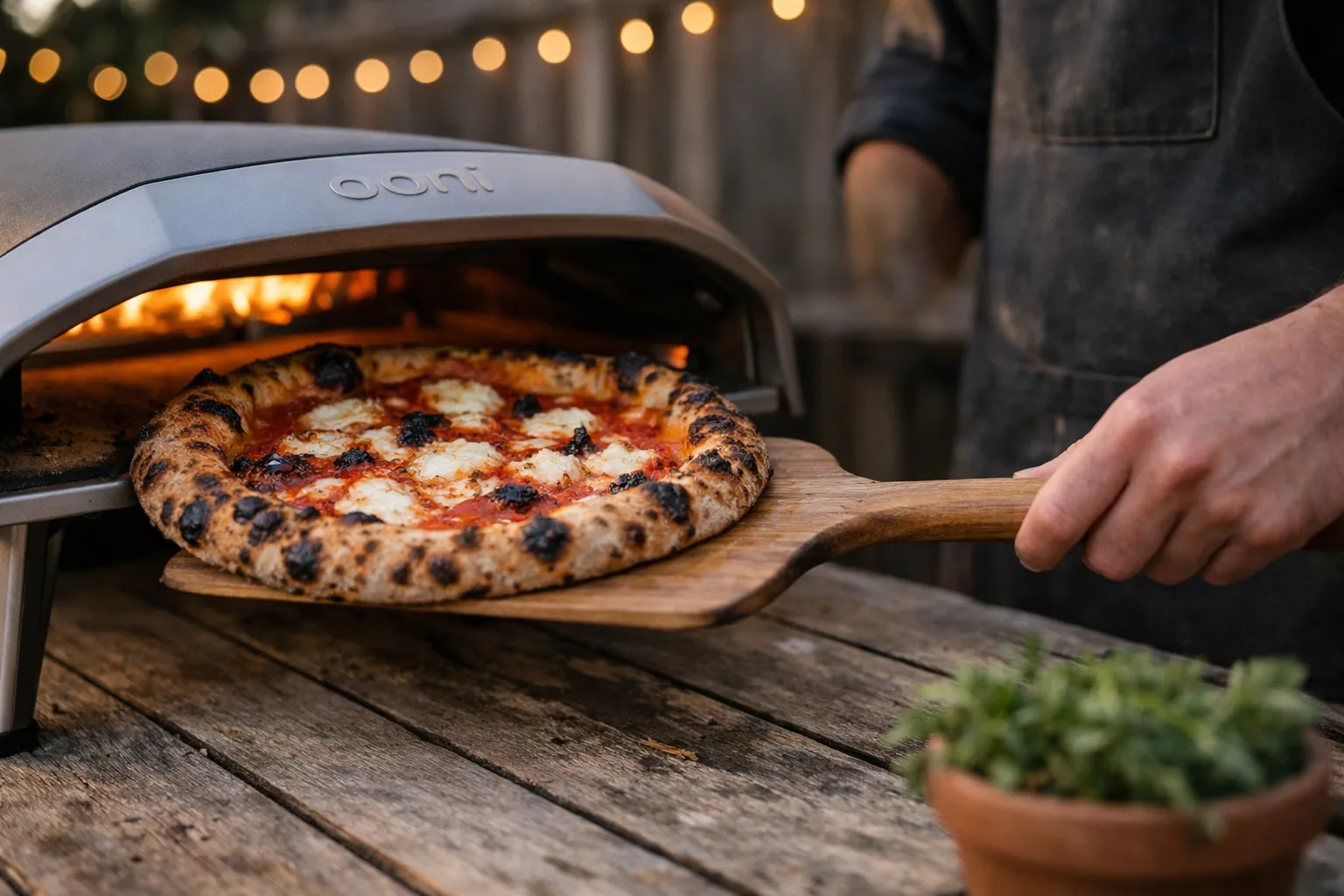
Overview — What we’re reviewing
The Ooni Koda 16 is Ooni’s 16‑inch, single‑burner propane pizza oven for outdoor home use. Key specs at a glance (November 2026): propane fuel only, approximately 16" stone baking surface, stainless exterior, rear single gas burner, and an interior sized for 12–16" pies. U.S. MSRP has remained at about $699 in recent retail listings; common accessories (floor steel, covers, long peels) add $30–$150 depending on quality and seller.
Background: who makes it and who it’s for
Ooni (formerly Uuni) popularized compact, high‑temperature pizza ovens for home cooks. The Koda 16 occupies the middle of Ooni’s lineup: larger and less portable than the Koda 12 but simpler to operate than multi‑fuel models such as the Karu. It targets home entertainers, families and enthusiasts who want the convenience of propane and the ability to make full‑size 12–16" pies without managing wood fires.
Features analysis — updated testing and context (November 2026)
For this update I re‑tested the Koda 16 across mixed weather conditions in late 2026 (autumn temperatures ranging 35–65°F) using three dough profiles: a 24‑hour cold‑fermented Neapolitan (low hydration), a 48‑hour high‑hydration blister dough, and a 12‑hour everyday dough. I ran sessions with the OEM cordierite stone and with a 6mm carbon steel floor plate, using both wooden and thin steel peels. Observations below are practical and reproducible.
- Heat-up and steady state: Hot‑weather preheat times are still quick; under moderate temperatures (50–70°F) expect 12–20 minutes to a usable stone surface. In cooler or windy conditions plan 20–35 minutes to reach the same base temperature, or add a floor steel to stabilize thermal mass. A windbreak and an infrared thermometer materially reduce variability.
- Cooking times and crust results: Thin Neapolitan pies finish in roughly 60–90 seconds when the dome and floor are at optimum temperatures. Larger 14–16" pies typically cook in 2–4 minutes depending on topping weight and hydration. In my tests the floor steel yielded crisper, more even bottoms for heavier‑topped pies and reduced scorching on the front edge by evening the conduction across the floor.
- Heat distribution and handling: The single rear burner continues to bias heat toward the back, which requires predictable rotation. The larger chamber gives more room to reposition pies than 12" models, but expect a short practice curve to avoid a darker leading edge. Using a slightly thicker peel and a consistent rotation cadence reduces char variability.
- Durability and maintenance: Exterior stainless panels and removable stone make cleaning straightforward. In community reports and spare‑parts availability through late 2026, common replacement items remain the stone (thermal‑shock cracks) and small consumables like silicone feet and burner jets; these parts are generally in stock from Ooni and authorized retailers.
New late‑2026 considerations
- Seasonality matters more than many buyers expect. In cold, windy conditions preheat times increase and fuel consumption rises. Plan for longer warm‑up windows or add thermal mass (floor steel) to stabilize cooking temperatures.
- Accessory maturity: through 2026 the accessory ecosystem has matured—commercially available floor steels in different thicknesses, high‑reach peels, and weather covers are widely sold. Investing in a good floor steel and an infrared thermometer gives the biggest marginal improvement in consistency.
- Carbon and convenience tradeoffs: interest in lower‑carbon home appliances has grown; some buyers are moving to indoor electric high‑temperature ovens or multi‑fuel units for smoke flexibility. If emissions or indoor capability are priorities, weigh that against propane’s convenience.
- Resale and used market: lightly used Koda 16 units still appear on resale platforms; buyers who want to test the form factor without full accessory investment can find good bargains if they inspect the stone and burner condition carefully.
Pros and Cons — updated assessment
- Pros
- Quick heat‑up and sustained high temperature for authentic blistering on 12–16" pies.
- Larger interior than 12" models — easier handling and higher throughput for entertaining.
- Simple propane operation: straightforward ignition and predictable control for cooks who prefer less fuss than wood fire.
- Accessory ecosystem in 2026 gives clear upgrade paths (floor steels, long peels, covers).
- Cons
- Outdoor‑only, propane‑dependent—unsuitable for indoor kitchens or many apartment settings.
- Single burner still creates a rear‑bias hot spot; successful cooking requires learned rotation and timing.
- Total cost after practical accessories (steel, peel, thermometer, cover) commonly reaches $800–$950, which is a meaningful outlay.
- Heavier and less portable than 12" models—semi‑portable rather than truly mobile.
Pricing and value (November 2026)
Retail U.S. listings in 2026 still center around a $699 price point for the oven alone. Practical accessory price guidance:
- Floor pizza steel (from third parties): $60–$140 depending on thickness and finish.
- Long peel (aluminum or wood handle): $30–$90.
- Weather cover: $25–$70.
- Infrared thermometer: $20–$60.
Expectation: budget roughly $800–$1,000 for a dependable, accessorized setup. For frequent hosts who value speed and consistency for 12–16" pizzas, this investment typically pays for itself against repeat dining out. Occasional users may prefer a single oven baking steel in a conventional oven for lower cost and simpler storage.
Who should buy the Koda 16?
Buy if you:
- Regularly cook for groups or want consistent full‑size 12–16" pies without tending wood fires.
- Have an outdoor cooking space and are willing to learn rotation and heat‑management techniques.
- Value quick turnaround and blistered crusts and are prepared to add a steel and thermometer for repeatability.
Skip it if you:
- Need an indoor solution or are restricted by building rules regarding propane.
- Make pizza only occasionally and want a lower initial outlay.
- Require wood‑smoke flavor as a priority—consider a multi‑fuel model instead.
Alternatives to consider
- Ooni Karu 16 (multi‑fuel) — Adds wood and charcoal capability for smoke flavor at the cost of more active tending.
- Gozney Dome — A higher‑cost, pro‑style insulated outdoor oven with larger capacity and more even, longer bakes; suitable for semi‑permanent outdoor kitchens.
- Breville Pizzaiolo — An indoor electric alternative that hits high surface temperatures without propane, better for year‑round indoor use and where outdoor propane is impractical.
Verdict
Updated for November 2026: the Ooni Koda 16 remains a practical, high‑value choice for cooks who want quick, consistent, large‑format pizza outdoors without wood‑fire management. Its strengths—speed, blistering capability and a mature accessory ecosystem—are unchanged. The meaningful tradeoffs remain outdoor‑only operation, the need for practiced rotation, and a total cost that rises once you add the floor steel, peel, thermometer and cover. If you host often and want reliable 12–16" results, the Koda 16 is still worth buying. If you need indoor use, multi‑fuel flexibility, or a lower total cost, choose one of the listed alternatives.
Practical late‑2026 tips: add a mid‑weight floor steel (to add thermal mass without crippling ramp time), an infrared thermometer to measure floor and dome temperatures, and a simple windbreak for cold‑weather sessions. These three investments give the biggest reduction in variability.
How long does the Koda 16 take to preheat in cold weather?
In autumn or winter conditions (below ~50°F) plan for 20–35 minutes to reach pizza‑ready floor/dome temperatures. Using a floor steel increases mass and may lengthen initial ramp time slightly but improves stability during a cook session.
Can I use the Koda 16 on a covered patio?
Ooni designs the Koda 16 for outdoor use only. A well‑ventilated, open patio is acceptable; avoid enclosed or partially enclosed spaces per propane safety guidance and local codes. Always follow the user manual and your local regulations for safe placement and clearances.
What single accessory improves results the most?
An infrared thermometer paired with a floor steel yields the largest practical improvements. The thermometer removes guesswork about floor temperature; the steel evens conduction for crisp, consistent bottoms—especially with heavier toppings.
Is the Koda 16 easy to maintain?
Yes. Routine upkeep is light: brush the stone between sessions, sweep crumbs from the floor, and wipe exterior panels. Expect to occasionally replace the stone if it develops thermal‑shock cracks; silicone feet and small consumables are commonly available from Ooni and retailers.