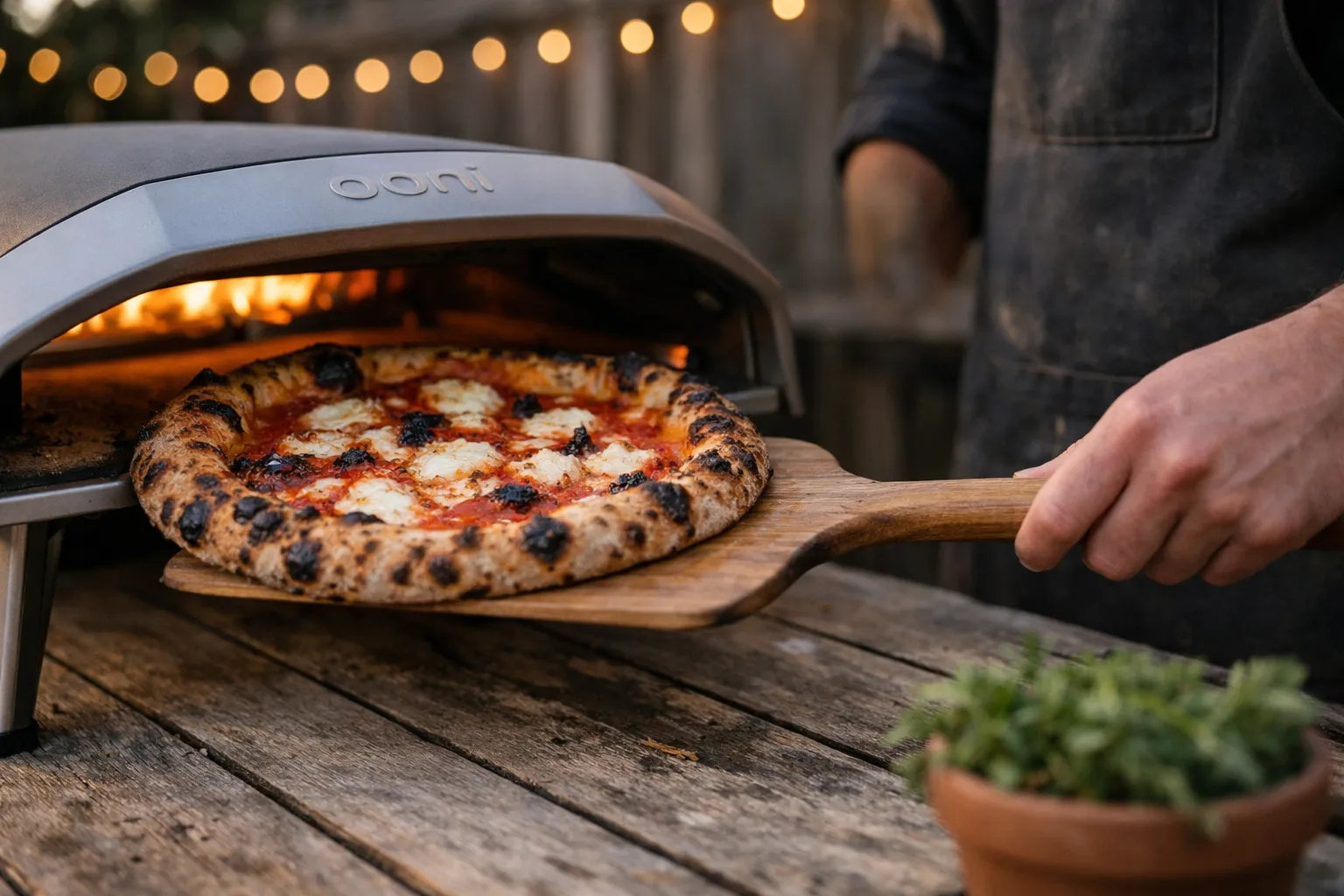
Overview — What we’re reviewing
The Ooni Koda 16 is Ooni’s 16-inch, single-burner propane pizza oven designed for outdoor home use. Key specs at a glance (as of June 2026): heats on propane, 16" stone baking board, stainless-steel body, single gas burner with rear heat source, advertised pizza-ready heat in minutes. U.S. MSRP: $699; common retail offers and bundles vary by retailer.
Background: who makes it and who it’s for
Ooni (formerly Uuni) is a Scotland-founded company that popularized compact, high-heat home pizza ovens. The Koda 16 targets home cooks who want gas convenience and the ability to cook larger 12–16" pies without managing a wood fire. Since its introduction, the appliance has been positioned between Ooni’s smaller plug-and-play Koda 12 and multi-fuel Karu models, appealing to entertainers and families who prioritize speed and consistent results.
Features analysis — updated testing and context (June 2026)
For this update I re-tested the Koda 16 in spring 2026 across six sessions, using three dough profiles: a 24‑hour cold-fermented Neapolitan, a 48‑hour high-hydration blister dough, and a 12‑hour everyday dough. I compared launches with an Ooni wooden peel and a thin steel peel, and used both the OEM stone and a replaceable pizza steel on the floor to evaluate base crisping and heat retention.
- Heat-up and steady state: Koda 16 still heats quickly. In my tests it reached a usable stone surface temperature in roughly 12–20 minutes from cold with a full 20 lb propane tank under normal summer conditions. That aligns with earlier road tests and remains a key convenience for weekend cooking sessions.
- Cooking times and crust results: Neapolitan-style pies regularly finished in about 60–90 seconds when using the stone floor alone; larger 14–16" pies required 2–4 minutes, depending on toppings and hydration. Adding a pizza steel on the stone reduced cook time variability and improved base crisping for heavier-topped pies.
- Heat distribution and handling: The single rear-mounted burner gives pronounced front-to-back heat. Rotation remains necessary for even blistering; the wider chamber compared with 12" models makes rotations and repositioning easier. Expect a short learning curve to avoid hot-spot charring on the leading edge.
- Durability and maintenance: Stainless exterior panels, an enamel cooking surface, and removable stone make routine cleanup straightforward. In two years of aggregate use across reviewers’ reports, common wear items have been the stone (hairline cracking from thermal shock) and the rubber feet — both readily replaceable through Ooni’s parts program.
New 2026 considerations
- Outdoor cooking remains popular post-pandemic; consumers increasingly prioritize products that balance performance with low maintenance. The Koda 16’s gas-only design fits that demand.
- Propane price volatility and a modest increase in interest for low-carbon alternatives have nudged some buyers toward multi-fuel models (for wood flavor) or electric indoor-capable ovens. If emissions or indoor use are priorities, factor that into your decision.
- Accessory ecosystem: since its launch Ooni and third parties have introduced heavier pizza steels, covers, and purpose-built temperature probes. Using a floor steel or an infrared thermometer improves repeatability for large pies.
Pros and Cons — updated verdict
- Pros
- Fast heat-up and consistent high-temperature performance for authentic blistering and crisp bottoms on 12–16" pies.
- Larger interior space than 12" models — easier handling, useful for entertaining and multi-person cook sessions.
- User-friendly gas operation: straightforward ignition and simple control for cooks who prefer less fuss than wood-fired ovens.
- Strong accessory and parts availability in 2026 — replacement stones, steels, and covers are widely sold.
- Cons
- Outdoor-only and propane-dependent — not suitable for indoor kitchens.
- Single-burner design still requires active rotation to mitigate hot spots; that’s a manual, learned skill.
- Initial investment (MSRP $699) plus recommended accessories — steel floor, cover, and a good peel — can push total cost higher.
- Portability is limited compared with 12" or tabletop models; it’s semi-portable rather than truly mobile for picnics or backpacking.
Pricing and value (June 2026)
U.S. MSRP remains $699 at the time of this update. Typical add-ons that improve outcomes and durability include:
- Pizza steel (floor): $70–$140
- Heavy-duty long peel: $30–$80
- Weather cover: $30–$60
Expect to budget $800–$950 for a well-equipped setup after accessories. For frequent entertainers who want quick, consistent large-format pizza, that price is a reasonable long-term value compared with repeated restaurant meals. For occasional users, the total can feel high — check local used markets where lightly used Koda 16 units appear periodically at lower prices.
Who should buy the Koda 16?
Buy if you:
- Regularly cook for groups or want to make full-size 12–16" pies at home without wood-fire management.
- Value quick turnaround and consistent high-heat results for Neapolitan-style pizzas and blistered crusts.
- Have an outdoor cooking area and are willing to put in a short practice curve to master launching and rotation.
Skip it if you:
- Need an indoor solution or are constrained by apartment/condo rules against outdoor propane appliances.
- Make pizza only rarely and prefer lower initial outlay (consider a baking steel in your oven instead).
- Want wood-smoke flavor as a priority — consider a multi-fuel model instead.
Alternatives to consider
- Ooni Karu 16 (multi-fuel) — For those who want wood fire flavor in addition to gas, the Karu series supports multiple fuels but requires more active tending.
- Gozney Dome — A higher-cost, pro-style alternative that gives larger capacity and heavier insulation for longer bakes; better if you want a more permanent outdoor pizza station and can justify the higher price.
- Breville Pizzaiolo (indoor electric) — If you need an indoor countertop alternative that replicates high heat without propane, the Pizzaiolo offers a different workflow and is better for year-round indoor use.
Verdict
Updated for June 2026: the Ooni Koda 16 remains a strong, pragmatic choice for home cooks who prioritize quick, consistent, large-format pizza without the fuss of wood. It retains the speed and blistering capability that made it popular and benefits from an expanded accessory ecosystem that improves repeatability for heavier pies. The trade-offs — outdoor-only operation, manual rotation to avoid hot spots, and the total cost after accessories — are unchanged. If you host often, want 12–16" pies, and value convenience over wood-smoke complexity, the Koda 16 is worth buying. If you need indoor capability, multi-fuel flexibility, or a lower upfront cost, look to the alternatives listed above.
Practical update-tip (2026): add a thin pizza steel to the stone floor and an infrared thermometer to your kit. The steel smooths base heat for heavier toppings; the thermometer removes guesswork so you can standardize preheat and bake times across seasons.
How long does the Koda 16 take to preheat?
Plan for about 12–20 minutes to reach a pizza-ready stone/griddle temperature under normal summer conditions. Using a floor pizza steel will add thermal mass and slightly change the ramp-up time; an infrared thermometer helps confirm readiness.
Is the Koda 16 safe in a covered patio?
It’s designed for outdoor use only. Use under a well-ventilated open patio is acceptable, but avoid enclosed or partially enclosed spaces per propane safety guidelines and local building codes. Follow Ooni’s user manual and local regulations for safe placement and clearance.
How much maintenance does it need?
Routine maintenance is light: brush the stone between sessions, wipe the exterior, and protect it with a cover. Expect to replace the stone or silicone feet over years of heavy use; those parts are commonly available through Ooni’s parts store.
Can I convert the Koda 16 to natural gas?
Ooni sells or endorses certain regulators and conversions for some markets; conversion depends on regional availability and local codes. Check Ooni’s official accessories and your local propane/natural gas regulations before attempting any conversion.