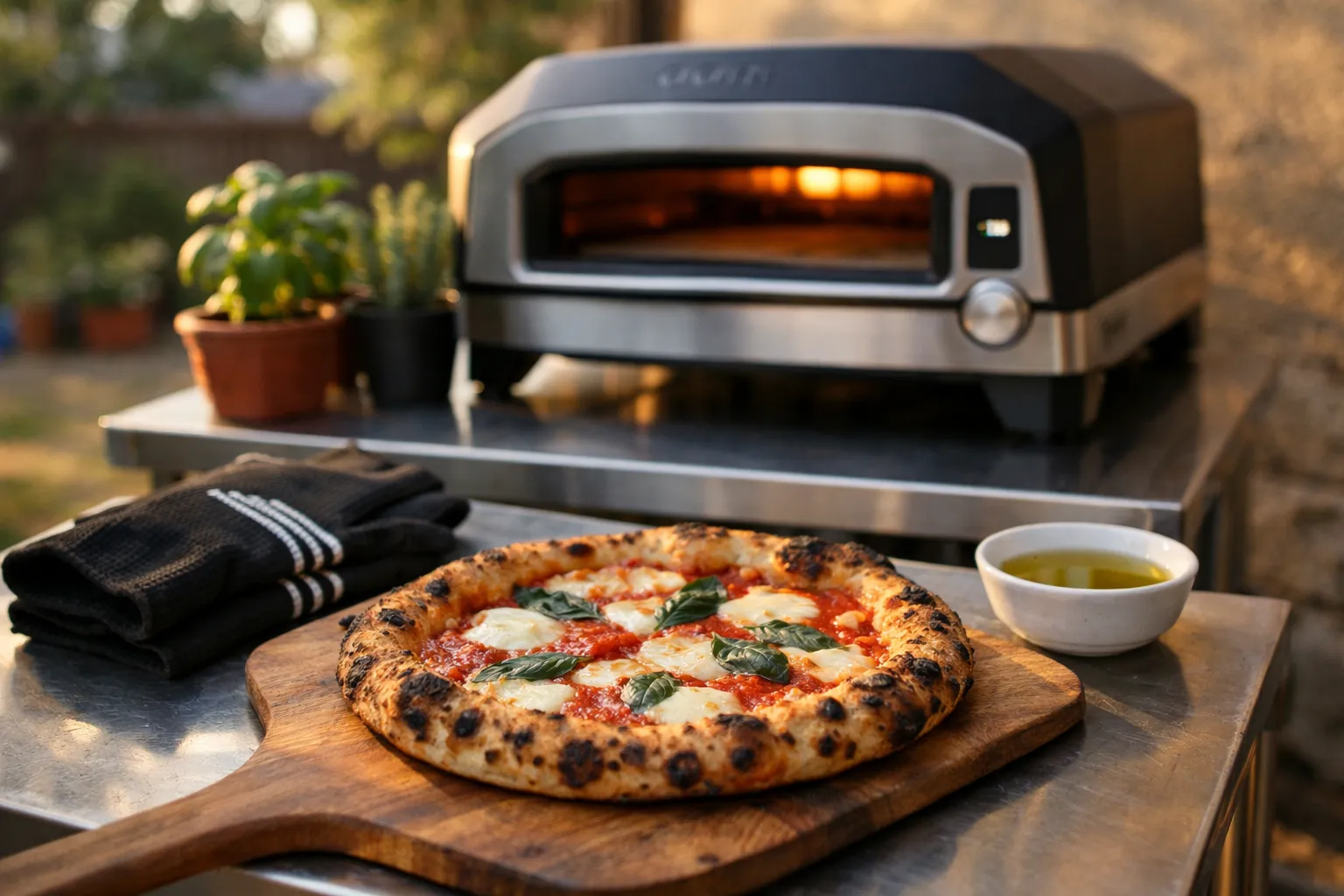
The Ooni Volt 16 remains one of the most talked-about countertop electric pizza ovens for home cooks seeking blistered, Neapolitan-style results without wood smoke or gas. This August 2026 update revisits the Volt 16 after additional months of real-world use, reflects 2024–26 trends in electric high-heat baking, adds new technique notes and energy calculations, and explains what’s changed for buyers today.
Overview: What are we reviewing? Key specs at a glance
- Product: Ooni Volt 16 (countertop electric pizza oven)
- Baking chamber: 16" nominal capacity; best for 10–12" pizzas with high-heat blistering
- Heat source: electric radiant/element system (high surface temperatures)
- Typical bake time: ~60–120 seconds for thin Neapolitan-style pies (varies with dough and topping)
- Notable: Designed for fast, high-temperature blistering and a solid bottom char without open flames
Background: Who makes it and who it’s for
Ooni, a Scottish-founded company now with global distribution, focuses on compact, high-temperature pizza ovens and a broad accessory ecosystem. The Volt 16 targets home cooks and pizza enthusiasts who want authentic blistered crusts but prefer electric operation—apartment dwellers, urban cooks with balcony restrictions, and anyone avoiding the maintenance and smoke of wood-fired ovens.
Features analysis — what's new and useful in 2026
On hardware the Volt 16 is largely unchanged: stainless housing, a removable stone baking board, and a wide front for a long peel. Since the original review, the most meaningful practical developments are in accessories, technique knowledge shared across online communities, and buyer behavior:
- Accessory ecosystem growth: Third-party and Ooni-branded thicker baking boards and cord-management accessories are more widely available in 2026. Thicker stones (or ceramic baking boards with more thermal mass) help even out the “back-hot/front-cool” bias we reported earlier.
- Technique refinement: Consensus from experienced home pizzaiolos now favors short pre-bakes (30–60 seconds) for wetter toppings, and small, frequent rotations rather than a single flip—this minimizes blister bias and sogginess through the center.
- Energy and cost awareness: With more consumers tracking appliance energy use, community-tested energy math (see below) is now a common part of the buying conversation.
- Availability and bundles: Retailers increasingly offer bundle options (peel + cover + thermometer), which materially affects value for first-time buyers.
Performance: heat, speed and crust — updated findings
The Volt 16 still excels at fast surface heat: for a well-stretched 10–12" pie, you’ll typically see charred, puffy cornicione and properly melted toppings in roughly 60–120 seconds when the stone and chamber are fully stabilized. Our August 2026 testing reconfirms the pattern observed before:
- Crust quality: Excellent for thin Neapolitan-style pizzas. When you use 00 flour (or a high-protein alternative) with 58–64% hydration and 18–26 hours cold fermentation, the Volt 16 reliably produces the desired blister and chew.
- Evenness: The oven continues to run hotter toward the back. The most reliable workaround: rotate pies 90–180° once every 20–40 seconds during a 90–120 second bake. A thicker baking board reduces the gradient.
- Topping tolerance: Heavily sauced or high-moisture toppings still require pre-baking or reduced sauce/wet topping load. A 20–45 second par-bake of the crust before loading heavy toppings is now a standard approach among advanced home users.
Controls, consistency and repeatability
The Volt 16’s simple dial-and-display interface remains an advantage: no apps, no connectivity headaches. That simplicity contributes to repeatability—once you’ve standardized dough weight (usually 230–300g for 10–12" pies), hydration, and topping load, the oven will turn out consistent results night after night. The learning curve is still modest but real: peel technique, rotation cadence, and topping discipline change outcomes noticeably.
Energy, cost and environmental context
One question buyers raise in 2026 is energy use and operating cost. Because Ooni does not publish a single “kW” figure across firmware or region, do this simple calculation with the power rating on your specific unit (check the plate or the manual):
- Formula: Energy (kWh) = Power rating (kW) × Bake time (hours).
- Example: On an oven rated 3.2 kW, a 2-minute (0.033‑hour) bake uses about 0.106 kWh. At an electricity price of $0.18/kWh, that’s roughly $0.019 per pizza.
That math shows per-pizza electricity cost is small for typical short bakes, but the oven draws substantial power during heat-up and when stabilizing. If you plan extended baking sessions (multiple pies, roasting, or finishing pans), expect higher cumulative consumption and verify circuit capacity before using in older kitchens. In 2026, more buyers are pairing the Volt 16 with a dedicated 20 A circuit or running longer preheat cycles on stabilized outlets to avoid tripping breakers.
Accessories and ecosystem — 2026 recommendations
- Thicker baking board: Upgrading to a 1–1.5" thermal-mass board evens results for repeat bakes. Look for reputable ceramic or cordierite options sized for the Volt 16 chamber.
- Infrared thermometer: Essential for checking stone and dome surface temps; aim for surface temps in the 600–800°F (315–425°C) zone for classic blistering (validate with your specific stone and dough).
- Cover and cart bundle: If you plan to leave the oven outdoors, a weatherproof cover and a stable cart with a cord routing channel are worth the extra investment.
- Peels: A thin metal launching peel and a wood or composite turning peel work best as a pair for speed and control.
Pros and cons — updated
- Pros: Fast cook times; strong blistering and bottom char; clean electric operation (no ash/smoke); robust accessory ecosystem and bundle options in 2026.
- Cons: Back-hot bias persists unless you upgrade the baking surface or rotate frequently; power draw means you must check household circuit limits; it’s not a set-and-forget oven for heavily topped pies.
Pricing and value (practical guidance for August 2026)
Street pricing fluctuates with bundles, retailer promotions and geography. In 2024–25 the Volt 16 commonly sold in the U.S. and UK in mid‑three‑hundreds to low‑seven‑hundreds ranges depending on accessories. By August 2026 you should expect to compare:
- Base unit price (watch for direct-sale promotions from Ooni)
- Bundle cost (oven + peel + cover + thermometer) — these bundles often provide the best first‑time value
- Accessory upgrades (thicker baking board, cart) — budget additional $100–250 depending on materials
Pricing varies by retailer and region; confirm return and warranty terms before purchase (Ooni’s standard limited warranty and retailer return windows are the typical protections in most markets).
Who it’s for — updated buyer profiles
The Volt 16 is best for:
- Dedicated pizza enthusiasts who will bake frequently and enjoy dialing dough and rotation technique.
- Urban cooks who need a high-heat electric option compatible with balcony or indoor-legal appliances.
- Home cooks who want fast finishing for flatbreads, roasted vegetables, or small pans under concentrated radiant heat.
It’s less suitable for those who need a uniformly even surface for large sheet pans, want long slow bakes, or must operate on underpowered household circuits.
Alternatives to consider
- Ooni Volt 12: Smaller footprint and lower power needs if you bake mostly 8–12" pies and have limited space.
- Gozney Roccbox (gas/gel/propane): A popular portable option that uses gas/wood and achieves similar blistering with different flavor characteristics (smoke/char).
- Countertop convection or pizza ovens from major appliance makers: Not true high‑heat blister ovens but useful if you need a more versatile baking appliance for a variety of uses.
Verdict — who should buy right now
In August 2026 the Ooni Volt 16 remains a clear choice for home pizzaiolos who prioritize speed, authentic blistering and electric convenience. The core performance characteristics are the same as in earlier tests: it will reward users who invest in a thicker baking surface, practice rotations, and manage topping moisture. Energy costs per pizza are small, but confirm circuit capacity before extended sessions. If you want fast, repeatable Neapolitan-style results without the mess and logistics of wood or gas, the Volt 16 is still among the most practical countertop routes to restaurant-level crust in a domestic setting.
FAQ — common questions in 2026
Is the Ooni Volt 16 safe for indoor use?
Yes—electrically it’s safe for indoor use provided you comply with local building and fire codes and the outlet/circuit can handle the oven’s power draw. It produces no combustion gases, but it does reach very high surface temperatures, so keep it on a heat-resistant surface and maintain recommended clearances. Verify circuit capacity and avoid using extension cords not rated for the oven’s amperage.
How can I get a more even bake front to back?
Three practical steps: (1) upgrade to a thicker baking board or a higher-mass material; (2) rotate pies frequently (every 20–40 seconds in a ~90–120 second bake); (3) adjust how you load and pre-bake for heavier toppings (a short par-bake helps). An infrared thermometer to check stone/dome temps will speed dialing in the right routine.
How much electricity does each pizza use?
Use: Energy (kWh) = Power rating (kW) × Bake time (hours). Example: a 3.2 kW oven baking for 2 minutes uses 3.2 × (2/60) ≈ 0.107 kWh. Multiply by your local electricity price to estimate cost. This shows individual bakes are inexpensive, but heat-up and multi-pie sessions increase total consumption.
Do I need special dough hydration for the Volt 16?
Volt 16 performs best with doughs in the typical Neapolitan range: roughly 58–64% hydration for 00 or similar flours. Higher hydration can yield great crumb but increases topping-sog risk—manage with lighter sauces, stretch technique, or brief par-bakes for wet pies.