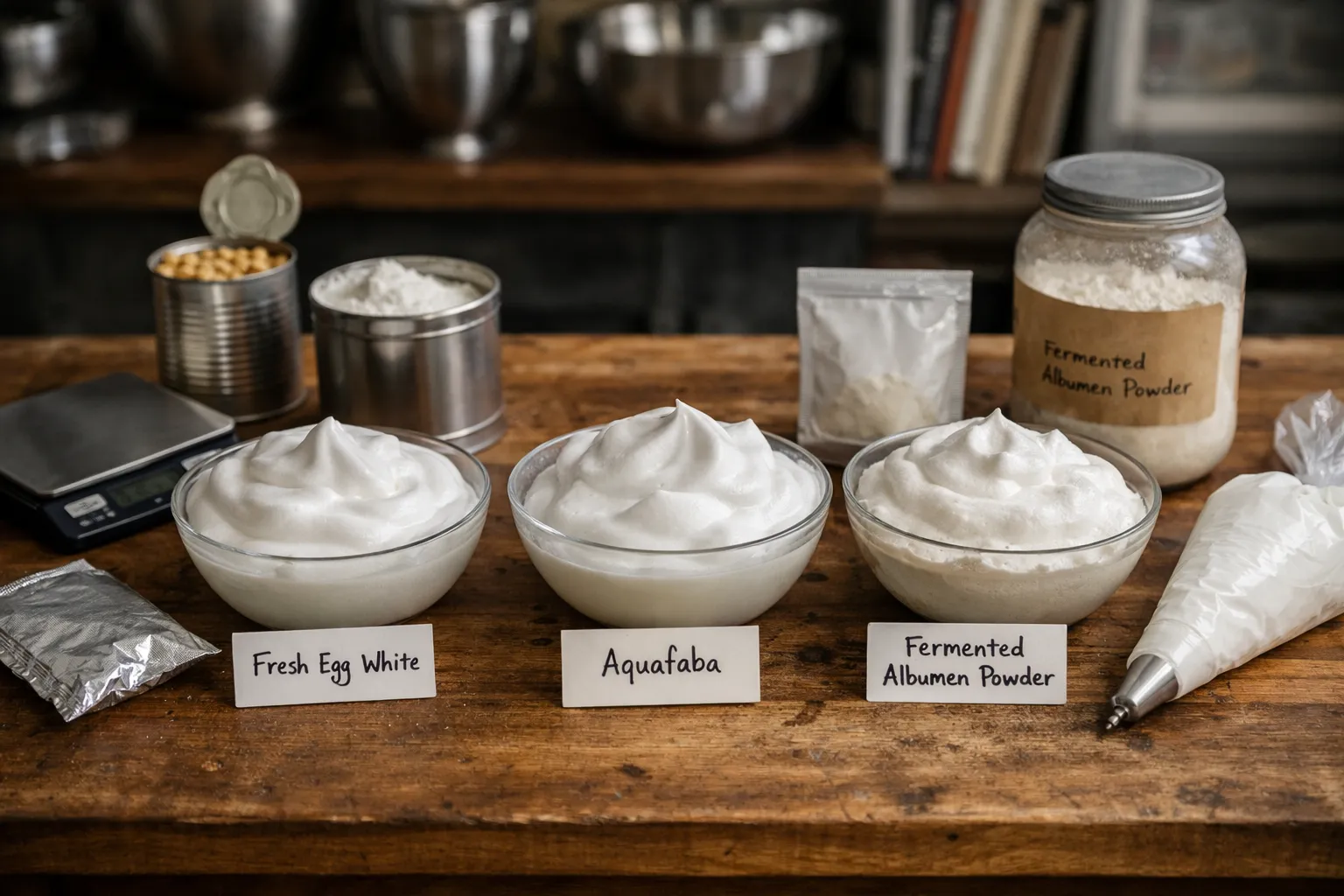
Overview: Precision‑fermented egg white powders—often labeled “fermented albumen,” “bio‑albumin” or similar—moved from R&D aisles into wider retail circulation in 2025–26. For home bakers deciding whether to swap fresh whites, powdered egg, or aquafaba for these new powders, the practical question is the same as it was in March 2026: do they deliver the lift, stability and neutral flavor bakers need? This June 2026 update reviews what has changed in the market and, crucially, what that means at the mixing bowl.
Background: why this category matters now
Precision fermentation uses engineered microbes to produce single proteins at scale. Producers isolate and dry the target protein—here, egg white albumen—to create a shelf‑stable powder that aims to reproduce egg‑white functionality (foaming, gelation, gloss) without poultry. That technical premise has stayed the same, but the category has started to mature: more consumer brands launched retail SKUs in 2025–26, several ingredient formulators introduced blended powders aimed at specific baked applications, and packaging options (single‑use sachets, pre‑measured tubs) began appearing to lower the barrier for non‑technical bakers.
Data and evidence: what’s new through June 2026
- Availability: Where early 2026 saw limited, sporadic retail presence, by mid‑2026 the powders are increasingly visible in specialty grocers and online ingredient marketplaces. Adoption remains uneven regionally; they are still not as ubiquitous as powdered egg whites or canned chickpeas.
- Product variety: Several manufacturers now offer purpose‑tuned powders—formulations optimized for fast whipping, for high‑temperature stability, and for lower syneresis in baked goods. Some blends combine fermented protein with stabilizers (small amounts of starches or hydrocolloids) to emulate the mouthfeel of whole egg white foams.
- Price trajectory: Prices remain premium to conventional eggs and typical powdered whites, but ingredient makers report incremental cost reductions as fermentation scale increases and packaging moves from laboratory‑scale sachets to retail volumes. Expect continued price compression, but not immediate parity with commodity egg products.
- Sustainability context: Lifecycle assessments published through 2024 and industry white papers in 2025–26 continue to show that the environmental benefits of precision fermentation depend heavily on process energy sources and upstream inputs. In other words: when fermentation plants run on renewable electricity, the carbon and land‑use footprint can be substantially lower than conventional egg production; when they rely on carbon‑intensive grid electricity, the climate benefits shrink.
How they compare now: performance, flavor, and practicality
Fresh egg whites
- Performance: The benchmark for tensile strength and predictable behavior in meringues and macaronage remains fresh whites. They still whip reliably and provide the traditional mouthfeel sought in many classic recipes.
- Practical notes: Fresh eggs require refrigeration and handling care; variability by freshness and yolk traces persists.
Dried powdered egg white
- Performance: Reconstituted powdered whites remain the closest non‑fresh direct substitute in most home recipes, and they are widely available and inexpensive relative to new fermented powders.
- Use case: Good for bakers who want familiarity and economy with low storage burden.
Aquafaba (chickpea brine)
- Performance: Still a strong, accessible vegan option. Aquafaba can produce voluminous foam but tends toward softer, slightly drier‑textured bakes and exhibits batch variability depending on bean source, canning liquid concentration and reduction method.
- Flavor and technique: Legume notes remain manageable with sugar and acid; for reliable results many home bakers strain and reduce the brine, or standardize by weight.
Precision‑fermented egg white powders (June 2026 view)
- Performance: Many home and professional trial reports find these powders produce glossy, elastic foams that can closely approximate powdered or fresh egg white behavior in meringues and mousses—often with faster set and greater consistency between batches.
- Flavor: Because the ingredient is a concentrated protein, producers and early users report a largely neutral sensory profile that does not carry legume notes, making it advantageous when a clean flavor is desired.
- Practical notes: New consumer packaging (pre‑measured sachets, recipe‑targeted tubs) reduces friction for home bakers. Labels vary: watch for allergen guidance. Some producers carry advisory language recommending people with egg allergies consult a physician because the protein sequence is identical to egg albumen, even if produced without animals.
Multiple perspectives
Pastry chefs and R&D bakers testing the 2025–26 retail launches generally praise consistency and predictable whipping times. Vegan bakers welcome an animal‑free way to make egg‑white–style foams, particularly where aquafaba’s flavor is a limitation. Consumer advocates and allergists caution that precise labeling and clinical data on allergenicity are still evolving; several advocacy groups have pressed for explicit “contains egg protein” phrasing when the final ingredient is structurally identical to egg albumen.
Implications for home bakers
What should you change in your pantry or method?
- Try before you commit: If you’re curious, buy a small retail sachet or sample pack. Use it in recipes where egg white performance is critical (meringue, macarons, pavlova) so you can directly compare texture, shine and handling.
- Follow reconstitution guidance: Manufacturers’ hydration instructions matter; don’t assume one‑to‑one swaps with powdered egg white. Hydration affects whipping time and stability, so measure by weight rather than by volume.
- Stabilize as you normally would: Acid (cream of tartar or lemon juice) and gradual sugar addition remain best practices. For Italian or Swiss meringue methods, the temperature window for safe syrup incorporation is unchanged—monitor by thermometer and visual cues.
- Adjust bake times and temperatures sparingly: Some fermented‑protein foams set differently under heat; when first substituting, bake a small test shell to confirm timing.
- Mind allergy labeling: If egg allergy is a concern in your household, treat fermented albumen as you would egg white until the producer provides clear, clinically validated allergen statements.
Outlook: what to watch next
Expect three developments through the rest of 2026:
- Wider retail penetration and packaging innovation: More consumer‑friendly dosing (sachets calibrated to “one egg white”) will continue to appear, making adoption easier.
- Price pressure: As production scales and companies optimize fermentation yields and downstream processing, prices should continue to trend down—but broad price parity with commodity eggs is unlikely in the near term.
- Regulatory and labeling clarity: Pressure from consumer groups and food regulators is likely to produce clearer allergen and origin labeling guidance; watch for standardized language about “contains albumen protein” or similar declarations.
Practical recipes and substitutions — quick reference
- For macarons: use fermented powder in small test batches. Pay attention to macaronage since foam elasticity can differ subtly from fresh whites.
- For baked meringues/pavlovas: stabilize with acid and add superfine sugar slowly; reduce oven humidity slightly if your previous pavlovas dried out too quickly with aquafaba.
- For mousses and stabilized foams: many fermented powders produce a cleaner flavor base; consider reducing extra stabilizers if the powder is formulated with hydrocolloids.
Bottom line
As of June 2026, precision‑fermented egg white powders are a useful new tool for home bakers who need predictable, neutral‑flavored foams, and they are becoming easier to buy and use. They are neither an outright replacement for fresh eggs in all contexts nor an automatic cost saver, but they close the functional gap between powdered egg whites and plant alternatives like aquafaba—particularly where consistent performance and neutral flavor matter. Continue to treat them as an experimental pantry addition: test small, compare side‑by‑side, and adjust technique based on what you observe.
Is precision‑fermented albumen safe for people with egg allergies?
Manufacturers typically advise caution. Because the protein sequence can be identical to egg albumen, it may trigger the same allergic responses. If someone in your household has a known egg allergy, consult an allergist or the product’s safety data before use.
Can I substitute fermented powder one‑to‑one for powdered egg white?
Not always. Reconstitution ratios and functional blends differ by brand. Use the manufacturer’s hydration and dosing guidelines and run a small test bake when switching.
Will fermented powders make aquafaba obsolete?
Unlikely. Aquafaba remains the lowest‑cost, widely available vegan option and is valued for accessibility. Fermented powders offer cleaner flavor and greater batch consistency, so each has a place depending on your priorities—cost, flavor neutrality, or vegan labeling preferences.
Where should I buy a small sample for testing?
Look for specialty ingredient retailers, online marketplaces that list new food‑tech ingredients, or local gourmet shops that stock innovative ingredients. Many brands now sell single‑use sachets or small tubs aimed at home bakers.