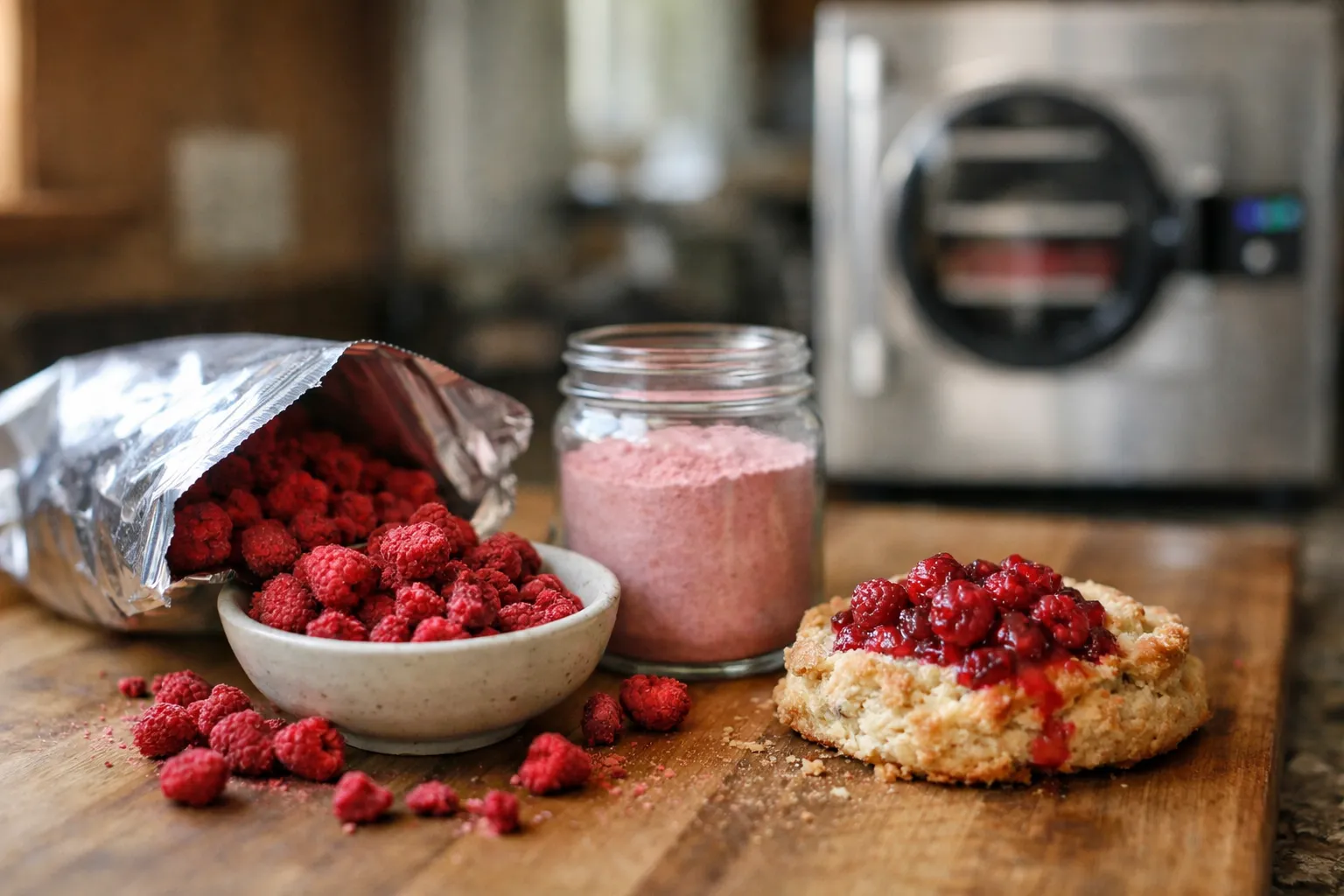
Overview: Freeze-dried ingredients — whole fruits, herbs, sauces and even composed components converted into crisp, shelf-stable form — continue to move from niche emergency-prep and specialty aisles into mainstream home kitchens. As of June 2026, adoption is broader, product variety has widened, and small-scale equipment has improved enough that more serious home cooks are weighing buy vs. own. This update reviews what’s changed since early 2026, summarizes practical performance and recipe implications, and gives timely buying, storage and energy-advice for people who actually cook with these products.
Background: what freeze-drying does and why it matters now
Freeze-drying (lyophilization) removes water by first freezing the food and then reducing pressure so ice sublimates. That leaves a highly porous, brittle matrix that rehydrates quickly and retains many volatile aroma compounds better than heat-based drying.
Why the renewed attention in 2026? Three forces converged: product innovation (more single-origin and culinary-grade lines), packaging advances (brands testing recyclable barrier pouches and resealable MAP — modified atmosphere packaging), and incremental improvements in consumer freeze-dryer hardware (better vacuum pumps, app controls and slightly faster cycle profiles). Those changes make freeze-dried items more attractive for everyday baking, cocktail work, and pantry-ready garnishes — not just for backpacking or emergency rations.
Data and evidence: market signals and product trends
- Retail assortment: Specialty and mainstream grocers have expanded SKUs. You’ll now find more single-fruit crisps, culinary herb powders, and cocktail powders on shelves and in online marketplaces than two years ago.
- Product diversity: Beyond fruit chips, makers are selling concentrated powdered “culinary extracts” for bakers and mixologists, whole-flower crisps for plating, and multi-ingredient meal components aimed at home batch-cooking.
- Hardware improvements: Consumer freeze-dryer brands introduced refreshed models with quieter pumps, improved condensers and smartphone monitoring during 2024–2026, which lowers the barrier for hobbyists processing seasonal harvests.
- Packaging experimentation: A growing number of brands now advertise recyclable or reduced-plastic barrier formats and smaller single-use packs aimed at trial consumers.
Note: these are observable market developments through mid-2026 rather than definitive industry totals. If you want the precise market share or growth rate for a business decision, consult category-specific retail research from NielsenIQ, IRI or similar firms.
How freeze-dried compares now: frozen and dehydrated revisited
Freeze-dried still occupies the middle ground: it provides shelf stability without refrigeration and preserves volatile aromatics better than conventional dehydration. Compared with frozen, freeze-dried eliminates freezer space and avoids freezer-burn risk. Compared with dehydration, it maintains brighter aroma and quicker rehydration. The tradeoffs remain the same: higher production energy and retail price than dehydrated items, and a texture that is a close facsimile rather than a perfect return to a just-picked piece of produce.
Where freeze-dried shines in home cooking — fresh 2026 examples
- Baking and patisserie: Freeze-dried berries and fruit powders are now common in professional-style home baking: they intensify flavor without adding extra water that would loosen batters. Use powdered freeze-dried fruit in macarons, buttercreams and chiffon cakes for vivid color and concentrated notes.
- Instant cocktail and mixology: Bartenders at home are using single-serve freeze-dried citrus powders, dehydrated bitters blends and fruit crisps for garnishes and rim salts. They deliver predictable flavor by weight — helpful for replicable recipes.
- Powdered seasonings: Freeze-dried garlic, onion and herbs milled to powder dissolve quickly into sauces and emulsions; many home cooks now keep a jar of freeze-dried basil powder for fast pesto-like flavor without bruising fresh leaves.
- Garnishes and plating: Crisp fruit chips and edible flower crisps are widely used for finishing plated desserts and cheese boards; they hold color and add visual contrast without the oil or sugar involved in frying.
- Home preservation and value-add: Small growers and home gardeners increasingly create small-batch freeze-dried product to sell at farmers’ markets — lightweight, premium-priced items that extend seasonality.
Flavor and nutrition: updated considerations
Freeze-drying continues to protect many heat-sensitive vitamins and aroma compounds better than thermal drying. Practically, expect reconstituted freeze-dried fruit to be brighter than rehydrated dehydrated fruit, with sharper perceived sugar and acid because of concentration by weight. However, some ultra-volatile aroma molecules still escape during sublimation, and texture expectations matter: a rehydrated strawberry will be different from a just-picked berry.
For nutrition-conscious cooks: freeze-drying preserves macro- and most micro-nutrients well when performed properly, but attention to storage is essential: moisture ingress and oxygen are the main causes of nutrient and color degradation post-packaging.
Economic, energy and environmental tradeoffs in 2026
Retail freeze-dried products remain premium-priced per ounce. Consumer freeze-dryers have become modestly more accessible (smaller footprints, better controls) but still require upfront capital, electricity and bench space. Two practical points for home cooks considering ownership:
- Batch efficiency: The most energy- and cost-efficient way to run a consumer unit is to fill it and run full cycles. Partial loads reduce per-kilo efficiency.
- Packaging waste vs. food waste: Freeze-drying can reduce fresh-food spoilage, letting you capture surplus harvests and avoid throwing away produce. Weigh this against packaging choices if you purchase retail packets — look for brands advertising recyclable barrier films or bulk refill options.
Energy-wise, incremental hardware improvements have reduced cycle times marginally and improved pump efficiency, but the process remains more energy-intensive than passive air-drying. If sustainability is a priority: batch loads, run cycles during off-peak electricity hours, and prioritize vendors that disclose packaging lifecycle improvements.
Buy vs. own: updated practical considerations
- Try before you invest: With broader retail offerings, test product forms (powder, chip, whole) to find which you’ll use regularly.
- Volume threshold: You’ll generally need steady monthly throughput — preserving garden harvests, making small batches to sell, or frequent culinary experimentation — to justify a consumer freeze-dryer financially and in terms of space.
- Operational reality: Expect cycle times still measured in hours (often 20–36+ hours depending on load). Newer models shave a few hours off earlier cycles, but throughput remains limited compared to industrial lines.
- Control and creativity: Ownership gives you control over raw inputs and protocols (pre-freezing practices, multi-stage drying), enabling experimentation with texture, concentrate blends and custom powders.
Practical tips for home cooks — what’s new in 2026
- Scale recipes by weight, not volume: Freeze-dried powders concentrate flavor. Weigh and adjust liquid or sweetener rather than substituting cup-for-cup.
- Rehydrate strategically: For fillings, rehydrate briefly in warm liquid; for baking, fold powders directly into dry mix to avoid changing batter hydration.
- Storage upgrades: Use airtight jars with oxygen absorbers or resealable barrier packs. Keep opened retail pouches in a cool, dark place to slow degradation.
- Batch and time your runs: If you own a freeze-dryer, aim for full loads and set cycles to start during lower electricity-rate windows; pre-freezing thicker items at uniformly low temperatures shortens overall cycle time.
- Safety first: Freeze-dried products are safe when fully dried and stored dry. If rehydrating for long-term refrigerated storage, treat them as you would any cooked produce — refrigerate promptly and follow safe-holding rules.
Multiple perspectives
Culinary professionals view freeze-dried ingredients as a toolkit: pastry chefs prize powders for color and intensity, mixologists value predictable flavor by weight, and some savory chefs use herb powders to finish sauces. Sustainability advocates applaud reduced food waste potential but press companies to address packaging and disclosed energy footprints. Equipment manufacturers emphasize incremental efficiency gains and better controls for hobbyists, while smaller growers see freeze-drying as an avenue to convert surplus into higher-margin products.
Implications for readers
For the home cook, the practical path remains incremental. Buy small packs to experiment — powdered herbs and a bag of fruit crisps will demonstrate how the ingredient behaves in your kitchen. If you have steady output (garden harvests, regular baking projects, or plans to sell small-batch products), newer consumer units may now be worth evaluating for their convenience and creative possibilities.
Outlook: what to watch for next
Through late 2026 and into 2027, watch for three developments that will shape practical use:
- Continued packaging innovation — more recyclable or refillable options.
- Hardware improvements aimed at throughput and energy monitoring that let consumers compare operating costs more transparently.
- Broader culinary applications and recipe sharing as home cooks publish techniques that normalize use (e.g., standard powder-to-liquid ratios for common ingredients).
Freeze-dried ingredients are not a wholesale replacement for fresh, frozen or dehydrated goods. Instead, they continue to broaden the home cook’s toolkit — offering intense flavor, long shelf life and new textures. The smartest approach in 2026 is targeted experimentation: try, adapt recipes for concentrated flavor, refine storage, and consider a home machine only once your usage justifies the investment.
FAQ
Do freeze-dried ingredients retain vitamins and nutrients?
Yes — freeze-drying preserves many heat-sensitive vitamins and volatile aroma compounds better than thermal drying when the product is fully dried and stored correctly. Storage conditions (oxygen, moisture, light) determine how well nutrients hold up over months and years.
Can I substitute freeze-dried for fresh one-for-one in recipes?
Not exactly. Freeze-dried fruit and vegetable powders are concentrated by weight and add little free water. Start by reducing added liquid by 5–15% and taste as you go. For fillings, rehydrate briefly before use if you need fresh-like texture.
Is owning a home freeze-dryer energy-efficient?
Consumer units are more efficient than they were five years ago but remain energy- and time-intensive compared with passive air-drying. If you own one, maximize efficiency by running full loads, timing cycles for off-peak electricity, and using pre-freezing best practices.
How should I store opened freeze-dried packages?
Transfer to airtight jars with oxygen absorbers or keep in resealable barrier bags. Store in a cool, dark place. Avoid opening packages repeatedly; keep desiccants in the container if you live in a humid climate.
Are freeze-dried garnishes safe to eat straight from the bag?
Yes — commercially freeze-dried garnishes are fully dried and ready to eat. Just be mindful of intense flavor concentration and possible choking risk for young children with whole chips; for children, crush powders or chips appropriately.