
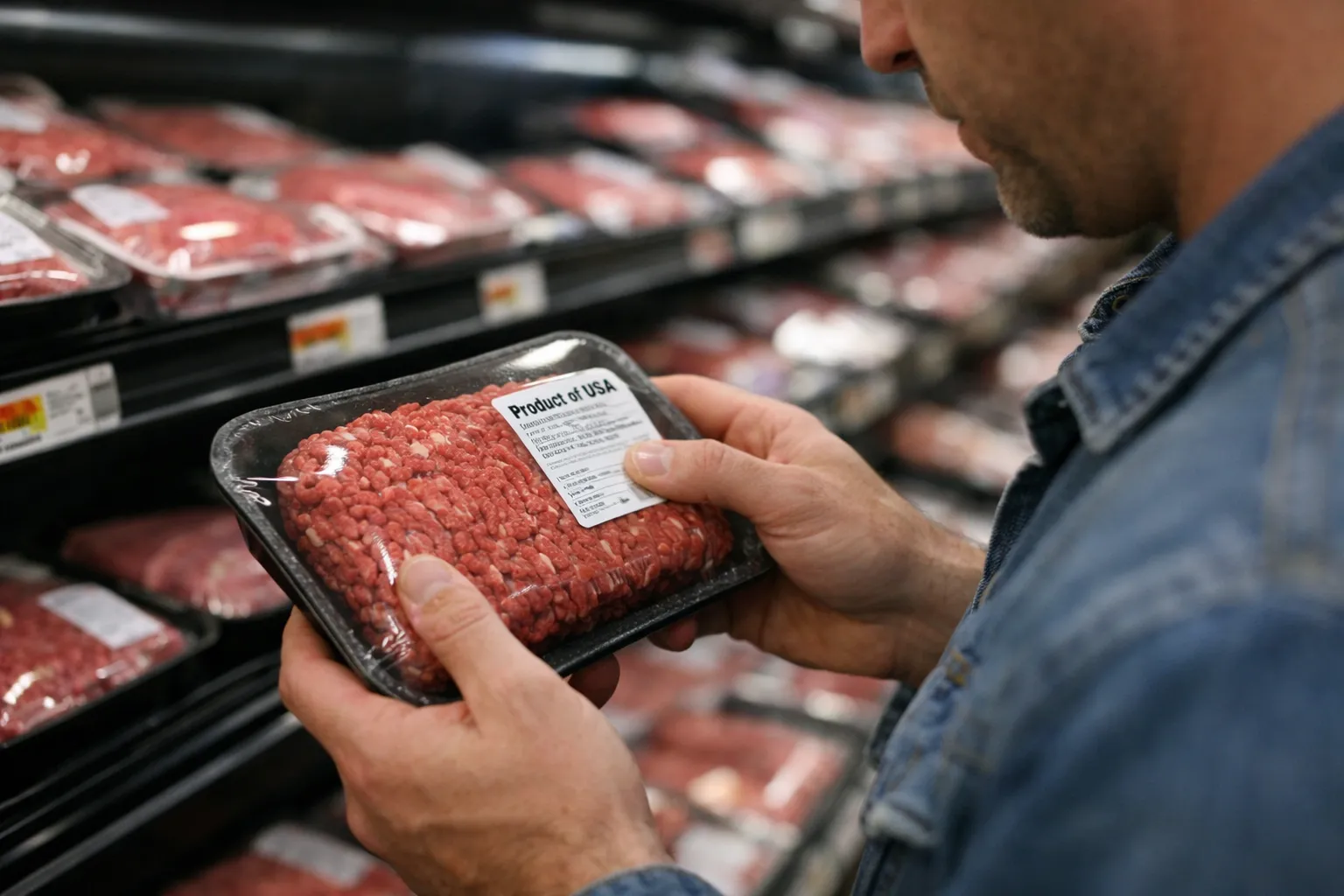
WASHINGTON — Aug. 6, 2026: The U.S. Department of Agriculture’s Food Safety and Inspection Service (FSIS) continues enforcing the tightened voluntary “Product of USA” label standard that went into effect after FSIS finalized guidance in February 2026. The rule requires that meat, poultry and egg products labeled “Product of USA” come from animals born, raised, slaughtered and processed in the United States. Three months into the transition period, the label landscape has shifted — but the on‑the‑ground reality in stores still demands attention from cooks who care about provenance.
Why this still matters — and what’s different in August 2026
We care because origin matters for flavor expectations, supply‑chain transparency, animal‑welfare decisions and support for domestic producers. The core change is not rhetorical: FSIS narrowed an earlier practice that allowed some products with only U.S. processing to claim American origin. Since the February guidance, manufacturers, processors and retailers have had to decide whether to document full domestic chains, remove the claim, or pursue alternative, more specific origin statements.
What’s different now compared with May 2026 is pragmatic: major national grocery chains and several large branded meat suppliers have moved beyond “we’ll change labels later” to practical implementation. At the same time, smaller processors and some multi‑source private‑label programs are still adjusting documentation and packaging runs. The result is a mixed-but-improving shelf that rewards shoppers who know where to look.
Market moves and real-world examples
- Retail rollouts: National grocers — including Kroger, Walmart and Albertsons — have largely updated front‑of‑pack wording on nationally distributed brands and private‑label lines. That change is most visible in full‑case items and fresh‑cut programs where packaging turnover is frequent.
- Brands that removed the claim: Several mid‑sized processors chose to drop “Product of USA” rather than institute continuous upstream audits; those products now use more specific language (for example, “Processed in USA from imported and domestic ingredients”) or rely on third‑party seals.
- Traceability tech ramping up: Scan‑to‑trace QR codes are more common on premium and direct‑to‑consumer lines. Companies using IBM Food Trust, Provenance or in‑house trace systems now link lot IDs to supplier declarations and harvest dates — though coverage is uneven across categories.
- Butcher counters and regional programs: Independent butcher shops and regional farm networks are advertising verified U.S. origin more openly, sometimes with state‑level claims such as “Born & Raised in Nebraska” backed by invoices and lot tags at the counter.
New evidence and industry reaction
Industry groups, including the National Cattlemen’s Beef Association and the American Sheep Industry Association, have publicly supported greater clarity on origin claims, saying it protects producers who invest in fully domestic supply chains. Retail trade groups note increased administrative costs but say clearer claims reduce customer confusion and returns.
FSIS continues to emphasize enforcement of the guidance: the inspection legend and establishment number remain the primary regulatory anchors. FSIS has reiterated that the claim is voluntary — companies aren’t forced to use “Product of USA” — but when used it must meet the full domestic‑chain standard that consumers expect.
What shoppers are actually seeing in August 2026
Walk into a supermarket today and you’ll encounter three common label situations:
- Packages that plainly say “Product of USA” and include either a farm/state claim or a QR code linking to lot‑level info. These are what we want as shoppers who care about provenance.
- Packs with patriotic graphics and ambiguous wording (e.g., “Packaged in USA”) — front‑panel art that can mislead if you don’t read the fine print.
- Products that simply omit origin language and instead use third‑party seals (USDA Organic, Certified Angus Beef, American Grassfed Association, Certified Humane), which convey other attributes but not a full domestic origin unless specified.
Updated how‑to: Verify origin at the meat case (August 2026)
1) Read the exact wording
Don't assume a flag or “American” brand name equals “Product of USA.” Look for the precise phrase and any qualifying clause on the back panel such as “processed in” versus “born, raised, slaughtered and processed in.”
2) Use the EST number — and the FSIS lookup
The establishment number (e.g., “EST. 1234”) still identifies the processing plant. FSIS’s online establishment lookup remains useful to confirm processing location; if you need upstream details (where the animal was born or raised), ask the retailer or brand for supplier declarations tied to the lot number.
3) Scan QR codes and follow the trail
Premium and direct‑to‑consumer brands increasingly provide QR codes that link to harvest date, lot number and supplier info. Scan in the store; if the code lands on a marketing page with no lot‑level data, treat it as insufficient.
4) Ask the butcher and check invoices for bulk buys
Butcher counters at regional chains and independent shops are often the quickest route to lot documentation. For large purchases (wedding roast, holiday whole bird), demand written supplier declarations that confirm birth, raising, slaughter and processing locations.
5) Treat third‑party seals as complementary evidence
Labels like USDA Organic, Certified Angus Beef and Certified Humane tell you about production or welfare standards, not necessarily full domestic origin. Use them in combination with “Product of USA” wording or traceability links.
Impact: who’s affected and how
Consumers: People who prioritize origin now have clearer options, but they must be discerning. For everyday cooks who don’t need full-chain verification, third‑party seals or retailer sourcing statements may be sufficient. For provenance purists, buying local, shopping independent butchers, or choosing packages with explicit “Product of USA” and lot trace links is the safest bet.
Producers & processors: Larger companies that committed to supplier audits have converted packaging and tightened recordkeeping. Smaller processors face continued paperwork and packaging costs; some have opted to market on other attributes rather than risk a claim they cannot sustain.
Retailers: Chains are balancing cost of relabeling and consumer demand. By August 2026 we’ve seen stronger consistency among national players and more variability in regional stores.
Reactions and what to watch next (rest of 2026)
- Label consolidation: Expect the majority of national brands to finish their packaging refreshes by Q4 2026. Smaller brands and seasonal labels may lag into 2027.
- Traceability adoption: Look for more QR codes with genuine lot‑level data — but also for marketing-only codes. Verify linked content before trusting provenance claims.
- Retail transparency: Grocery e‑commerce pages and apps should continue improving back‑panel imagery; take screenshots and save lot numbers for high‑value purchases.
Updated shopping checklist
- Prefer packages that explicitly state “Product of USA” and provide a trace link or clear lot info if you want a full domestic chain.
- Use FSIS establishment lookup for processing location and ask retailers for upstream supplier declarations when origin is critical.
- Scan QR codes and insist they present lot-level information — not just promotional content.
- Buy direct from regional producers or trusted butchers when provenance is non‑negotiable.
- Use third‑party certifications as supplemental indicators, not as substitutes for a full origin claim unless the cert specifically covers origin.
FAQ — August 2026
Does the FSIS rule require every meat package to list country of origin?
No. The FSIS guidance tightens the meaning of the voluntary “Product of USA” claim but does not mandate a universal country‑of‑origin label on every package. When used, the phrase must reflect a full domestic chain.
Can I rely on patriotic packaging or store signage?
No. Flags, red‑white‑blue graphics and patriotic brand names are marketing. Read the exact claim on the label — front and back — and check for qualifying language such as “processed in” versus “born and raised in.”
Are QR codes a reliable way to verify origin?
They can be — but only if the QR leads to lot‑level information (harvest date, supplier, lot number). Many QR codes still link to general marketing pages. Scan and confirm the presence of supplier declarations before assuming proof of provenance.
If a product omits “Product of USA,” is it imported?
Not necessarily. Many domestic producers choose to omit the voluntary claim to avoid continuous auditing costs. Absence of the claim is not proof of import; ask for supplier documentation if it matters to you.
What’s the quickest verification method when shopping online?
Look for high‑resolution back‑panel photos that show exact claim wording and lot or establishment numbers. If the listing lacks a clear image or trace link, contact customer service or choose a different product.
Bottom line
By August 2026, the “Product of USA” rule is producing clearer labels in many national channels and prompting sharper traceability in premium lines. But the transition is uneven. We still need to read the fine print, scan QR codes critically, and talk to butchers when provenance truly matters. For cooks who want certainty: insist on explicit “Product of USA” wording backed by lot‑level traceability or buy local. The regulation set the guardrails — now it’s on brands and retailers to live up to them. And frankly, as cooks, we should demand nothing less.