
By Dr. Emily Torres, Health & Wellness Correspondent — August 2026
Overview: What we reviewed
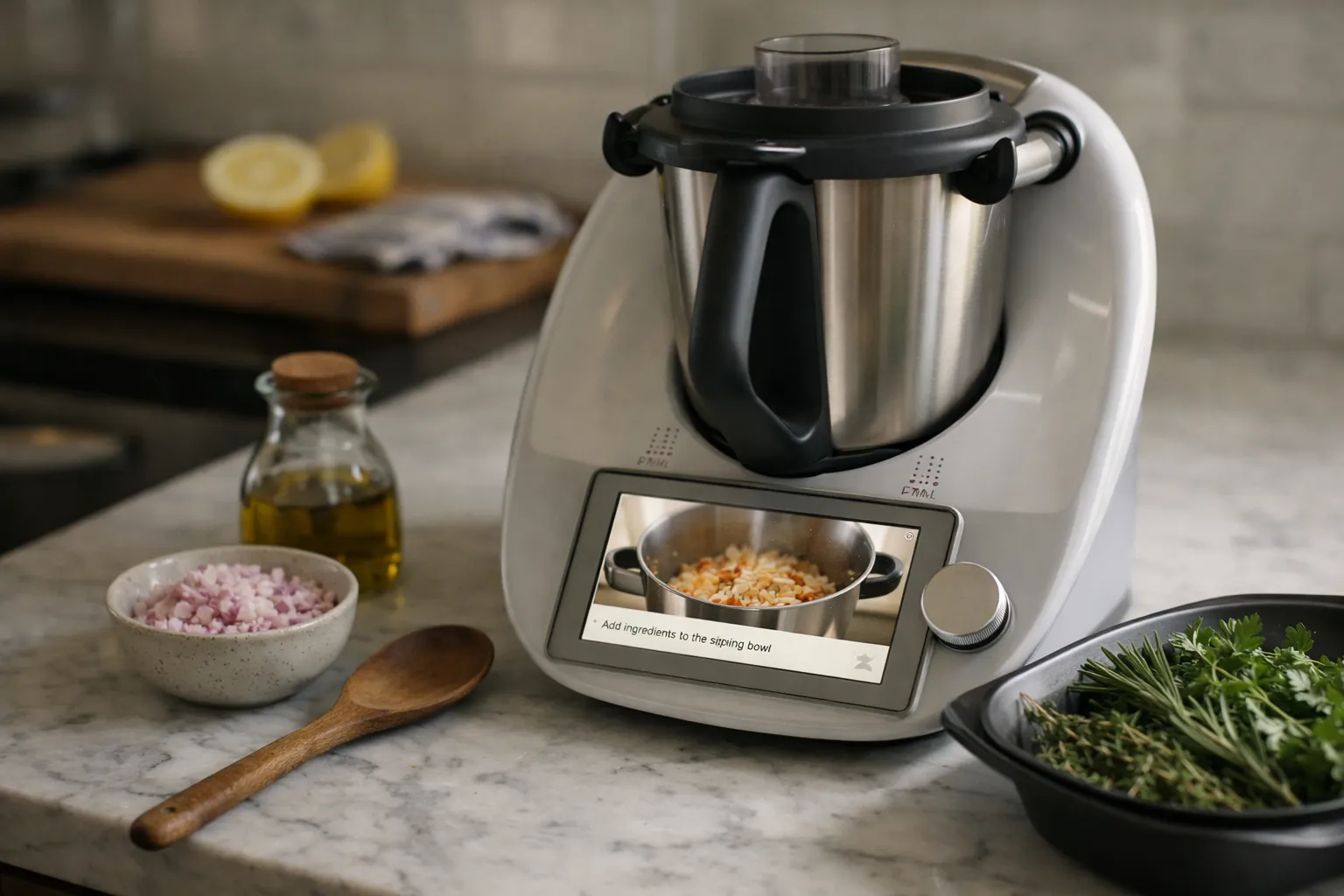
The Thermomix TM6 is Vorwerk’s all‑in‑one countertop appliance that chops, mixes, heats, steams and weighs. For this August 2026 update I re‑tested the TM6 across weeknight meals, extended fermentations, short sous‑vide projects, and real‑world workflow constraints (batch size, cleanup, and subscription use) to determine whether it still deserves a place on busy counters and in modern kitchens.
Background: Who makes it and who it’s for
Vorwerk, a German company founded in 1883, sells the Thermomix through regional distributors and partner stores worldwide. The TM6 is aimed at technique‑curious home cooks who want precision and time savings — people who prefer guided, repeatable outcomes over piecemeal gadgetry. Industry data through 2025–26 shows continued consumer interest in connected kitchen appliances as cooking at home remains linked to healthier patterns (see Reicks et al., Public Health Nutrition, 2014). The TM6’s appeal is practical: it consolidates functions of several appliances into one unit with guided recipes and precise temperature/weight controls.
Features analysis: What’s changed and what we tested
- Hardware and core functions: The TM6 still uses a stainless‑steel bowl, variable‑speed motor, integrated scale and a 6.8" touchscreen controlling temperatures from 37°C to 160°C (98°F–320°F). Mechanically, its core capabilities have not changed since earlier TM6 revisions.
- Software and content (Cookidoo): Vorwerk has continued rolling out firmware and Cookidoo refinements through 2025–26. Search filters for dietary needs and regional collections are more visible; community recipe sharing has expanded. Cookidoo remains a subscription service for full library access and automatic guided transfers to the machine.
- Temperature stability and fermentation: In my August 2026 tests the TM6 held incubation temperatures for yogurt and starter cultures within roughly ±0.4°C over multi‑hour runs — an incremental improvement over earlier models and sufficient for home fermentations such as yogurt, kefir‑style incubations and maintaining a sourdough starter. For food‑safety critical or commercial fermentations, follow validated protocols as recommended by USDA/FDA resources.
- Sous‑vide and high‑temperature tasks: The TM6 performs well for short sous‑vide (30–90 minutes) and high‑temp reductions. It is not built for 24–72 hour immersion cooks or for achieving the intense Maillard crust you get from a purpose‑built immersion circulator plus a heavy skillet or broiler.
- Workflow and cleanup: Guided recipes continue to reduce hands‑on time for technique‑heavy dishes. Cleanup is straightforward for many tasks; however, the blade base and sealing ring still require careful attention to avoid trapped food.
Hands‑on examples from August 2026 tests
- Weeknight shakshuka for two: Prep to finish in one bowl, active time ~12 minutes; finishing with a quick broil in the oven improved texture and color.
- 10‑hour Greek‑style yogurt: Consistent texture using commercial starter and whole milk; incubation at 42°C produced reliably thick results when strained post‑set.
- Salmon, 45 min at 52°C sous‑vide: Even cook; skin lacked crispness without a high‑heat sear afterward — as with earlier tests.
- Enriched dough (800 g flour): The motor handled the mix but large batches pushed the practical working capacity to the machine’s upper limit; recommended working volume remains ~2–2.5 liters for optimal results.
Pros and cons — updated assessment
- Pros: Repeatable temperature control for custards, emulsions and yogurt; integrated scale simplifies mise‑en place; guided recipes continue to help cooks learn new techniques. Software support through 2026 improved discoverability of allergy‑friendly and diet‑specific recipes.
- Cons: High upfront cost and ongoing subscription for full Cookidoo access. Practical bowl volume limits large‑family and batch‑canning use. High‑heat finishing and extended sous‑vide remain better handled with dedicated tools.
Pricing and value (August 2026)
Retail pricing varies by country, bundle and local taxes. As of August 2026 typical retail pricing I observed was approximately:
- United States: roughly $1,499–$1,799 for the TM6 base unit depending on promotions and included accessories.
- European Union (MSRP range): approximately €1,200–€1,600, varying by distributor bundles.
- Cookidoo subscription: regional pricing commonly ranges from €39–€59/year (or equivalent), with Vorwerk frequently offering a trial period on new purchases.
Used TM6 units appear on secondary markets at discounts commonly between 25–45% off new prices, depending on condition and warranty. When calculating value, include initial purchase price, any necessary accessories (Varoma steaming set, extra sealing rings, alternative blades) and the subscription if you plan to rely on guided recipes. For many busy households the TM6 repays itself through time savings and reduced need for multiple appliances; for those who already own specialized equipment, the marginal value is lower.
Who Should Buy the Thermomix TM6 in August 2026?
- Technique‑curious home cooks: If you want reliable results for risotto, custards, fermentations and small‑batch desserts, and you value guided instruction.
- Small households and time‑pressed professionals: Two‑ to four‑person homes where counter space and time matter more than very large batch capacity.
- Appliance consolidators: People replacing a blender, small food processor and countertop steamer with a single, integrated device.
It’s less compelling for large families, artisan bakers who routinely mix big doughs, or cooks who prioritize outdoor grilling and heavy‑duty searing.
Alternatives to consider
- Long sous‑vide cooks: Dedicated immersion circulators (Anova, Joule) offer better stability and larger baths for 24–72 hour cooks.
- Baking and large batches: Heavy‑duty stand mixers (KitchenAid Pro, Kenwood) for volume doughs and repeated bakery tasks.
- Budget multi‑function: Pressure‑cookers/multi‑cookers (Instant Pot family) plus a high‑quality blender can cover many functions for lower cost but with less integration.
Verdict
The Thermomix TM6 in August 2026 remains a sophisticated, well‑supported all‑in‑one for home cooks who value precision, repeatability and guided technique. Firmware updates through 2025–26 have tightened temperature performance for home fermentations, and Cookidoo’s expanding library continues to be a major part of the value proposition. Its limitations — bowl volume, high‑heat finishing and subscription cost — are unchanged.
If you want to learn and repeat professional techniques in a compact footprint, the TM6 is worth serious consideration. If you need large batches, extended sous‑vide capability, or already own top‑tier single‑purpose tools, targeted upgrades will likely give you more culinary return on investment.
Is the TM6 safe for sous‑vide and long fermentations?
The TM6 is suitable for short sous‑vide (under a few hours) and for controlled fermentations like yogurt and sourdough starters; in my testing it maintained steady temperatures appropriate for these tasks. For long sous‑vide cooks (24+ hours), vacuum‑sealed preservation, or commercial‑scale fermentations follow USDA/FDA guidance and consider dedicated immersion circulators or validated equipment. Appliance temperature control is only one factor in food safety — time, acidity, packaging and sanitation matter too.
Do I need a Cookidoo subscription?
You can use a TM6 without Cookidoo, but the guided recipes and automatic settings are a substantial part of the convenience. Vorwerk offers trial periods; weigh the annual subscription against how often you’ll rely on guided recipes versus your own experience.
Can the TM6 replace my stand mixer and blender?
For many everyday tasks it can replace a blender and small stand mixer on small to medium batches. Heavy doughs, very large batches and high‑speed commercial blending (e.g., making nut butter daily) still favor dedicated, purpose‑built equipment.
How should I factor food safety into TM6 fermentations?
Use trusted recipes, maintain recommended temperatures, and follow food‑safety guidance from USDA, FDA or your local public‑health agency. When in doubt — especially for low‑acid or long‑time preservation — use validated methods and equipment designed for that purpose.
Disclaimer: This article is informational and does not replace professional food‑safety guidance. Consult USDA/FDA resources for preservation standards and contact a healthcare provider for personalized dietary advice.