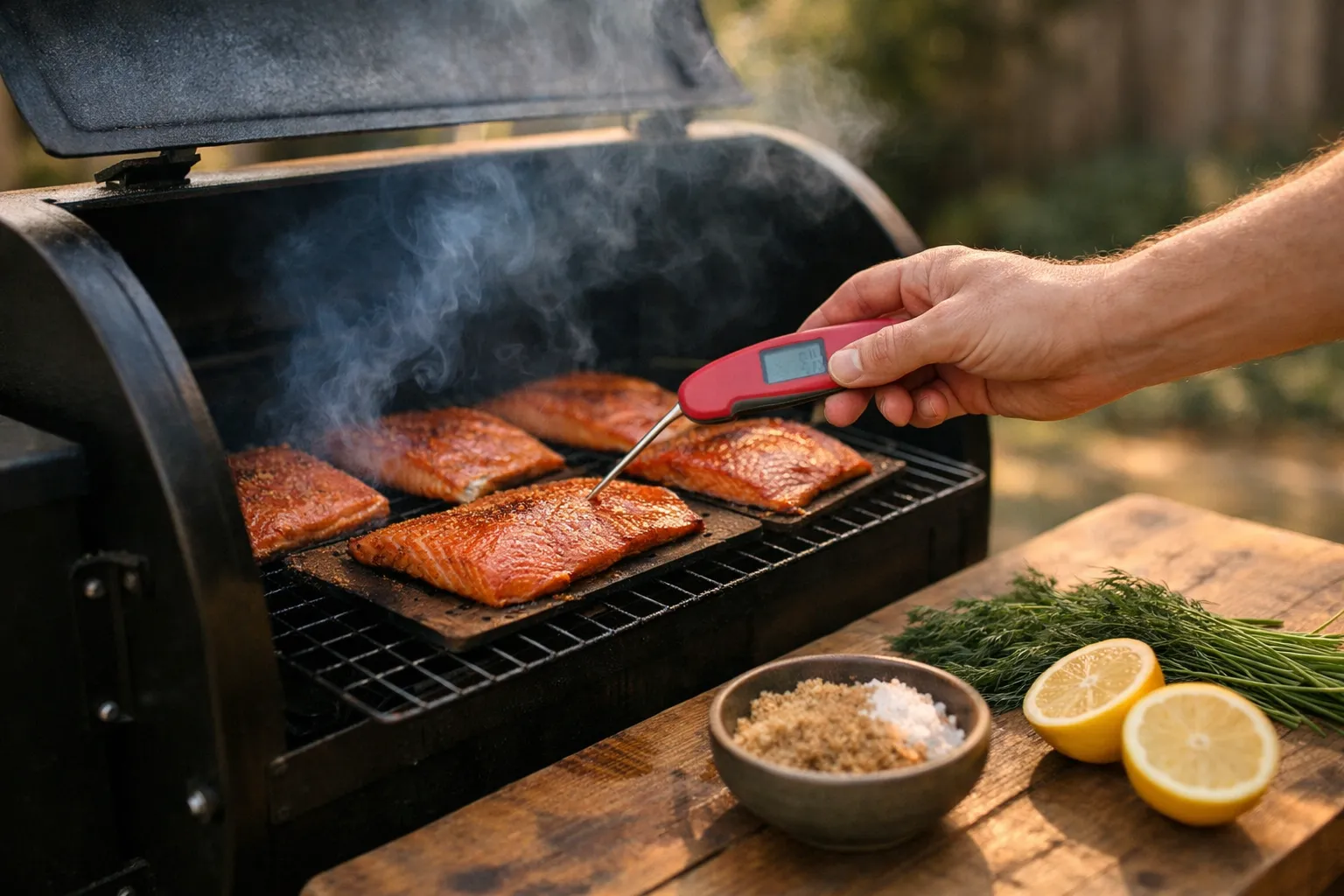
Smoking food at home remains one of the most rewarding ways to add depth and complexity to everyday ingredients. This June 2026 update covers what’s changed since early 2026: smarter pellet and electric units, hybrid cooking workflows (sous‑vide + smoke), renewed consumer attention to cleaner combustion and smoke chemistry, and practical safety reminders. This guide is for enthusiastic home cooks and weekend pitmasters who want reliable methods, up-to-date equipment advice, and actionable recipes to produce predictable, safe results.
Prerequisites & context: what’s new in 2026
Since early 2026 the market has continued two clear trends: increased adoption of smart pellet and electric smokers with closed‑loop PID control, and continued interest in hybrid techniques that pair low‑temperature sous‑vide with a short smoke finish for flavor and texture. Manufacturers have also emphasized cleaner combustion and emissions control in product marketing; at-home cooks are more conscious of smoke off‑flavors from creosote and of minimizing polycyclic aromatic hydrocarbons (PAHs) by maintaining hotter, cleaner burn conditions and avoiding charred surfaces.
What you should know before you start:
- Skill/tools: an instant‑read thermometer and a reliable leave‑in probe remain essential. Wi‑Fi enabled smokers are convenient, but never replace a probe in the meat.
- Food safety basics: hot smoking must reach safe internal temperatures; cold smoking requires proper curing and refrigeration. Curing-salt dosages and sanitary handling rules have not changed—follow manufacturer instructions and tested recipes.
- Local rules: check local burn and air‑quality rules for outdoor smoking—some municipalities restrict open coals and visible smoke on certain days.
Why smoke at home?
Smoking adds smoky compounds that complement or transform ingredients and creates desirable textures via slow cooking or gentle drying. Benefits include:
- Flavor depth: controlled smoke exposure adds complexity to proteins, vegetables and dairy.
- Texture transformation: low‑and‑slow cooks convert collagen to gelatin (e.g., pulled pork) or gently dry and firm cured products.
- Versatility: cold smoking adds flavor to cheese, butter or vegetables without cooking; hot smoking produces fully cooked, ready‑to‑eat dishes.
Choose the right method: hot vs cold (and hybrids)
Hot smoking
- Temperature ranges:
- Low‑and‑slow meats: 225–275°F (107–135°C)
- Quicker poultry roasts and finishing: 300–350°F (149–177°C)
- Use for: ribs, pork shoulder, whole chicken, hot‑smoked fish, vegetables.
- Food safety: follow USDA internal temp targets—poultry 165°F (74°C); whole-muscle pork and fish 145°F (63°C) with a 3‑minute rest; ground meats 160°F (71°C). Pulled pork needs higher final tenderness (often achieved at 195–205°F / 90–96°C internal) to break down collagen.
Cold smoking
- Temperature range: keep product exposure below about 90°F (32°C), ideally 60–80°F (15–27°C).
- Use for: smoked cheese, butter, alkali‑cured fish and cured meats following tested protocols.
- Safety: cold‑smoked raw proteins require validated curing and refrigeration. Do not cold‑smoke raw poultry or large untreated muscle cuts unless you follow certified curing protocols or commercial HACCP guidance.
Hybrid workflows (2026 common practice)
Hybrid approaches are increasingly popular and reliable:
- Sous‑vide then smoke: vacuum‑seal protein, sous‑vide to a target pasteurization temperature/time (e.g., 140–165°F / 60–74°C for extended periods per pasteurization tables), chill if necessary, then finish for smoke flavor and bark in a smoker at 225–300°F for 20–60 minutes.
- Reverse sear + smoke: low‑and‑slow until just under target temperature, rest, then finish over higher heat for a crust while adding brief smoke exposure.
Equipment in mid‑2026: what to buy
Choose gear for your goals and budget. Key developments to watch: improved PID temperature control, cloud firmware updates, pellet level sensors, and more smoke‑generator accessories for cold smoking.
Beginner‑friendly
- Electric smokers: reliable, low‑maintenance, good for consistent hot smoking in protected spaces. Look for models with accurate PID control and a leave‑in probe port.
- Compact pellet smokers: precise temperature control and programmable smoke schedules. In 2026 many models include pellet‑level sensors and smartphone apps—useful but always verify with a probe.
Intermediate to advanced
- Charcoal offset and ceramic kamado cookers: best for smoke nuance and high‑heat finishing; more hands‑on fuel management.
- Large pellet or cabinet smokers: stable temperatures over long cooks and better airflow control for bark development.
Cold‑smoking options
- Dedicated cold smoke generators, smoke boxes, or small powered generators that feed smoke through hose into a chamber. Use food‑grade tubing and ensure your generator’s output keeps chamber temps below 90°F.
Also buy: instant‑read thermometer, a quality leave‑in probe for long cooks, silicone/rubber gloves, a drip pan, and a small fan or chimney tool for managing vents. Replace or service seals and PID controllers per manufacturer guidance.
Wood choices and pairings
Match wood to ingredient for complementary flavors. Trends in 2026 show broader availability of blended pellet flavors made for specific proteins.
- Fruit woods (apple, cherry) — mild, sweet; poultry, pork, fish.
- Maple — mild and sweet; pork, vegetables.
- Hickory — assertive, bacon‑like; pork and beef in moderation.
- Oak — versatile for long cooks like brisket.
- Alder — classic for salmon and delicate fish.
- Mesquite — intense; use sparingly for short cooks or bold cuts.
Preparation: brines, cures and rubs (updated tips)
Preparation still determines texture and safety. Two updates to incorporate in 2026: allow extra time for pellicle formation when humidity is high, and consider light smoke infusion in refrigeration for some cured products to extend flavor without increasing risk.
Wet brine for poultry (basic)
Dissolve 1/2 cup coarse kosher salt and 1/2 cup granulated sugar in 1 gallon (3.8 L) water. Submerge bird and refrigerate 4–8 hours. Rinse lightly, pat dry, and air‑dry uncovered in the fridge 2–12 hours to develop a tacky pellicle for better smoke adhesion.
Simple cure for salmon (hot‑smoked)
For a 2–3 lb fillet: mix 1/4 cup coarse kosher salt with 1/4 cup brown sugar, plus 1 tbsp cracked black pepper and 1 tbsp lemon zest. Massage onto flesh, refrigerate skin‑side down on a rack 4–6 hours, rinse, pat dry and let rest uncovered in the fridge to form a pellicle.
Dry rub for pork shoulder
Mix 1/4 cup coarse kosher salt, 1/4 cup brown sugar, 2 tbsp smoked paprika, 1 tbsp black pepper, 2 tsp garlic powder, 2 tsp onion powder, 1 tsp cayenne. Apply liberally and refrigerate uncovered 2–12 hours.
Curing salts and cold‑smoking safety
Use commercially labeled curing salts (Prague powder #1 or #2) and follow manufacturer dosing exactly. Improper curing can allow Clostridium botulinum and other hazards. When in doubt, follow tested recipes from reputable sources or consult a local food‑safety authority.
Step‑by‑step smoking workflow
- Decide method (hot, cold, or hybrid) and equipment appropriate for the food and time available.
- Prepare ingredient: brine, cure, or rub. Refrigerate and develop a pellicle for cold or wet‑cured items when needed.
- Preheat smoker to target temp (e.g., 225°F/107°C for most low‑and‑slow cooks).
- Load wood: start mild for the first hour; reserve stronger woods for shorter later bursts if desired.
- Place food with space for airflow. Insert probe into the thickest part of the meat; verify probe accuracy with an ice bath or boiling test periodically.
- Maintain temperature and add fuel as needed. For long cooks, a water pan moderates heat swings and preserves interior moisture. Use vents and baffles to reduce creosote formation.
- Finish to target internal temperature or tenderness metric; for pulled pork test for probe‑tenderness rather than temp alone (195–205°F commonly). Rest meats wrapped or tented to redistribute juices.
- Chill cold‑smoked or cured items promptly and label with date. Store refrigerated or frozen per standard guidelines.
Five practical recipes to try (updated, tested approach)
1. Hot‑Smoked Whole Chicken (225–275°F)
- Brine: 1/2 cup kosher salt + 1/2 cup sugar per gallon; brine 4–8 hours. Rinse and dry 2–6 hours in fridge.
- Rub: 2 tbsp olive oil, 1 tbsp smoked paprika, 1 tsp garlic powder, 1 tsp salt, 1 tsp black pepper.
- Smoke: 275°F (135°C) until internal temp reaches 165°F (74°C) in the thickest part of the thigh — typically 2–3 hours depending on size. For crisper skin, finish 10–15 minutes at 375°F (190°C).
- Rest 10–15 minutes before carving.
2. Pulled Pork Shoulder (225°F low‑and‑slow or sous‑vide hybrid)
- Dry rub: as above; let sit 2–12 hours.
- Traditional: smoke at 225°F (107°C) until 195–205°F (90–96°C) and probe‑tender — often 10–16 hours for 6–8 lb shoulder.
- Hybrid: vacuum‑seal and sous‑vide at 165°F (74°C) for 18–24 hours for even pasteurization and collagen breakdown; chill briefly, then finish on smoker at 250–275°F for 45–90 minutes to develop bark and smoke flavor.
- Rest wrapped 1 hour, then pull and mix with sauce if desired.
3. Hot‑Smoked Salmon (single fillet)
- Cure: 1/4 cup kosher salt + 1/4 cup brown sugar per 2–3 lb fillet; refrigerate 4–6 hours. Rinse and dry to form a pellicle.
- Smoke: 225°F (107°C) to an internal temp of 145°F (63°C), roughly 1–2 hours. For a more delicate finish, use alder or apple wood.
- Serve warm or chilled. Keep leftovers refrigerated; use within 3–4 days.
4. Cold‑Smoked Cheddar (short sessions)
- Use pasteurized, well‑chilled cheese. Keep the chamber below 80–90°F. Smoke 1–4 hours, turning hourly. The cheese will pick up color and smoke aroma; refrigerate promptly.
- Tip: vacuum‑seal after smoking to help the flavor mellow and distribute evenly over 1–2 days in the fridge.
5. Smoked Eggplant Dip (vegan, quick and modern)
- Halve and oil eggplants. For a smoky roast in a smoker, set 400°F (204°C) for 20–30 minutes until very soft; alternatively roast at 450°F in an oven. Scoop flesh; mix with 2 tbsp tahini, 2 tbsp lemon juice, 1 clove garlic, 1 tsp smoked paprika, salt and pepper.
- Optional: finish with 10–20 minutes of cold smoke for added complexity (keep temps low) or add a few drops of liquid smoke—use sparingly.
Common problems and fixes
- Too bitter or acrid smoke: wood is creosoting (often green or smoldering). Use dry, well‑seasoned wood, increase airflow and maintain a hotter, cleaner combustion.
- No smoke flavor or weak color: pellicle may be absent or smoke exposure too light. Air‑dry proteins to develop a pellicle and increase contact time with clean smoke or use chunkier wood pieces.
- Dry meat: too high temperature or overcooking. Lower the temp, use a water pan, and monitor internal temperature rather than clock time.
- Excessive PAH/charring concerns: avoid direct flames contacting food, trim charred edges before serving, and favor cleaner-burning wood and moderate smoke doses.
Pro tips (advanced)
- Probe placement: place leave‑in probe in the thickest, most representative muscle (not near bone or fat) and verify with a second instant‑read in a different spot during long cooks.
- Note‑taking: log wood type, temp, ambient conditions, placement and cook time. Small adjustments to smoke timing often produce better results than adding more smoke intensity.
- Use mixed woods intentionally: start with fruit wood, add oak or hickory later for body. For delicate proteins stick to alder, apple or cherry.
- If using a smart smoker, enable local alerts and keep a hardwired or battery‑backed probe to avoid app or network failures interrupting a long cook.
- For cured, shelf‑stable products only, rely on tested recipes from universities or commercial processors and ensure curing salt dosing is precise to 0.1 g when required.
Safety checklist
- Always verify internal temperatures with a calibrated probe thermometer.
- Follow curing‑salt manufacturer dosing exactly for cold smoking or shelf‑stable products.
- Keep cold‑smoked items refrigerated and consume within recommended refrigerated windows. Consider using pasteurized dairy for smoked cheeses when serving immunocompromised guests.
- Check local air‑quality and burn rules before outdoor smoking. Use a spark extinguisher and maintain safe distances from structures.
- Clean smokers regularly to prevent creosote build‑up and grease fires; remove ash and drip residue after each major cook.
FAQ
Can I use a smart, Wi‑Fi pellet smoker for long overnight cooks?
Yes—many modern pellet smokers are designed for overnight cooks and include closed‑loop PID controls and pellet‑level sensors. However, always use a dedicated leave‑in probe in your meat and place the smoker in a safe, ventilated outdoor area. Treat app alerts as helpful but not fail‑safe: verify probe readings locally.
Is cold‑smoked salmon safe to make at home?
Cold smoking raw salmon requires a validated curing step with the correct curing salt and refrigeration afterward. If you’re unfamiliar with curing protocols, use hot‑smoking or follow tested recipes from trusted sources. For home cold smoking of cured fish, keep cold chain and sanitation strict and use only established cure formulations.
How can I reduce bitter or acrid smoke flavor?
Use dry, well‑seasoned wood; ensure adequate airflow and avoid smoldering piles. Increase combustion temperature slightly and avoid adding large quantities of fresh green wood. Trimming charred surfaces before serving also removes much of the acrid flavor.
Should I worry about PAHs or nitrosamines in smoked food?
There is growing consumer awareness about PAHs formed from incomplete combustion and nitrosamines in improperly cured products. Practical steps to reduce risk: avoid direct flame contact, minimize heavily charred surfaces, maintain clean combustion, and follow curing-salt manufacturers’ dosing instructions. For at‑risk diners (pregnant, very young, elderly, immunocompromised), moderate consumption of heavily smoked or home‑cured items.
What’s the best first project for someone new to smoking?
A whole chicken or a hot‑smoked salmon fillet are great starter projects: they’re forgiving, cook in a reasonable time (2–4 hours), and teach key skills—pellicle formation, probe placement, and smoke management—without a full day commitment.
Smoking is a craft that rewards patience, good records and careful safety practices. With the smarter gear and hybrid techniques available in 2026, home cooks can consistently produce impressive results—just prioritize temperature control, clean combustion and tested curing protocols. Work safely, taste critically, and build from modest projects: the payoff is reliable flavor and texture that will become part of your regular cooking rotation.